• Skip to primary navigation
  • Skip to main content
  • Skip to primary sidebar

QTOOTH

News & Reviews for Living with Bluetooth Wireless

  • Reviews
    • Wearable
    • Gaming
    • Health & Fitness
    • Home & Office
  • How To Tips
  • Industry News
  • About QTOOTH

QTOOTH

EKVANBEL V5.3 vs. Apple Airpods: A Budget-Conscious Battle for Your Ears

2023-12-18

Man wearing Ekvanbel V5.3 Model A6L featured in review as compared to Apple AirPods

The wireless earbud market is a battlefield, with budget options like the EKVANBEL V5.3 Model A6L squaring off against tech giants like Apple and their AirPods (3rd Generation). Both promise convenient connectivity, clear calls, and immersive audio, but which reigns supreme? We spent weeks putting these earbuds through their paces to find out.

Design and Comfort:

  • EKVANBEL V5.3 (Model A6L): These earbuds sport a sleek, minimalist design with a comfortable fit. The earpieces are lightweight and sit snugly in your ears without feeling bulky. They come with three sets of ear tips to ensure a personalized fit.
  • Apple AirPods: AirPods are known for their iconic, stem-like design. While some find them comfortable, others struggle with their one-size-fits-all approach. They can feel loose and prone to falling out, especially during workouts.
Picture of Ekvanbel V5.3 Model A6L featured in review as compared to Apple AirPods

Audio Quality:

  • EKVANBEL V5.3: The V5.3 boasts surprisingly good audio for its price range. The sound is clear and well-balanced, with decent bass and crisp highs. While they won’t blow audiophiles away, they’re more than adequate for everyday listening.
  • Apple AirPods: AirPods offer a richer, more nuanced listening experience. The bass is punchier, and the overall soundstage is wider. However, some users find the audio too bright or treble-heavy, especially at higher volumes.

Call Quality:

  • EKVANBEL V5.3: The V5.3 features dual microphones with active noise cancellation (ANC) for clear calls. We found that our voice was picked up well, even in noisy environments. However, the ANC isn’t as strong as on higher-end earbuds.
  • Apple AirPods: AirPods Pro offer superior call quality with their advanced ANC technology. They effectively block out background noise, making your voice crystal clear to the other caller. However, standard Airpods lack ANC and struggle in noisy environments.
Picture of Apple AirPods (3rd Generation) featured in review as compared to Ekvanbel V5.3 Model A6L

Battery Life:

  • EKVANBEL V5.3: The V5.3 boasts an impressive 96 hours of playtime with the charging case. The earbuds themselves last for about 8 hours on a single charge.
  • Apple AirPods: AirPods offer a more modest battery life, with around 5 hours of playtime per charge and 24 hours with the charging case. AirPods Pro fare slightly better, with 4.5 hours per charge and 24 hours with the case.

Features and Connectivity:

  • EKVANBEL V5.3: The V5.3 supports the latest Bluetooth 5.3 technology for a stable and reliable connection. They also have touch controls for music playback, volume, and calls. However, they lack some of the advanced features of Airpods, like automatic ear detection and seamless device switching.
  • Apple AirPods: AirPods seamlessly integrate with the Apple ecosystem, offering features like automatic ear detection, pause/play on ear removal, and easy switching between Apple devices. They also support Siri voice commands for hands-free control.

Verdict:

The EKVANBEL V5.3 is a compelling option for budget-conscious listeners. They offer surprisingly good audio quality, decent call performance, and an impressive battery life. However, they lack some of the premium features and seamless integration of Airpods.

If you’re an Apple user who prioritizes convenience and advanced features, the AirPods are the better choice. But if you’re looking for a great value with solid sound and long battery life, the EKVANBEL V5.3 are definitely worth considering.

Ultimately, the best choice depends on your individual needs and budget. Consider your priorities in terms of audio quality, call performance, battery life, features, and price before making your decision.

We hope this review helps you choose the right wireless earbuds for your ears!

Filed Under: Featured Content, Headsets, Home & Office, Reviews, Wearable

Why the Enduring Popularity of the LG Tone+ HBS-700 & HBS-730 Bluetooth Headsets? In Review

2023-05-24

It’s amazing when a manufacturer can create a tech product that actually has a substantial shelf-life. Case in point? The LG Tone+ series. The HBS-700 came out in early 2011 and has been going strong ever since. This in spite of the introduction of an “improved” HBS-730 version in early 2013. Now both headsets seem to sell equally well. QTOOTH is going to re-visit this popular series of Bluetooth headsets and take a look at what makes them such a success. Perhaps other manufacturers and designers can learn from what LG has done.

There are a few common issues that come with wearing any Bluetooth wireless headset:

  • The electronics put weight on the sensitive inner folds of the ear
  • The ear buds block normal hearing of the environment even when not in use
  • Due to their typically small size devices are often easy to lose

How did the LG Tone+ series attempt to cure these?

lg-tone+-plus-woman-wearing-around-neck-qtooth

The main thing that set the LG Tone+ HBS-700 apart when it was first introduced was the use of a collar, or necklace, mount for the ear buds. This immediately took the weight of all of the electronics off of the sensitive parts of the ear. The control interface and the electronics are all built-in to the collar itself. Connected by wires, the only part of the device that is inserted into the ear are the small, lightweight ear buds. By placing magnetized holders at each end of the collar mount, LG provided a convenient place to store the ear buds. This simultaneously cured the issues of blocked hearing when not in use and the tendency to lose them. Because the ear buds are stored only inches away from the ear, users always know where they are and can be confident that they can quickly take the ear buds in and out of their ears quickly as needed during use.

It is their unique solution to these three issues is probably what set them apart the most from the competition. There are so many built-in limitations to Bluetooth audio that the variances between models and manufacturers have thus far proven to be very small at best.

lg-tone+-tone-plus-white-bluetooth-stereo-headset-control-button-diagram-qtooth

Here are a few of the other features that have made them great. In our experience, both of the LG Tone+ HBS-700 and the LG Tone+ HBS-730 perform well and reasonably close to their stated technical specs. Great battery life at 10 hours of use and 15 days of standby time. The batteries also re-charge very quickly, sometimes within 90 minutes. The controls are located within easy reach on the collar, even if tucked inside of a shirt or sweatshirt. Because the collar can jump around on the neck a bit, this is our preferred method of wearing them, especially if moving around at work or while working out.

lg-tone+-tone-plus-bluetooth-stereo-headset-balck-main-qtooth

The main complaint we have about both headsets has to do with the quality of the microphones when making a phone call. Although they claim to be using noise-cancelling circuitry and digital noise reduction, in our experience they do not seem to be very effective in noisy environments. Background noise is an issue and we found ourselves raising our voices in order to be understood by our callers. We must stress that this is only an occasional issue and that due to the nature of this design we didn’t really expect the Tone+ to perform at the same level as a dedicated, on-the-ear headset with a microphone boom.

lg-tone+-tone-plus-bluetooth-stereo-headset-balck-top-qtooth

So what’s the real difference between the LG Tone+ HBS-700 and the LG Tone+ HBS-730? The original 700 seems to have a slightly better range and battery life. These two attributes may have gotten sacrificed just a little bit when they added the Apt-X circuitry to the 730. However the Apt-X circuitry did slightly improved the audio experience of the 730 and gave the bass frequencies a little more “oomph”.

So, which is the one for you? If you’re using it primarily for talking on the phone, dictation, or listening to podcasts, choose the LG Tone+ HBS-700. If you are going to be spending more time listening to music, movies or gaming, then the HBS-730 would be a better choice.

Note: And yes, LG did make an even better version called the HBS-800 that had slight improvements in the electronics and subtle cosmetic change. Although it’s a good headset, most people seem to agree with us that they are not worth the nearly 2-3 times amount of money that the other two models can typically be found.

Filed Under: Gaming, Mobile, Reviews, Wearable

Dialog Semiconductor Extends its Bluetooth® Low Energy Market Success to Automotive Tire Pressure Monitoring Systems

2017-09-14

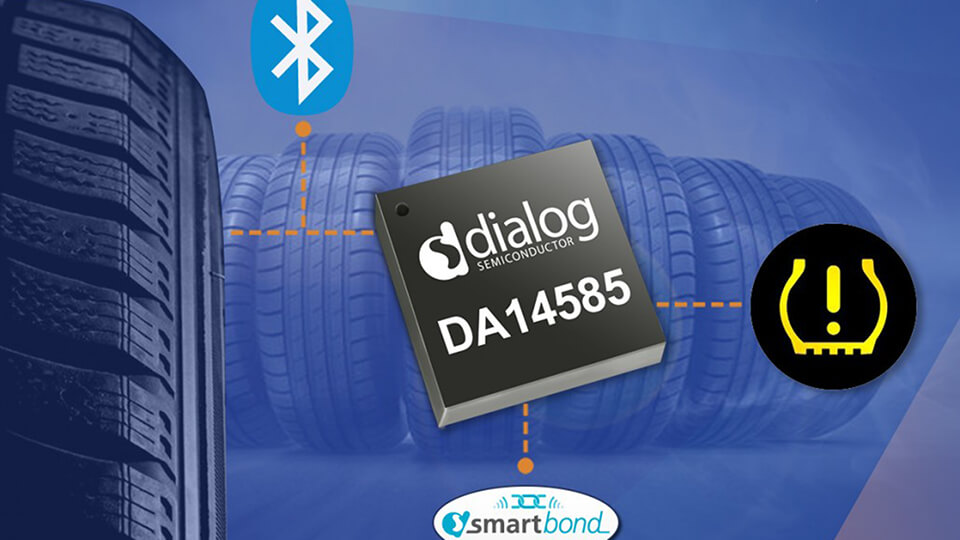
London, United Kingdom – September 13, 2017 – Dialog Semiconductor plc (XETRA:DLG), a provider of highly integrated power management, AC/DC power conversion, charging, and connectivity technology, today announced the first shipments of its SmartBond™ DA14585 Bluetooth low energy (BLE) System-on-Chip (SoC) to two internationally-recognized suppliers to the automotive industry for use in tire pressure monitoring system (TPMS) sensors. With over 100 million units of its SmartBond SoCs already shipped to other applications, this represents another success milestone for Dialog’s Bluetooth market leadership.

A TPMS sensor is an electronic subsystem for monitoring the air pressure and temperature within automobile tires, alerting drivers of improperly-inflated tires or other safety information in real time. Most typical TPMS sensors use proprietary or non-standard sub-GHz radios to transfer information to the automobile’s computer, but by replacing these radios with Bluetooth low energy connectivity, TPMS can now take advantage of a worldwide standard and the interoperability it brings with the added benefit of long battery lifetime and smartphone connectivity.

With a long legacy in the automotive market as a provider of motor control ICs, Dialog now addresses the TPMS market with the DA14585, the lowest cost, lowest power Bluetooth low energy SoC in high volume production today. To build a Bluetooth low energy-enabled TPMS, only sensors supporting pressure, temperature and acceleration and a battery need to be added. The DA14585 handles the entire processing required for the TPMS application, with no additional microcontroller needed. Further benefits include high security, upgradable firmware and connectivity to automobile computers via a single node for all Bluetooth low energy functions.

“TPMS is already mandated in the United States, South Korea, and the European Union,” said Sean McGrath, SVP and GM of the Connectivity, Automotive and Industrial Business Unit, Dialog Semiconductor. “With other countries such as China and Japan reviewing their own mandates, the early adoption of Bluetooth low energy for TPMS represents an excellent opportunity for Dialog to support the automotive market’s move into the next phase of connectivity and also address the rapidly-growing TPMS aftermarket with these first design wins.”

The DA14585 is available for purchase through Avnet, Digi-Key and Mouser Electronics. As with all SmartBond solutions, the DA14585 is easy to design with, and supports standalone as well as hosted applications. It is supported by a complete development environment including Dialog SmartSnippets™ software, helping designers profile and fine tune the power consumption of their applications. For more information on the DA14585 and Dialog’s Bluetooth SmartBond technology, visit: https://www.dialog-semiconductor.com/bluetooth-low-energy

Filed Under: IoT, News, Tech Talk, Transportation

Bluetooth SIG Announces Mesh Networking Capability

2017-07-18

Brings proven, global interoperability and the mature, trusted ecosystem of Bluetooth technology to industrial-grade device networks

Kirkland, Washington – July 18, 2017 – The Bluetooth Special Interest Group (SIG) announced today that Bluetooth® technology, the global standard for simple, secure wireless connectivity, now supports mesh networking. The new mesh capability enables many-to-many (m:m) device communications and is optimized for creating large-scale device networks. It is ideally suited for building automation, sensor networks and other IoT solutions where tens, hundreds, or thousands of devices need to reliably and securely communicate with one another.

“By adding support for mesh networking, the Bluetooth member community is continuing a long history of focused innovation to help new, up-and-coming markets flourish,” said Mark Powell, executive director for Bluetooth SIG, Inc. “In the same way the connected device market experienced rapid growth after the introduction of Bluetooth Low Energy, we believe Bluetooth mesh networking can play a vital role in helping early stage markets, such as building automation and wireless sensor networks, experience more rapid growth.”

Industrial-grade solution

Commercial building and factory automation represent major market opportunities for wireless mesh networking technologies. These markets demand true industrial-grade solutions, which Bluetooth mesh uniquely delivers.

  • Reliability: Enables inherently self-healing networks with no single points of failure
  • Scalability: Supports thousands of nodes with industrial-level performance
  • Security: Provides industrial-grade security for protection against all known attacks
    Proven, global interoperability

Time and time again it has been shown that markets flourish when multi-vendor interoperability exists. Bluetooth mesh delivers proven, global interoperability that assures products from different vendors work together.

  • Full-stack solution: A unique full-stack approach that defines the low-level radio up to the high-level application layer, ensuring all aspects of the technology are fully specified
  • Interop-centric specification: Comprehensive, multi-vender interoperability testing is conducted during the specification development process, not after specification release
  • Time-tested tools and processes: A 20-year history of delivering the qualification tools and processes needed to ensure global, multi-vendor interoperability

“Multi-vendor interoperability is a major factor in determining how fast markets develop,” said Russ Sharer, VP Global Marketing and Business Development, Fulham. “Fulham is excited to finally see a wireless, multi-vendor, interoperable standard for lighting controls and we believe Bluetooth mesh networking will greatly expand the size and functionality of the market.”

Mature, trusted technology

Selection of a mesh networking technology is a critical decision for any developer, and it is a make or break factor in the success of a solution. By selecting Bluetooth technology, developers can deliver richer solutions with a faster time to market.

  • Value-added services: A mesh network built using Bluetooth technology can support additional services, such as asset tracking and way finding
  • A mature ecosystem: The Bluetooth ecosystem provides the best enabling technology, along with the tools and services that shrink the time to market
  • Global brand awareness: Bluetooth is a trusted global brand that stands for simple, secure wireless connectivity

“Within the building automation market, there is a growing focus on connected lighting and the role it can play as a platform for providing automation services throughout a facility,” said Szymon Slupik, president and CTO of Silvair and chairman of the mesh working group within the Bluetooth SIG. “A smart lighting platform built on top of Bluetooth mesh networking can also support asset tracking, point of interest, and way-finding services. These value-added capabilities are part of why we believe Bluetooth is an ideal technology for enabling a mesh network.”

Bluetooth Mesh Availability

The Bluetooth mesh networking specifications, as well as the tools required to qualify Bluetooth products with mesh networking support, are now available at the Bluetooth website. Bluetooth mesh networking operates on Bluetooth Low Energy (LE) and is compatible with core specification version 4.0 and higher.

To learn more about Bluetooth mesh, visit bluetooth.com/mesh.

Filed Under: IoT, News, Tech Talk

Dialog Semiconductor Ushers in the Bluetooth® 5 Era with SmartBond 5.0 DA14586: Smarter, More Flexible, and Even Lower Power

2017-03-01

One of the 1st Bluetooth 5 qualified SoCs, DA14586 integrates microphone interface for intelligent voice control of cloud connected products w/mic & speaker.
One of the first Bluetooth® 5 qualified SoCs, DA14586 also includes an integrated microphone interface allowing customers to add intuitive intelligent voice control to any cloud connected product that has a microphone and speaker.

London, United Kingdom – March 1, 2017 – As the connected devices market enters a new era of connectivity with Bluetooth 5.0, Dialog Semiconductor plc, a provider of highly integrated power management, AC/DC power conversion, solid state lighting (SSL) and Bluetooth® low energy (LE) technology, today announced the next generation in its SmartBond family – DA14586. The all-new System-on-Chip (SoC) is the company’s first standalone device that is qualified to support the latest Bluetooth 5.0 specification, delivering the lowest power consumption and unrivalled functionality for advanced use cases.

Derived from the SmartBond™ DA14580, which has proven to be the smallest, highest integrated and lowest power Bluetooth SoC in mass production over the past three years, the DA14586 maintains this leading flagship position for these benchmark metrics, offering even greater flexibility to create more advanced applications with the smallest footprints and power budgets. Other enhancements include an advanced power management setup with both buck and boost converters, which enable support of most primary cell battery types.

“The Bluetooth 5 standard is one of the most highly-anticipated developments in connectivity, and Dialog is amongst the first out of the gate to enable development on this standard with a qualified standalone SoC,” said Sean McGrath, SVP and GM, Connectivity, Dialog Semiconductor. “Not only is DA14586 following in the SmartBond tradition of flexibility and low power consumption, but now, with Bluetooth 5 support and an integrated microphone interface, we have an SoC that opens the door to a new era of connected devices and applications.”

In addition to Bluetooth 5 support, DA14586 has double the memory of its predecessor for user applications, making it ideal for adding Bluetooth low energy to proximity tags, beacons, connected medical devices and smart home applications. Meanwhile, an integrated microphone interface reduces the system cost of voice-command remote controls, a fast growing emerging market. Advanced features are also included allowing for Mesh based networked applications to be simply supported.

Like all Dialog SmartBond solutions, DA14586 is easy to design-in and supports fully-hosted applications. The SoC is supported by a complete development environment and Dialog’s SmartSnippets™ software to help engineers optimize software for power consumption. For cost-sensitive applications, the SmartBond family will also include the DA14585 with integrated One-Time Programmable (OTP) memory as an alternative to flash memory.

The DA14586 and DA14585 and their associated development kit will be available for purchase through Mouser and Digi-Key.

Dialog will also be showcasing the DA14586 and DA14585 devices at the upcoming Bluetooth World event in Santa Clara on the 28th and 29th of March 2017.

For more information, visit www.dialog-semiconductor.com/products/da14586

Filed Under: News, Tech Talk

TRX Systems’ NEON® Personnel Tracker Solution Used by Houston Police to Ensure Public Safety During Super Bowl

2017-02-27

TRX Systems, developer of the NEON® Indoor Location Solution, today announced that the NEON Personnel Tracker application was used by the Houston Police to help ensure public safety in NRG Stadium for Super Bowl LI.

You can check out the Super Bowl example video here, but here’s a quick look at the technology:

https://www.youtube.com/watch?v=QwLHO-PP60A

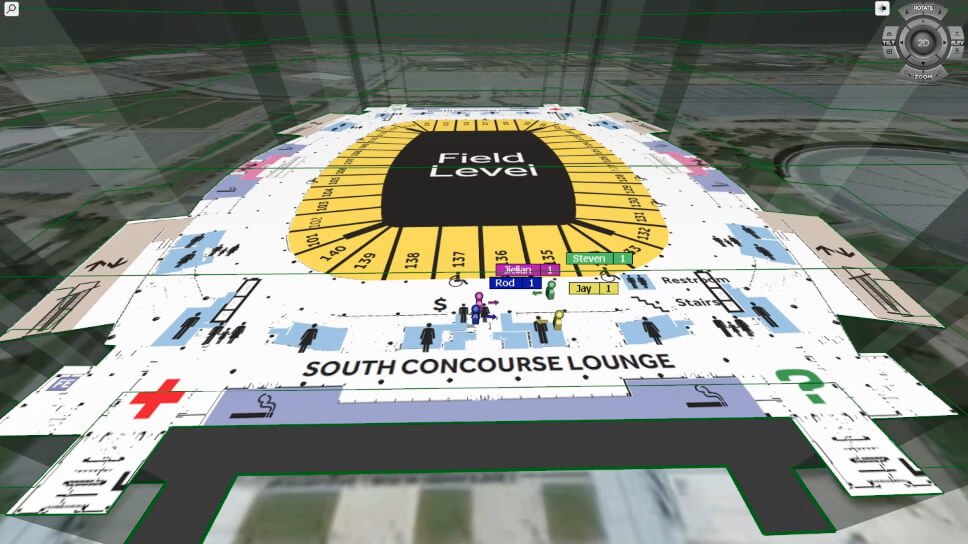
NEON Personnel Tracker delivers mapping and location in environments where GPS is unavailable or unreliable such as inside large office buildings, in stadiums and underground. By delivering location in these “GPS-denied” environments, NEON improves both command effectiveness and safety for public safety and security personnel. NEON Personnel Tracker delivers location in both 2D and 3D and provides tracking and visualization of personnel in complex indoor and outdoor environments. Accurate tracking is accomplished using NEON’s patented location algorithms which leverage all available device sensors including inertial, magnetic, pressure, light, Bluetooth, Wi-Fi and GPS signals (where available) to calculate location.

Working closely with Harris County Central Technology Services and the Houston Police, TRX deployed NEON Personnel Tracker in a solution integrated with the Motorola LEX L10 Mission Critical LTE Handhelds. The NEON solution on the LEX L10 utilized the Harris County Public Safety Broadband network at NRG Park where each officer carrying the LEX L10 with the NEON application was able to be tracked in 3D from the command center throughout the nearly 2 million square feet of NRG Stadium. With real-time 3D visualization of first responder locations inside buildings, police and other first responders have improved situational awareness that helps ensure public safety. A short video showing TRX Systems’ NEON Personnel Tracker at NRG Stadium can be found here.

“Public Safety LTE is a reality and happening right here in Texas. Harris County is committed to enhancing public safety through the use of leading edge technology,” said Shing Lin, Director Harris County CTS. “Applications enabled by Public Safety LTE networks are part of our continuing investment to safeguard the public and effectively manage our resources at major public events such as the Super Bowl.”

Filed Under: Home & Office, Tech Talk, Wearable

  • « Go to Previous Page
  • Page 1
  • Page 2
  • Page 3
  • Page 4
  • Page 5
  • Page 6
  • Interim pages omitted …
  • Page 29
  • Go to Next Page »

Primary Sidebar

Affiliate Disclosure

This website uses affiliate programs for monetization. At no additional cost to you, links to various sites mentioned in posts may result in a commission that is credited to this site if you make a purchase.

Some affiliate programs and affiliations include, but are not limited to, Commission Junction, Apple, Google, Amazon.com and more.

For complete details
click here.

Copyright © 2026 · Preferred Hosting by WP Engine and Domain Name Registry by Namecheap

We are using cookies to give you the best experience on our website.

You can find out more about which cookies we are using or switch them off in .

QTOOTH
Powered by  GDPR Cookie Compliance
Privacy Overview

This website uses cookies so that we can provide you with the best user experience possible. Cookie information is stored in your browser and performs functions such as recognising you when you return to our website and helping our team to understand which sections of the website you find most interesting and useful.

Strictly Necessary Cookies

Strictly Necessary Cookie should be enabled at all times so that we can save your preferences for cookie settings.

3rd Party Cookies

This website uses Google Analytics to collect anonymous information such as the number of visitors to the site, and the most popular pages.

Keeping this cookie enabled helps us to improve our website.

Additional Cookies

This website uses the following additional cookies:

(List the cookies that you are using on the website here.)