• Skip to primary navigation
  • Skip to main content
  • Skip to primary sidebar

QTOOTH

News & Reviews for Living with Bluetooth Wireless

  • Reviews
    • Wearable
    • Gaming
    • Health & Fitness
    • Home & Office
  • How To Tips
  • Industry News
  • About QTOOTH

Tech Talk

New Nordic Bluetooth® Smart Component and Module Seek to Revolutionize IoT Development

2015-10-14

Wireless component manufacturer Nordic Semiconductor introduces a Bluetooth® Smart system-on-chip that handles complex processes with minimal power use. U.S.-based developer and engineering firm Rigado presents a pre-certified, comprehensive Bluetooth® Smart module using Nordic’s SoC to deliver a secure, cost-effective solution to IoT developers.

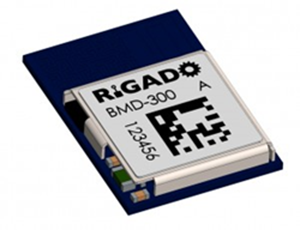
nordic-semiconductor-bmd-300-qtooth-300x230Nordic Semiconductor’s new system-on-chip is set to revolutionize development for the Internet of Things. On Oct. 5, Nordic launched the Global Tech Tour in Boston, Mass. to introduce the nRF52832 system-on-chip, an ultralow power Bluetooth® Smart solution that can handle complex multivalent processes while maintaining ultralow power consumption. The nRF52 is the basis of Rigado’s newest Bluetooth® Low Energy module, the BMD-300, an easy-to-implement component that shortens IoT developers’ time to market and reduces development costs.

The Global Tech Tour visits thirty cities, including nine in the U.S. The free presentations will feature a thorough introduction of the nRF52 chipset family, along with presentations on RF connectivity and layout, power devices, software development kits and more. Attendees will receive a free nRF52 development kit

The nRF52 is an ultralow power multiprotocol system-on-chip that supports Bluetooth® Smart, ANT and 2.4GHz ULP wireless applications. The chipset is Nordic’s smallest Bluetooth® Smart SoC to date, measuring just 3.0 x 3.2 mm, and is the first Nordic SoC to feature near field communication (NFC) protocol, allowing developers to implement “touch-to-pair” functionality in their designs. Its comprehensive digital and analog interfaces and peripherals address a variety of Bluetooth® Smart design requirements, including digital audio processing, FFT/FIR and security algorithms, driving device displays and user interfaces.

Rigado, a provider of embeddable Bluetooth® Smart modules, is an early adopter of the nRF52 for its next generation of Bluetooth® Smart modules, the BMD-300 and will have a presence at the Seattle, Portland, San Jose and Orange County Tech Tour stops. The BMD-300 is an integrated system-on-module that includes a comprehensive set of RF components, along with all of the features of the nRF52, allowing developers to forgo engineering design and costs when producing wireless products. The module is pre-certified and tested, and it includes added security, libraries and firmware to protect customers’ products, lower their development costs and shorten their time to market. Samples are scheduled to be available in Q4 with production quantities available in early Q1 2016.

Rigado also helps customers seeking assistance with design or chip-down solutions by offering complete, multidisciplinary engineering services and expertise in low power and wireless designs. Rigado provides electrical, industrial, mechanical, software and application engineering to support customers from concept to production.
For more information on the nRF52, visit
https://www.nordicsemi.com/eng/Products/nRF52-Series-SoC.
Learn more about and register for the Global Tech Tour at https://www.nordicsemi.com/eng/Events/Global-Tech-Tour-2015/US.
 

Filed Under: IoT, News, Tech Talk

CSR Applying its CSRmesh Protocol to Other Home Automation Applications

2015-08-11

CSR plc (LSE: CSR; NASDAQ: CSRE) announced the latest version of its Bluetooth® Smart solution for the smart home – CSRmesh® Home Automation. The latest software release adds sensor and actuator models to build on the original protocol that was designed for lighting control. This makes it possible for developers to deliver a wider range of home automation solutions including control of heating, ventilation, air conditioning, door locks and window sensors.
https://www.youtube.com/watch?v=FtLBazKoFq8&feature=youtu.be
Seamless and Secure

The new flood mesh solution combines a configuration and control protocol based on CSR’s proven Bluetooth Smart devices, including the CSR101x™ family, and allows for an almost unlimited number of devices to be networked together and directly controlled from a smartphone, tablet PC or wearable device. The system does not require a hub or router to function locally, or an end-to-end IP connection which means it offers a simple and seamless user experience. An encrypted network key, combined with other measures, ensures security against eavesdroppers, as well as man-in-the-middle and replay attacks.

https://www.youtube.com/watch?v=QB-NyMr_ifA

Extended battery life

Importantly, for a positive user experience, CSRmesh for Home Automation significantly extends battery life for sensors and actuators such as door locks. Multiple devices can be easily grouped together with a mains powered proxy device in the group, for example a light bulb, holding data from a battery powered sensor device. This proxy device can then relay that information without ‘waking’ the battery powered sensor. By doing this, manufacturers can reduce the duty cycle of each mesh device to as little as two percent, ensuring long battery life without any impact to the consumer experience. Some battery powered devices, such as security sensors and light switches, need only wake up when they are triggered by user activation such as a window being opened. At all other times the devices would be in sleep mode, providing extremely long battery life.

https://www.youtube.com/watch?v=SmdM0gVjCLg

Seamless End-User Experience

A recent study commissioned by CSR found that consumers are increasingly interested in home automation, but a quarter (26%) are concerned connected devices would be too difficult to set up and too complex to use (25%). A significant amount is also anxious about security, with 26% worried about devices being open to hacking.

“Consumers want a simple, secure smart-home experience that works with a wide range of devices and smartphones. The set-up process has to be simple and low maintenance with minimal need to change batteries,” says Anthony Murray, Senior Vice President, Business Group at CSR. “This latest version of CSRmesh meets increasing consumer demand for a much wider range of home automation applications that are seamless and secure. And it’s significantly more cost-effective than other RF technologies designed for the smart home market.”

Interoperability to prevent fragmentation

The solution can provide whole building coverage, even in RF dead zones, without the need to add relays or set up routing tables for each device. It does this by enabling an almost unlimited amount of Bluetooth Smart sensors and actuators to be simply networked together. CSR is working in the Bluetooth Special Interest Group’s (SIG) Smart Mesh Study Group to help create a global standard for Bluetooth Smart mesh to ensure interoperability of all compatible devices and prevent fragmentation.

Developer ready

https://www.youtube.com/watch?v=hRJ3RQvsgn8

To enable developers to get products to market quickly the CSRmesh Development Kit provides a complete set of tools for evaluation and software development, including Android and iOS source code. New example applications for the HVAC market, including those that allow developers to set thermostats, trigger air conditioning or heating, or display the current temperature, are also available.

For more information on the new release a whitepaper with more details on the technology and how it works for key applications will be available in the coming weeks. Register today to receive your copy.

Filed Under: IoT, News, Tech Talk

Bluetooth Developer? Why Reinvent the Wireless Radio… Use the CORDIO BT4 Radio IP

2015-02-20

Many developers feel they need to go it alone when inventing a new wireless device, designing every aspect of the device from the ground up. What many forget is that it is often the best approach to buy or license certain parts of the design from other developers who may specialize in just one facet of their overall product. Case in point? Well if you are a Bluetooth developer, and need to have a best-in-class wireless radio, the Sunrise Micro Devices CORDIO BT4 may be just the shortcut to getting to market you are looking for.

sunrise-micro-devices-logo

What is CORDIO BT4?

So, what is the CORDIO BT4 exactly? It is a patented IP (Intellectual Property) Bluetooth Smart wireless radio design that can be licensed from Sunrise Micro Devices. And why would you want to choose their design over your own or another competitors? Sunrise Micro Devices is in the standards-based radio core IP business and has been for quite a while. They are experts in sub-volt radios which greatly extend battery life and are friendly to energy harvesters.

Two important things to know before we get into more details about the CORDIO BT4.

  1. Sunrise Micro Devices will be giving two demonstrations of it in use at the Embedded World Event February 24-26 in Nuremberg, Germany.
  2. They are excited to announce support for Bluetooth 4.2 enhancements.

What are it’s benefits?

The CORDIO BT4 wireless radio is a sub-volt radio that is not only extremely power efficient but also has an incredible small form factor. In comparison tests against other best-in-class radios, the CORDIO BT4 has been shown to extend battery life by 26% in its 3V mode (while transmitting) and as much as 103% in 1V mode (while in sleep mode).

sunrise-micro-devices-bluetooth-best-in-class-battery-life-qtooth

As you can see in the images above, the form factor is so small that it can easily be integrated into a system that is smaller than the battery that runs it. And, because of its extraordinarily low power consumption, it can even be run with no batteries at all using two .5V solar cells.

Examples of the CORDIO BT4 in Use

As mentioned previously, Sunrise Micro Devices (SMD) will be doing demos of their product at in Nuremberg Germany next week as part of the Embedded World convention. Here is a sneak peek at what they have in store:

First, SMD will be part of the ARM ‘Sensors to Servers’ demo, where the booth will be outfitted with sensors that provide temperature and position information. The data that is collected will be processed on an mbedTM device server and aggregated to create compelling visualizations. Meanwhile, the SMD customer evaluation boards will serve as sensor nodes. These customer evaluation boards willwill send periodic temperature and position data and consist of a CORDIO BT4 Bluetooth Smart 4.1 radio, an ARM Cortex-M0+ processor based MCU, and an ARM mbed–enabled platform with Wicentric Bluetooth Stack and Profiles.

sunrise-micro-devices-gyroscope-temp-data-demo-qtooth

The Second demo will be part of the ARM ‘mbed ecosystem’ demo. In this scenario the ARM booth will be outfitted with Bluetooth Smart nodes functioning as UriBeacons. The transmitting UriBeacons will be received by mobile devices with the standard Physical Web app on Android. SMD micro-beacon and evaluation boards will be programmed as UriBeacons. The evaluation boards in this case will consist of CORDIO BT4 Bluetooth Smart 4.1 radio beacons running from 1V batteries, an ARM Cortex-M0+ processor based MCU, and an ARM mbed–enabled platform with Wicentric Bluetooth Stack and Profiles. They will be configured to send out the www.mbed.com web address.

sunrise-micro-devices-bluetoothsmart-micro-beacons-demo-qtooth


Make vs. Buy When It Comes to the CORDIO BT4 Bluetooth Wireless Radio

Why might a company or developer decide that it is wiser to buy a design solution rather than coming up with their own? Well, in the case of the CORDIO BT4, it helps reduce the risk and cost of development while improving time to market. Buying the radio is an enabler that allows the developer to spend their most precious resources, time and money, in areas where they may have better expertise. There is also the fact that as part of the licensing they are guaranteed of keeping the radio current ot the most recent standards. It’s important to support the latest standards in order to stay competitive. Take the burden off of your team and let someone like Sunrise Micro Devices shoulder that load. Radios are very hard to build and development requires a highly specialized skillset. Relying on an experienced outside team allows the developers to innovate in other areas that might better differentiate their product from the competition.

sunrise-micro-devices-make-vs-buy-bluetooth-wireless-design-qtooth


Sunrise Micro Devices and the Future of Bluetooth

bluetooth-4.2-development-mission-control-meet-the-team-qtooth

Sunrise Micro Devices is working hard to make sure their radio designs stay on the leading edge of all developments in the industry. So much so, that their CTO, Dr. Ed Callaway, is on the Bluetooth SIG team that developed the 4.2 specification that was just ratified in December of 2014. You can read more about it by clicking here, but the main enhancements to the Bluetooth Smart protocol are the increased levels of privacy and security and the extended packet length. “Extended what” you say?! Extended packets mean that the Bluetooth signal will be able to carry more data. This will make low-power internet connectivity available over IPv6/6LoWPAN, helping facilitate easier communication between Bluetooth and WiFi.

bluetooth-bt4.2-increased-packet-length-qtooth

CORDIO BT4 Features & Specifications

  • 2.4GHz standard-compliant Bluetooth Smart radio IP
  • BT4 power consumption (@ 1V):
    • Active Rx: 6 mW
    • Active Tx (0 dBm): 6.5 mW
    • Sleep mode: 700 nW
  • Radio specifications:
    • TX power:0 dBm @1V and 5 dBm @3V
    • RX sensitivity: -94 dBm
  • Integrated Link Layer sub-system and HCI Interface for easy SW implementation
  • Link Layer firmware in the ROM  48KB ROM and 12KB RAM
  • Bluetooth qualified controller sub-system

sunrise-micro-devices-cordio-bt4-bluetooth-smart-solution-qtooth

Need It? Want It? Have to Have It?

There comes a time in every inventor or developer’s journey where they realize they are losing precious time and spending a lot of money on things that are not completely within their field of expertise. A decision will have to be made, do they soldier on and take the time to train themselves in this new discipline? Or do they do a cost/benefit analysis to see if it will be to their advantage to outsource it to someone who is already the best at what they do. The CORDIO BT4 from Sunrise Micro Devices is one of those solutions. If you want to know more, check them out next week at Embedded World or reach out to them via their website at sunrisemicro.com.

Filed Under: News, Tech Talk

What Good Is Wireless Without the Apps to Use It? – Apps World Germany 2015

2015-02-09

Truly, what good is all of the latest wireless technology without the apps to make it all work and do cool things? That’s why we’re excited by great events like Apps World Germany 2015. The event, now in it’s sixth year, is pulling in some real heavyweights when it comes to technology.

apps-world-germany-2015-logo-qtooth

Keynote Speakers

Announced as keynote speakers at Apps World Germany 2015 are Steve Wozniak, Peter Molyneux & Ian Livingstone.

Apple co-founder Steve Wozniak, will be one of the featured keynote speakers this April at the inaugural Apps World Germany event in Berlin. Joining him will be Peter Molyneux, founder of Lionhead Studios, and Ian Livingstone, co-founder of Games Workshop. The event will attract over 6,000 attendees over two days is set to take place at CityCube, Berlin on April 22-23.

Having helped shape the computing industry with his designs of early Apple products that influenced the later Macintosh, Steve Wozniak will be discussing the story of Apple, entrepreneurship, innovation and sharing his industry insight with developers in the free-to-attend Developer World conference stream.

Both Peter Molyneux and Ian Livingstone will be sharing their insight on the Gaming World stage (part of International Games Week Berlin) this April with their individual keynotes discussing the evolution of mobile games production; the challenges, lessons and their future predictions.

Besides Wozniak, Molyneux and Livingstone, there is an incredible line up of over 200 speakers at the show speaking at 10 tightly-focused niche workshops, including: HTML5, Mobile Strategy & Marketing, Mobile Payment & Banking, Gaming Apps, TV Apps, Developer, Droid, Enterprise Apps, Cloud and Connected Car.

Other speakers include; Jimmy Maymann, CEO, Huffington Post, Ulrik Nehammer, CEO, Coca-Cola, Ben Phillips, Global Head of Mobile, MediaCom, Miika Tams, Vice President, Games at Rovio Entertainment Ltd, Stefan Zilch, Managing Director Germany, Spotify and Dr. Volkmar Tanneberger, Executive Director Volkswagen Electrics and Electronics Department, Volkswagen.

Ian Johnson, Managing Director of the event organiser Six Degrees said: “We’re ecstatic to welcome Steve Wozniak, Peter Molyneux and Ian Livingstone to Apps World Germany. The speaker line up is stronger than ever and we’re excited that a whole new audience will be able to hear from some of the industry’s most respected figures.”

To see Steve Wozniak, Peter Molyneux and Ian Livingstone keynote at Apps World Germany please visit the website to register your exhibition pass. Remember: get 15% off by using the promo code QTOOTH15 during the checkout process!

Apps World Germany 2015 HackFest

apps-world-germany-2015-wincor-hackfest-logo-qtooth

There will also be a hackfest to coincide with the Apps World Germany 2015 event. For those who may not be familiar, a hackfest (also known as a hack day, hackathon or codefest) is an event in which computer programmers and others involved in software development, including graphic designers, interface designers and project managers, collaborate intensively on software projects. Occasionally there is a hardware component as well. Hackathons typically last between a day and a week in length. Some hackathons are intended simply for educational or social purposes, although in many cases the goal is to create usable software. Hackathons tend to have a specific focus, which can include the programming language used, the operating system, an application, an API, the subject and the demographic group of the programmers. In other cases, there is no restriction on the type of software being created.

More Details About Apps World Germany 2015

Now in its 6th year, Apps World has grown to be the leading global multi-platform apps event covering HTML5 & Mobile Web, Mobile Strategy and Marketing, Mobile Payments & Banking, Gaming Apps, TV, Developer, Droid, Enterprise, Cloud and Connected Car. The inaugural Berlin event is set to host over 6,000 developers, mobile marketers, mobile operators, device manufacturers, platform owners and industry professionals for two days of high level insight and discussion.

Keep up with event news and announcements through the show blog or via Twitter.

Apps World is the leading global multi-platform event in the app industry – new for 2015 is the inaugural Apps World Germany event taking place at CityCube in Berlin on 22-23 April. The event has been launched to take advantage of the huge developer community in the region and the growing appetite for region specific content. Apps World will be bringing our popular interactive, engaging format to Berlin with workshops taking place alongside the buzzing exhibition hall, live hackathons, start-up demos and 6,000+ developers, marketers, platform owners, device manufacturers and operators expected.

Workshop tracks include:

  • Developer World *Free to attend
  • Droid World * Free to attend
  • Enterprise World *Free to attend
  • Cloud Apps World *Free to attend
  • Gaming Apps
  • HTML5 & Mobile Web        
  • Mobile Strategy
  • Payment & Retail

apps-world-germany-2015-pictures-of-previous-events-qtooth

The exhibition floor will be buzzing with some of the most innovative new start-ups showcasing alongside industry giants, live hackathons, interactive workshop sessions and parties. Don’t miss your chance to be a part of it – secure your pass today… and don’t forget to use promo code QTOOTH15 during the checkout process to get 15% off!

Register today for your FREE developer pass here http://www.apps-world.net/germany/register/free-developer-track-a-exhibition-pass

Register for your paid workshop pass, gaining access to all workshops & networking platforms here – http://www.apps-world.net/germany/register/select-your-pass

Filed Under: Events, News, Tech Talk

OORT, Bluetooth, and the Open Source Future of IoT

2015-02-06

While at CES 2015, I had the pleasure to sit down and have a wide-ranging talk with Radek Tadajewski, CEO of OORT. His company has been working mostly behind the scenes in the burgeoning Internet of Things market. They are making fast advances in directions that deserve attention.

oort-logo-qtooth-large

So What Exactly Does OORT Do?

OORT is a manufacturer of wireless devices that can be directly controlled through Bluetooth Smart using a free app that is available for both smartphones and tablets. By themselves, without any hub or extra hardware, these devices can be grouped into virtual networks so that any number of them can be controlled by a single tap of a button.

oort-iot-bluetooth-wireless-phone-app-screen-customizing-groups

However, if they are part of a network controlled by OORT’s hub, these same devices can also be controlled remotely from anywhere in the world via the internet. The hub is not available yet but it should be soon. OORT is expecting to receive their EU certification in early February and, having already secured three distributors in Europe, hope to ship shortly thereafter.

oort-hub-iot-bluetooth-wireless-qtooth

What Makes OORT Different?

This lack of needing a hub is at the core of OORT’s philosophy.  Buy any single one of their components, download the free app, and you can start using it immediately. It makes the entry cost of getting your first SmartHome IOT device much more affordable.

oort-bluetooth-wireless-iot-on-phone-app-bulb-controller

Not only are the OORT components less expensive because they don’t require a hub, they are typically less expensive as a single component. For example, currently their [easyazon_link asin=”B00GC8LSPA” locale=”US” new_window=”default” nofollow=”default” tag=”uneomediacom-20″ add_to_cart=”default” cloaking=”default” localization=”default” popups=”default”]SmartLED BLE Enabled Smart Bulb[/easyazon_link] costs $39.90 vs. the [easyazon_link asin=”B00HNLQQ7K” locale=”US” new_window=”default” nofollow=”default” tag=”uneomediacom-20″ add_to_cart=”default” cloaking=”default” localization=”default” popups=”default”]Philips Hue Bulb[/easyazon_link] which starts at $60. The price for the OORT should fall even lower as they start manufacturing in higher volumes. They expect the price for their bulbs will eventually drop to below $30.

oort-bluetooth-wireless-iot-system-diagram

The app will also control and track data from other devices that OORT has in the pipeline, including beacons, pet trackers, thermostats, light switches, air quality sensors, and more. These devices can be organized into groups so that a single press of a button on a touchscreen will change the settings of all the devices assigned to each group. You can have as many groups as you want, and in as many locations as you want. That means you can set up multiple preferences by group for work, home, or anywhere you are using your OORT Bluetooth-enabled devices.

oort-iot-bluetooth-wireless-phone-app-screen-customizing-groups

oort-iot-bluetooth-wireless-phone-app-screen-group

It is worth repeating: not only will it do this without a hub but it will also do this without the internet! Many, if not all, of their competitors require internet connectivity and rely on cloud services to make their magic. Not OORT! They allow a tremendous amount of functionality right from the start, with a single device and a free app from either Apple iTunes or Google Play. No registration, no creating an account, no surrendering of personal data… unless you want to. Currently there is a lot of concern among the general public about privacy and security issues. So, when it comes to starting your own SmartHome or Internet of Things network, QTOOTH feels like OORT’s approach will lower the resistance barrier to the point of a non-issue.

The hub can control 1000s of devices, allowing a variety of complex networks to be configured and to respond to the needs of many users. Hubs can also control things based upon proximity to connected devices using things such as wearables or embedded beacons.

We here at QTOOTH love most things open source, so we think it is a very smart move that OORT is the first to offer a truly open ecosystem of devices. Just about any Bluetooth device can be incorporated into the network. They have an open API and SDK (Application Program Interface and Software Development Kit, respectively) and supply development kits for anyone who wants to try their hand at adding their own Bluetooth controlled devices into the ecosystem.

OORT Developer Kit

Originally, OORT thought that they would be a consumer-facing company, selling their devices directly to the public. However, there has been a tremendously positive response to their approach from some pretty major players in the SmartHome market. Although selling their product to consumer is still very much a part of the plan, they have done a bit of a pivot to address the needs of the their business-to-business clientele. Even this has further segmented itself into more tightly focused opportunities:

First, OORT offers startup companies and independent developers an excellent end-to-end solution to make their products “smart”. By leveraging the hardware and embedded software technology that OORT already has in place, products can join the Internet of Things in 6-9 months.

Second, OORT is already already working with several major brands including an appliance manufacturer that will be coming out with a line of smart kitchen appliances by the end of 2015.

And finally, in a move that could have significant impact on many industries, OORT is currently helping to develop SmartHome-enabled set top boxes with several partners using OORT’s technology. This means that the same box that provide major utilities in the home, including power, internet, telephone, and cable, will also be acting as your hub for your connected devices. This will give these big players the opportunity to sell services that are targeted specifically to the end customer based on their known use habits. There may come a time when it will make more sense for these providers to give the hardware away for free but charge for cloud-based services. Another opportunity for OORT is that the information that each device collects is sent to OORT’s cloud for processing before being forwarded to the provider’s cloud.

The good news is that all of these business-to-business endeavors should not only help to increase the rate of adoption of OORT’s technology among developers, but to also hasten the availability of one of the more open-ended systems for consumers.

OORT is a member of the Bluetooth SIG’s SmartHome Market, the consortium of Bluetooth manufacturers that set the standards which all Bluetooth products must follow. It’s for these types of innovative approaches that OORT has been nominated for a 2015 Bluetooth SIG Breakthrough Award for Breakthrough Prototypes. Of course by the time the award winners are announced in March at the Mobile World Congress event in Barcelona, OORT should be making some waves as their presence starts to be felt within the industry. OORT CEO Radek Tadajewski will also be a featured speaker at Bluetooth World in April.

On a final note, we were curious to know how it was to start a forward thinking company in a country like Poland. Was it an issue being so far away from some of the traditional centers for technology and funding, like Silicon Valley or New York City? No, according to Radek Tadajewski. Starting any company any where presents its challenges but it can also make for some unique opportunities. There are a lot of beacon companies already in Poland and, due to its centralized location in Europe, a lot of big companies have setup R&D (research and development) facilities there. And from a venture capitalist’s perspective the “rate of burn”, or how quickly a startup company burns through its investors’ money, is significantly slower. This gives the company more time to develop its product and market before needing another round of investment or just simply going out of business. This is due in no small way because the average pay for qualified employees is about 1/3 of what can be in more mature markets. Poland also enjoys a large base of highly trained engineers and other talent that are hungry for the jobs and the challenges that startups and hi-tech companies typically offer.

We are looking forward to seeing where things go for OORT over the course of the next year. Big things seem to be on the horizon for them and it seems like we all stand to benefit from their efforts and forward-thinking vision.

In the meantime, check out our review of a few of their currently available individual devices.

Filed Under: Home & Office, News, Reviews, Tech Talk

Eye Tracking, Gesture Control, Voice-Activated… What Will Become of the Mighty Mouse? Logitech Wireless Performance Mouse MX Review

2015-01-04

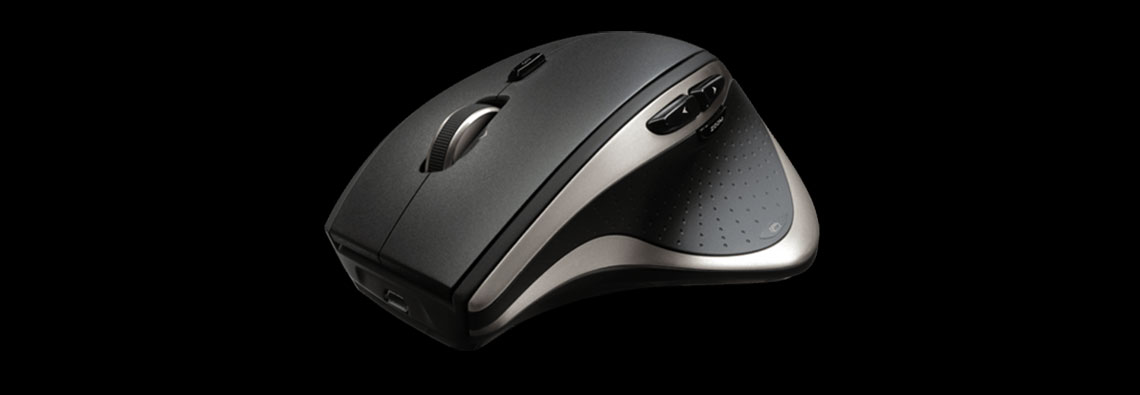
logitech-wireless-performance-mouse-mx-review-front-left-view-qtoothAs mentioned in the title of the article, there are so many options these days for controlling our electronics that it makes us wonder… is there a future for the once mighty and all powerful computer mouse? Of course, this might make you wonder why we are even doing a [easyazon_link asin=”B002HWRJBM” locale=”US” new_window=”default” nofollow=”default” tag=”uneomediacom-20″ add_to_cart=”default” cloaking=”default” localization=”default” popups=”default”]Logitech Wireless Performance Mouse MX for PC and Mac[/easyazon_link] review. Hasn’t it been on the market for over five years? But these are exactly the reasons why we want to take another look at it.

Similar to our second look at the enduring popularity of the LG Tone+ HBS-700 & HBS-730 Bluetooth Headsets, we wanted to find out why this remains one of the best selling, most popular mice on the market, beating out almost every wired and wireless model in existence. Not only that, it gives evidence that there is a huge amount of people out there who just plain prefer them over every development in human-to-computer interface technology, including not only the now readily-available touch pads and touch screens, but also the ever-improving forms like eye-tracking, gesture control and voice-activation. Please note that the Logitech Wireless Performance Mouse MX is meant as a best-in-class device for typical uses, such as office or web work. We treat gaming mice as a separate class and will do a review on the most popular version soon. In the meantime, let’s take a look at what the Logitech Wireless Performance Mouse MX offers!

The Basics

Comfort – It is an asymmetrically sculpted, ergonomically designed mouse. What it sacrifices in the ability to be used in either hand it more than makes up for by being incredibly comfortable. This is one of the most natural feeling we’ve used. It disappears into the hand and we experienced little if any fatigue over extended use.

logitech-wireless-performance-mouse-mx-review-rear-left-view-qtoothlogitech-wireless-performance-mouse-mx-review-front-left-view-qtooth

Rechargeable – It recharges through USB, so just connecting it to your computer or any powered USB hub or device will get you back in business quickly. The Logitech Wireless Performance Mouse MX comes with a micro-USB cable to do this. Each charge can last up to a month depending on use. If the battery does die, it is a very easy to find single AA rechargeable nickel metal hydride battery. We appreciate that they didn’t choose some odd, hard to-find size like some manufacturers seem to do.

Versatile – There are 9 buttons, 4 of which are thumb buttons that can change functionality depending on the software being used and/or user choice. There are ingertip controls for hyper-fast scrolling, quick-zoom and more. There is a button just below the scroll wheel that changes how it operates, varying between a “clicky” feel and a completely smooth, fluid feel. The fluid mode makes the wheel free-spinning, so you can actually ‘flick’ the wheel and it’ll keep spinning after you take your finger off. Great for extended documents, email threads, and web pages. The click-by-click mode is great for precise, line-by-line navigation of lists, slides and photos. The scroll wheel can also be tilted to the left and right for side-to-side scrolling. The convenient thumb buttons can help you things like quickly flip through web histories.

logitech-wireless-performance-mouse-mx-review-unity-dongle-view-qtoothWireless – It’s interesting to note that this is NOT a Bluetooth wireless device. Instead, the Logitech Wireless Performance Mouse MX opts for using a 2.4 GHz UHF signal. There are some tradeoffs here, but mostly it’s a positive. First, Logitech provides a USB dongle that acts as a receiver. It needs to be plugged into your device’s USB port for the mouse to work. Luckily, the receiver is so small you can basically leave it plugged in even when transporting the device. Logitech also has other accessories in the line, referred to as Unifying Technologies, that can work off the same dongle. A single Unifying dongle can connect up to 6 Unifying compatible devices, allowing you to add accessories like a Unifying wireless keyboard without having to manage multiple USB receivers. Second, 2.4GHZ has up to a 30m range, much greater than the 10m average range of most Bluetooth devices. We typically didn’t experience quite as long of a range as they specify, but is definitely more than Bluetooth and seemed to perform in a more consistent manner at extended distances. This longer range could be really handy when holding meetings in a large conference room where the speaker wants to demo things on a large screen but might be far removed from the computer and projector setup.

logitech-wireless-performance-mouse-mx-review-works-on-glass-view-qtoothPrecise Tracking – Logitech uses something that they call “Darkfield Tracking”, which makes a marked improvement in tracking, especially noticeable on super smooth surfaces like glass, granite and polished wood without a restrictive mouse pad. We’ll go into detail with Darkfield Technology next.

Tracking Technology

It is common in the tech world to use laser tracking to achieve a high level of precision. This is accomplished by setting the laser at an angle to the surface that it wants to track. In effect, this creates shadows to be cast by all of the little bumps and irregularities of the surface, even if they are very small and barely detectable to the eye. This in turn causes the reflected light bouncing off the surface to also be irregular. The reflection is then detected by a sensor which interprets the changes in the light into movement with the result being electronic tracking.

logitech-wireless-performance-mouse-mx-review-how-darkfield-technology-works-qtoothIf you take a look at the above illustration, you can see that in traditional optical setups the sensor is directly above the tracked surface, picking up the reflection at an angle perpendicular to the lens. In the specular optical setup, like that used by the Logitech Wireless Performance Mouse MX,  both the LED beam AND the lens and sensor configuration are set at angles to the tracked surface. Logitech calls this technique Darkfield Laser Tracking. It is a significant improvement over traditional optical and laser mice and helps enhance the visibility of the surface’s irregularities, especially on super-smooth materials like glass, metal and polished stone (like a tile or granite counter top).

logitech-wireless-performance-mouse-mx-review-use-on-glass-top-view-qtoothConclusions

So, no matter that most of us are now quite comfortable with touch screens, touch pads, and might soon be able to do more using voice-activation, eye-tracking and gesture controls, many of us still prefer the mouse. Maybe it’s a generational thing? Perhaps, but maybe it’s also just a choice of  tool for personal expression. Just like some people still like to use a manual typewriter, or oil paints, charcoal, hand saw, etc… It’s possible that the mouse will find its fans for generations to come.

It is extraordinary the success that this particular product has had and continues to have.  They seem to be selling just about as many as when it was first introduced. We here at QTOOTH are going to continue this series of reviews of devices that have obviously just gotten it right. When something receives universal praise over an extended period of time, often for years, and does not find itself becoming obsolete is something we want to recognize. Perhaps we can detect deeper trends of where technology is headed, or what questions or problems it needs to address, to be a true success. Stay tuned for more to come… in the meantime, if you need or just prefer a mouse for everyday use*, this is probably the one for you.

* Gaming mice have slightly different needs. We’ll be doing  a similar review of one soon!

[easyazon_block add_to_cart=”default” align=”center” asin=”B002HWRJBM” cloaking=”default” layout=”left” localization=”default” locale=”US” nofollow=”default” new_window=”default” tag=”uneomediacom-20″]

Logitech Wireless Performance Mouse MX System Requirements

Windows-based PC
  • Windows® XP, Windows Vista®, or Windows® 7, Windows® 8
  • Internet connection
  • USB port
Mac® computer
  • Mac OS® X 10.5 or later
  • Internet connection
  • USB port

Warranty Information

3-year limited hardware warranty

Package Contents

  • Logitech® Performance Mouse MX
  • Micro-USB charging cable
  • USB receiver
  • Quick-start guide
  • Tips guide

Technical Specifications

Mouse Dimensions (height x width x depth):
3.29 in (83.5 mm) x 5.05 in (128.3 mm) x 1.85 in (47 mm)
Mouse Weight (including battery): 5.19 oz (147 g)
Receiver Dimensions (height x width x depth):
0.57 in (14.4 mm) x 0.74 in (18.7 mm) x 0.24 in (6.1 mm)
Receiver Weight: 0.06 oz (1.8 g)
Sensor technology: Laser (Darkfield)
Sensor Resolution: Variable (100dpi~1500dpi) (Can be set in increments of 100dpi )
Number of buttons: 9
Scroll Wheel (Y/N): Yes (with Hyper-Fast Scrolling)
Tilt scroll function (Y/N) Yes
Battery life: 1-month battery life*
Battery type: 1-AA form rechargeable nickel metal hydride battery
Wireless operating distance: Approx 10m*
Wireless technology: Advanced 2.4 GHz wireless connectivity(Unifying supported)
Interface: USB receiver
Supported OS:
  • Windows Vista, Windows 7, Windows 8, Windows 8.1
  • Mac OS X 10.5 or later

Filed Under: Home & Office, News, Reviews, Tech Talk

  • « Go to Previous Page
  • Page 1
  • Page 2
  • Page 3
  • Page 4
  • Interim pages omitted …
  • Page 10
  • Go to Next Page »

Primary Sidebar

Affiliate Disclosure

This website uses affiliate programs for monetization. At no additional cost to you, links to various sites mentioned in posts may result in a commission that is credited to this site if you make a purchase.

Some affiliate programs and affiliations include, but are not limited to, Commission Junction, Apple, Google, Amazon.com and more.

For complete details
click here.

Copyright © 2026 · Preferred Hosting by WP Engine and Domain Name Registry by Namecheap

We are using cookies to give you the best experience on our website.

You can find out more about which cookies we are using or switch them off in .

QTOOTH
Powered by  GDPR Cookie Compliance
Privacy Overview

This website uses cookies so that we can provide you with the best user experience possible. Cookie information is stored in your browser and performs functions such as recognising you when you return to our website and helping our team to understand which sections of the website you find most interesting and useful.

Strictly Necessary Cookies

Strictly Necessary Cookie should be enabled at all times so that we can save your preferences for cookie settings.

3rd Party Cookies

This website uses Google Analytics to collect anonymous information such as the number of visitors to the site, and the most popular pages.

Keeping this cookie enabled helps us to improve our website.

Additional Cookies

This website uses the following additional cookies:

(List the cookies that you are using on the website here.)