• Skip to primary navigation
  • Skip to main content
  • Skip to primary sidebar

QTOOTH

News & Reviews for Living with Bluetooth Wireless

  • Reviews
    • Wearable
    • Gaming
    • Health & Fitness
    • Home & Office
  • How To Tips
  • Industry News
  • About QTOOTH

Tech Talk

PLT Labs and the Power of Purpose Driven Design

2013-12-26

There is a lot of talk these days about “purpose driven design”. QTOOTH wanted to take a look at where this term comes from, what it means, and provide a few real world examples of it in action in the world of wireless devices.

Technological advances make more possible. These possibilities excite inventors and manufacturers, inspiring them to develop products that might include features that previously could only be imagined. In doing so, they hope to impress others by being able to say, “Our product not only does X and Y, but also Z. Oh, and A… and B, and C and D…”  This may not only lead to what is referred to as feature bloat, but also the risk that they are adding features that no one will use. Just because you make it doesn’t mean people will want it. This is where the philosophy of purpose driven design comes to the rescue.

purpose-driven-design-what-is-it-qtooth

Purpose driven design could be considered a component of the Customer Development methodology popularized by Steve Blank. The basic concept of customer development is to learn as much as possible about potential customers, what problems they have, how they understand those problems, and what is of real value to them. The success of any design is how accurately it solves those problems in a way that will be most appreciated. So how does this differ from the classic “form follows function”? Form follows function doesn’t necessarily mean that anybody wants that particular function. However, if the function solves a very specific problem, the design that provides a solution can be said to exist for a reason. It serves a purpose.

Having recently attended the Wearable Tech Expo in Los Angeles, it was hard not to notice that “purpose driven design” was mentioned often in many of the presentations. The wearable tech industry is currently fighting for mass adoption. Because of this, they want to make sure that their innovations are not perceived as being frivolous in nature. Manufactures want to make sure that there is a ready market for their device and that they’re not creating something just because they can.

Stan Kinsey, president of Martian Watches, and Andy Tarczon, VP of Partner Development at Meta Watch, were the very first presenters and they couldn’t stress enough the value of purpose driven design. They were very clear that in order for their smart watch companies to succeed they had to fill very specific needs. They freely admitted that not everyone wants to wear a watch nor are they trying to convince everyone that they should. Instead, they started by asking current watch wearers what functions from their other smart devices would they most likely use if it were available on their wrist. How did this help? They ended up with shortlist of features that accurately targeted the needs and desires of their existing market.

One of the major players at the conference was PLT Labs, the research and innovation division of Plantronics. Their main product on display was a device called the Concept 1, based on the Legend series of Plantronics’ highly successful Bluetooth wireless headsets. They have basically thrown in everything and the kitchen sink when it comes to sensors, including such things as a nine-axis motion sensor, a free-fall sensor, a pedometer and an MFi chip for more direct communication with iOS devices. PLT Labs has been bringing the Concept 1 to hackathons, events where developers have a chance to find and create new applications for cutting edge technology. They provide developers with software development kits (SDKs) and application programming interfaces (API) that allow them to create new uses for the device. Check out these videos that barely scratch the surface of the awesome capabilities of the Concept 1:


Pretty exciting stuff! So when I had the chance at the Wearable Tech Expo to sit down and chat with Mike Holmlund, Software Product Marketing Manager for Plantronics and PLT Labs Software Evangelist, I asked the usual rabid technology fan question: “I want one! This looks ready for mass production, why don’t you release it… NOW?!” Mike smiled, calmed me down, and gave me some quick insight into their approach to purpose driven design.

First, here is a list of some of the most common sensors and functions that can be built-in to this type of device:

  • Capacitive sensor to detect whether a device is being worn or not
  • Gyroscope
  • Accelerometer
  • Compass
  • Head orientation tracking
  • MFi chip for easy integration with iOS devices (MFi means “made for iOS”) this allows for native access to iOS functionality over Bluetooth. This is very handy for applications requiring very low latency, particularly useful when tracking head orientation and related applications.
  • Built-in pedometer
  • Tap detection
  • Free-fall detection
  • Thermometer/ temperature
  • Heart rate
  • Pressure/barometric
  • Humidity
  • A suite of APIs for easy integration not only with iOS but also Android, Windows and Mac.

According to Mike, the Concept 1 has had just about every sensor available in it at some point during its development.  For instance, one of the earlier versions had a heart rate sensor. However, at the hackathons, no one was writing applications that used this feature. The heart rate sensor didn’t serve a purpose. They have since removed the heart rate sensor.

As a bit of a tech geek, I am of course mortified. Doesn’t everybody want it all? Maybe no one is writing apps for it yet, but maybe once released into the wild they would? But, as Mike reminded me, this would only add unnecessary cost to a device and potentially overwhelm users with too many options. From a business standpoint that is too much of a risk. Why include features and all of the hardware and software needed to support them if very few people will actually use them? This would run counter to the core principle of purpose driven design; usefulness.

So, as we watch this journey of the Concept 1’s development, it will be very interesting to see what the final design will include. One thing is certain, everything in it will serve a useful purpose.

[amzn_product_inline asin=’B009ZJ3MUM’]

[amzn_product_inline asin=’B00DP4HPTM’]

[amzn_product_inline asin=’B00FI16820′]

Filed Under: News, Tech Talk, Wearable

Intel Posts Great Guide to the Internet of Things Infographic

2013-12-02

Intel recently posted this great guide to the Internet of Things infographic. It’s basically a snapshot of where the technology is right now, not only explaining what the term means but also demonstrates the many areas of our lives that are being affected by its development.

The basic concept of an Internet of Things, or IoT, is that “smart” technology is being put into millions of devices, from microscopic ones that can be embedded in other devices, or event he human body, to large scale machines and systems. This allows them to communicate and work with each other and with us. As the technology finds greater adoption and becomes part of our daily lives, we will have everything from our clothing to our cars to our appliances and environmental systems communicating over the internet.

It is a concept that is exploding in popularity. There are virtually limitless areas that can be developed for both industries and our personal lifestyles. It’s a time of the wild frontier and there is so much to be explored. The potential benefits of an Internet of Things are enormous.

There are a few links embedded in the original that we can’t replicate here but we have listed those links below the infographic here for convenience.

internet-of-things-infographic-intel-qtoothHere, in order of their appearance, are the links that are referred to within the graphic:

Video: The Smart World in 2020

Video: Big Data, Big Future for Retail

Link to Intelligent Systems Twitter: Weigh In On Mind Control

Link to Intelligent Systems Twitter: Weigh in Robots

Link to Intelligent Systems Twitter: Can’t All Our Things Just Get Along

Video: End On a Good Note with a Futuristic Computer Orchestra

And of course the original graphic on Intel’s website.


[amzn_product_inline asin=’B00DGEGJ02′]

[amzn_product_inline asin=’B00713RSE0′]

[amzn_product_inline asin=’B005ZA2W42′]

Filed Under: How To Tips, News, Tech Talk

Check Out All of the Latest Gear at the WearableTech Expo in Los Angeles

2013-11-13

wearable-tech-expo-los-angeles-logo-qtoothWe here at QTOOTH are extremely excited to be attending the first Wearable Tech Expo to be held in Los Angeles. It promises to be a very eye-opening event with plenty of innovative technologies on display as well as talks by some of the industry’s leading luminaries. The conference is being held at the Hilton Los Angeles December 10-11, 2013. The event is tailored to explore the ins and outs of the rapidly growing market for wearable technology products and services. The two-day conference will feature live presentations and educational discussions from the pioneers of this movement who will share their profound insights on the latest wearable tech devices, trends, technologies and the future of this multi-billion dollar industry.

Sound like fun? Would you like to go? As media sponsor of the event, QTOOTH has a line on discounted tickets to the event which you can find by clicking here.

With new companies and products entering the market virtually every week, it can be hard to keep up or gain a clear perspective on where it all might be leading. This expo will help to gain some much needed perspective on how wearable technology will impact both our businesses and our personal lifestyles.

The range of topics on the agenda are extremely diverse. The Wearable Tech conference program includes:

  • Opening Keynote Panel: Wearable Tech – The Next Generation Electronics that will Drive Next Generation WT Products – This keynote will kick off the event, diving into the next wave of internal electronics and sensors that will drive innovation and power next generation product development.
  • The Smart Watch Phenomenon – Extraordinarily Useful or Simply Marketing Hype? – This panel will speak to the five-year future of smart watches and provide insight on what to expect from this market.
  • Quantifying Yourself – Do All Those Wearable Device Health Details and Graphs Really Make a Difference to Your Health? – Attendees will discuss the hype around health monitors and explore the truth behind functionality vs. fashion statements.
  • Enterprise Wearable Technology – This session will feature both enterprise vendors and enterprise end users who are working to develop and deploy cutting-edge solutions and discuss how these technologies will evolve at every point in the workforce value chain.
  • Fireside Chat: Creating a Wearable Tech Business from the Ground Up – Attendees will learn from an entrepreneur who has taken the plunge in building a wearable technology company from the ground up. Learn best practices, potential pitfalls and the “secret advice” for launching a successful wearable tech business.
  • Wearable Tech and Your Brain Waves – Really Useful Devices or Possibly Dangerous Toys? – As wearable devices begin to wirelessly monitor brain waves and brain-generated electrical signals via EEG, where’s the line between safe and dangerous when it comes to monitoring information as it’s emitted from the brain. This panel will debate that answer.
  • Fashion Technology and WT Design – Endless Possibilities – Fashion lovers will have the opportunity to discover the driving force behind a variety of technologies, especially smart clothing and how devices and sensors interact with and become part of the fashion itself.
  • Augmented Reality and a Hands-Free World – With new technologies designed to enhance visual reality, this session will explore the current state of the art in augmented reality.
  • Smart Materials – It’s Not Just the Toy, It’s what the Toy is Made of that Counts as Well – As wearable tech continues to grow, new materials come to market to help create the solutions. Attendees in this session will have the opportunity to discover many of these new wearable materials and get a glimpse into tomorrow’s possibilities.
  • Will Wearable Technology Prove Itself to be a Sustainable $50 Billion Market? – This panel discussion dives deep into perspectives on why wearable technology is either already turning into a significant marketplace or will have a shorter lifespan than expected.
  • Wearable Technology in the Entertainment Industry – Attendees will have the chance to examine how much of the wearable technology shown in movies such as “Tron: Legacy” and television shows can actually be implemented in the real world.
  • Making Sense of Google (News – Alert) Glass – Unsustainable Phenomenon or the Real Future? – Attendees will hear expert opinions on Google Glass, including the developers building applications for the device, as well as end-user content developers using Glass in creative ways.

Not only will attendees get to take part in all of these presentations and discussions, but they will also have the opportunity to go to the Wearable Tech Demo Forum and Reception. This will give them a chance to see technology and product presentations from nearly 20 companies. Nothing beats hands-on experience and this will be the place to do it.

So the question is: Wouldn’t you love to go? As mentioned before QTOOTH does have a line on discounted tickets. Click here for details.

And if you can’t make it, have no fear, QTOOTH is going to be there and we’ll be live tweeting from the event and posting many a followup story to everything that goes on. Hey, it’s what we do! Stay tuned…

Filed Under: News, Tech Talk, Wearable

Who Wouldn’t Want Waterproof Electronics? – Check Out HzO (Video)

2013-10-28

hzo-iphone-in-beer-liquid-proofing-electronics-qtooth

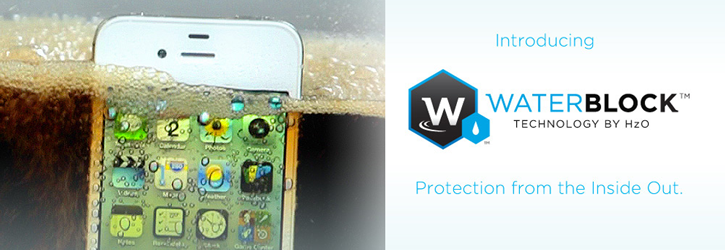
HzO is the developer behind WaterBlock, a special coating that uses nanotechnology to make sure our favorite electronics stay working no matter what liquid we try to drown them in. HzO has been making the rounds of all of the technology trade shows this past year and has one numerous awards. Check out this video and you’ll easily see why:

QTOOTH had the honor of being an official media partner for the 2013 Wearable Technologies Conference. that was held as part of the Taiwan International Cloud Technology & Internet of Things Show. One of the cool things that was on display was the amazing properties of HzO’s waterproofing technique. I’ve certainly lost at least one cell phone to water immersion and, as a lifetime musician, have had at least several prized pieces of musical equipment ruined by the careless drink “placement” of excited audience members. Where were you then, HzO, where were you then?

How does it work? HzO uses a vapor process that allows a layer of their organic polymer coating to form a barrier around every component of a device, This makes it not only liquid proof, but also virtually eliminates humidity and corrosion from wreaking havoc with these sensitive, and often expensive, pieces of technology. And we’re not talking mere water resistance, either. We’re talking water immersion. HzO’s WaterBlock technology can even work at considerable depths. In fact, it seems the pressure of the deep will probably have an effect on crushing the device before the waterproofing give out.

There are two things we wanted to bring focus to concerning HzO’s WaterBlock. First, most wireless devices that we enjoy here at QTOOTH are meant for real world living. If wireless technology makes things wearable and integrated into everyday devices (a la Internet of Things) then they will absolutely need to be waterproof. Second, we are on this quest of making technology transparent and unobtrusive. Being toxic to the environment is hardly being transparent or unobtrusive. Luckily, HzO makes the point that their coating, which is made of organic polymer,  has been FDA approved for use as “non-hazardous,” certifying each ingredient as being both non-toxic and bio-compatible for use in medical devices, such as implants inside the human body. Plus, Hzo Makes the point that the fewer electronics that are being dying prematurely due to immersion in liquid, the fewer devices end up a e-waste in landfills. Sounds good to us!

So when can you get your devices coated? Unfortunately not yet. HzO is focusing on working with manufacturers on new devices. They fill they can have the biggest, most pervasive effect by working with manufacturers during the assembly process so that their coating is done correctly from the start and performs to their high expectations. Perhaps someday soon either they’ll license it or develop a program that will retro-waterproof our current devices. But at least it’s good to know that in the near future, more and more of our devices will already be waterproof. In fact, we might just assume that they all are. Let’s hope so! Until then, where’s my clunky Otterbox for my iPhone…?

[amzn_product_inline asin=’B00AK1GN4Q’]

[amzn_product_inline asin=’B00B59NKRK’]

[amzn_product_inline asin=’B00EEB5NWG’]

Filed Under: Featured Content, Tech Talk

Why Apple’s iBeacon May Mark the End of NFC

2013-09-20

iphone5c-selection-hero-2013What is iBeacon? And why do most of us not have a clue as to why it is so important to… well, pretty much everyone?

Face it, we are all used to Apple putting on one heck of a show when it releases some new revolutionary product. They are so good at it that, even if you are a pretty low tech kind of person, it is hard to avoid hearing the news. Well here’s one that they have barely mentioned in their last to big product reveals: iBeacon. Although iBeacon showed up in a slide during their Worldwide Developers Conference last June as a feature of their new iO7 mobile operating system, it wasn’t mentioned at all during that products presentation. And what did they say about it last week when they revealed the new line of iPhones that sport the new system? Nothing!

This is amazing since it could lead to a huge wave of new apps for such things as indoor mapping, in-store marketing, mobile payment systems and will probably make a true “internet of things” possible even sooner. Perhaps it is because it isn’t news for the general public yet. Apple is probably more concerned with creating an environment of applications and partnerships with other companies to ensure adoption. Only then will they really have something that is easy to demonstrate to their end-user. However it is a HUGE deal to companies that want to leverage it for their own uses. Here’s a video from one of those companies, Estimote, that also does a good job of showing a few of the many ways that iBeacon can be used:

So, What is iBeacon?

iBeacon uses Bluetooth Low Energy, otherwise known as BLE, and creates a beacon around a physical area so that an app can be alerted when a user enters them. The beacons come in the form of small wireless sensors which, when placed inside any physical space, will transmit data to your iPhone using Bluetooth.

The most used real-world example of this is typically when a person goes to a store with the new Apple iPhone 5s that comes is equipped both iO7 and iBeacon.  When they enter the store’s beacon field it can interact with the iBeacon on their phone and give them customized information such as special promotional offers, directions to where the product they wish to purchase is located, or recommendations based on their current location or purchasing history. This is what is known in the industry as “personalized microlocation-based notifications and actions”. doesn’t exactly roll off the tongue does it? Perhaps that’s why Apple is waiting to slowly roll out this new concept to the public. Something this new, complex and pervasive could be perceived as being scary and big brother-ish as much as empowering.

As a note on the empowerment side: it has been shown that the iBeacon can actually communicate in both directions. In other words when you go into that fictitious store or restaurant, what if you and your phone communicated to them, “I’m not buying today” or “I’m looking for a new shirt in a large” or “I’m vegan”. Then they can accommodate you and provide you with a higher level of service without the hassle or miscommunication.

These days everyone in the tech world is hot for context. This means that they want to provide or take advantage of information that is placed within real world context. This gives the information real value. A system like the one that iBeacon promises can provide this type of contextual information when it is needed. Just like one of the more common uses for NFC, or Near Field Communication, iBeacons will even allow you to make payments using your smart phone. Here’s where it gets good: iBeacon runs on a single coin battery that can run for up to two years and includes an accelerometer, flash memory, a powerful ARM processor and Bluetooth connectivity. And the more sensors that are added to a system the better and more precise the context will be provided to the iBeacon.

What is NFC and Why is iBeacon Better?

NFC, otherwise known as Near Field Communication, is a very low power, short range form of wireless. It’s primary use so far has been for exchanging information and files between smartphones and as a means of using the phone to transfer funds at a payment terminal. There are a couple of significant limitations with NFC. It’s real world range is less than 2 inches (4cm). That means that when it is used to communicate with sensor tags in an environment like a retail store, the user has to be within 2 inches for it to communicate. The range for an iBeacon is up to 165 feet (50 meters). Another limitation is that NFC functionality on a phone requires its own chip. This chip is in addition to the ones already included on a device that will almost always have Bluetooth as well. Why not take advantage of a Bluetooth chip that is already there instead of adding another one?

Google and NFC Versus Apple and Bluetooth

What we are really witnessing is a war between Google and their support of NFC and Apple and their support of BLE (also known as Bluetooth 4.0 or Bluetooth Smart). Google has only started to support BLE with the release of Android version 4.3 and this was only done under extreme pressure from app developers. Many app developers couldn’t create their products for Android phones because of the lack of BLE.

Meanwhile Apple had been mysteriously avoiding NFC. Even when the iPhone 5s and 5c rolled out recently many were confused by its lack of NFC support. But as we start to wrap our heads around iBeacon and what it means and what it can do, it is easy to understand why. They do not feel the need to support yet another form of wireless and are committed to Bluetooth and WiFi. In the words of Apple’s mobile development chief Craig Federighi, “There’s no need to wander around the room, bumping your phone”. ANd Apple’s AirDrop allows their phones to share files across WiFi, so unless you are in a remote part of the ocean, why bump phones together? We agree! Between NFC, gesture controls, and the crazy smart watch phenomenon, we at QTOOTH are wondering what’s up with all this hands on approach to technology? Wireless is what will make our world hands-free so we can use them for more important things, like sports, hobbies, carrying things or holding hands! (Hey, why not? I guess we’re romantics at heart!)

Conclusion

There’s a few more things that iBeacon will do that NFC can’t: indoor mapping with navigation (hey, I’m in aisle 5!), share files with ANYONE on ANY PLATFORM using BLE, and the promise of making the sensors ever smaller and less obtrusive.

There’s the wise view of “the world is what it is, not as it should be”. QTOOTH is gonna go out on a limb and say how we think it should be: iBeacon in. NFC out.

Filed Under: Featured Content, Mobile, News, Tech Talk

What is Bluetooth Wireless Technology ?

2013-08-19

Bluetooth Technology Basics:

Bluetooth is a form of short-range wireless communications technology that is simple and easy to use, secure, and found in an increasing array of devices. Literally billions of devices ranging from cell phones, tablets and computers to home entertainment products, game consoles and medical devices. The reason Bluetooth was created was to replace the cables connecting devices, while maintaining high levels of security.

Bluetooth technology was developed around three main criteria: robustness, low power, and low cost. By requiring manufacturers and developers of compatible devices to adhere to a uniform Bluetooth Specification a wide variety of devices are able to connect and communicate with each other.

“Pairing” refers to when two Bluetooth enabled devices connect to each other. Because of its features and its global acceptance, any Bluetooth enabled device, in almost location anywhere in the world, can connect to other Bluetooth devices as long as they are located relatively close to one another.

When Bluetooth devices connect to each other wirelessly they form a short-range temporary network that is called a “piconet”. These devices can be setup by the user to automatically connect or disconnect to these piconets at any time, whether on command or by simply moving in and out of the range of the piconet’s wireless range.

Each device in a piconet can communicate simultaneously with up to seven other devices within that same piconet. Each device can also belong to several piconets at the same time. This means Bluetooth devices can connect to each other in virtually an infinite number of ways.

A key strength of Bluetooth wireless technology is the ability to handle data and voice transmissions at the same time. Bluetooth can be used to create devices that will perform a near limitless variety of tasks. Good examples would be hands-free headsets for voice calls, printing and fax capabilities, synchronization of PCs and mobile phones, device controllers for video games, remote access to environmental controls, and more. Bluetooth promises to be at the very heart of achieving the “Internet of Things”, where almost any device in our day-to-day lives can be accessed from anywhere in the world and controlled wirelessly through the internet.

Bluetooth Core Specification:

Unlike other wireless standards the Bluetooth Core Specification provides developers with both link layer and application layer definition in order to support both data and voice applications. For more information visit the Bluetooth.org website (some sections of the site require a password which can be obtained by becoming a member of the Bluetooth Special Interests Group, or BSIG).

Wireless Signal;

The Bluetooth wireless signal operates in the unlicensed industrial, scientific and medical (ISM) band, between the 2.4 to 2.485 GHz range. The 2.4 GHz ISM band is available and unlicensed in almost all countries. Bluetooth makes use of a spread spectrum, frequency hopping, full-duplex signal at a nominal rate of 1600 hops per a second. Because it can detect other signals within its operating spectrum it can avoid them, allowing for a minimum of interference from other wireless signals that may be already exist in the immediate environment. By using adaptive frequency hopping, otherwise known as AFH, it can constantly shift from one frequency to the next and make it very difficult for hackers to intercept or corrupt the signal. This adds an extra layer of security for the users of an enabled device.

Range:

The effective range of Bluetooth wireless technology depends on its application.  The Core Specification requires a minimum range of 10 meters, or just over 30 feet. However, there is no predetermined limit and manufacturers can modify the range to support the how their application will be used.

Bluetooth devices are typically rated as being of one of three Classes which gives an indication of both their range and their power consumption:

Class 3: Has a range of up to 1 meter, or 3 feet
Class 2:  Has a range of 10 meters, or approximately 33 feet (most common class found in mobile devices)
Class 1: has a range of 100 meters, or just over 300 feet (primarily used in industrial applications)

Power:

The most commonly used signal is Class 2. It uses a mere 2.5 mW of power. Since most application are battery powered, Bluetooth technology is designed to have very low power consumption. This is reinforced in the specification by allowing Bluetooth radios to be power down when inactive for certain periods of time.

Bluetooth Low Energy technology, optimized for devices requiring maximum battery life instead of a high data transfer rate, consumes between 1/2 and 1/100 the power of classic Bluetooth technology.

It is because of these low power specifications that Bluetooth is widely considered to be the ideal wireless solution for devices that are meant to be safely used on or near the human body, especially over extended periods of time.

[amzn_product_inline asin=’B0054JJ0QW’]

[amzn_product_inline asin=’B005IMB5NG’]

Filed Under: Featured Content, News, Tech Talk

  • « Go to Previous Page
  • Page 1
  • Interim pages omitted …
  • Page 3
  • Page 4
  • Page 5
  • Page 6
  • Page 7
  • Interim pages omitted …
  • Page 10
  • Go to Next Page »

Primary Sidebar

Affiliate Disclosure

This website uses affiliate programs for monetization. At no additional cost to you, links to various sites mentioned in posts may result in a commission that is credited to this site if you make a purchase.

Some affiliate programs and affiliations include, but are not limited to, Commission Junction, Apple, Google, Amazon.com and more.

For complete details
click here.

Copyright © 2026 · Preferred Hosting by WP Engine and Domain Name Registry by Namecheap

We are using cookies to give you the best experience on our website.

You can find out more about which cookies we are using or switch them off in .

QTOOTH
Powered by  GDPR Cookie Compliance
Privacy Overview

This website uses cookies so that we can provide you with the best user experience possible. Cookie information is stored in your browser and performs functions such as recognising you when you return to our website and helping our team to understand which sections of the website you find most interesting and useful.

Strictly Necessary Cookies

Strictly Necessary Cookie should be enabled at all times so that we can save your preferences for cookie settings.

3rd Party Cookies

This website uses Google Analytics to collect anonymous information such as the number of visitors to the site, and the most popular pages.

Keeping this cookie enabled helps us to improve our website.

Additional Cookies

This website uses the following additional cookies:

(List the cookies that you are using on the website here.)