• Skip to primary navigation
  • Skip to main content
  • Skip to primary sidebar

QTOOTH

News & Reviews for Living with Bluetooth Wireless

  • Reviews
    • Wearable
    • Gaming
    • Health & Fitness
    • Home & Office
  • How To Tips
  • Industry News
  • About QTOOTH

Health & Fitness

Rockin’ Out Wire-Free: A Review of the KTGEE Wireless Earbuds

2024-03-15

ktgee bluetooth 5.3 wireless earbuds in pink shown worn in-ear by happy woman qtooth-review

As a self-proclaimed music addict and someone who craves convenience, wireless earbuds have become my go-to audio accessory. I’ve owned more than a few pairs of Apple Airpods, in both the standard and the Pro versions. They are fantastic and work seamlessly. However, until somebody, somewhere, bothers to make headsets with user replaceable batteries, none of them lasted me beyond two years. And typically less. How are non-replaceable batteries still a thing in almost all of our modern devices? And none of them are recyclable. Are we to treat everything we own as disposable? But until that changes, it can be very costly buying a new pair once every year or two. So, after countless hours spent researching and reading reviews, I finally snagged a pair of the much-talked-about KTGEE Wireless Earbuds, and let me tell you, they’re a game-changer. For as little as 1/8th the cost of the Apple AirPods or AirPods Pro, these little wonders do a heck of a job. Buckle up, music lovers, because I’m about to dive deep into my experience with these little powerhouses of sound.

Specs at a Glance:

  • Bluetooth 5.3 connectivity
  • 40 hours of playtime (with charging case)
  • IPX5 sweatproof rating
  • 13mm dynamic drivers
  • Touch controls for playback, volume, and calls
  • Type-C charging port
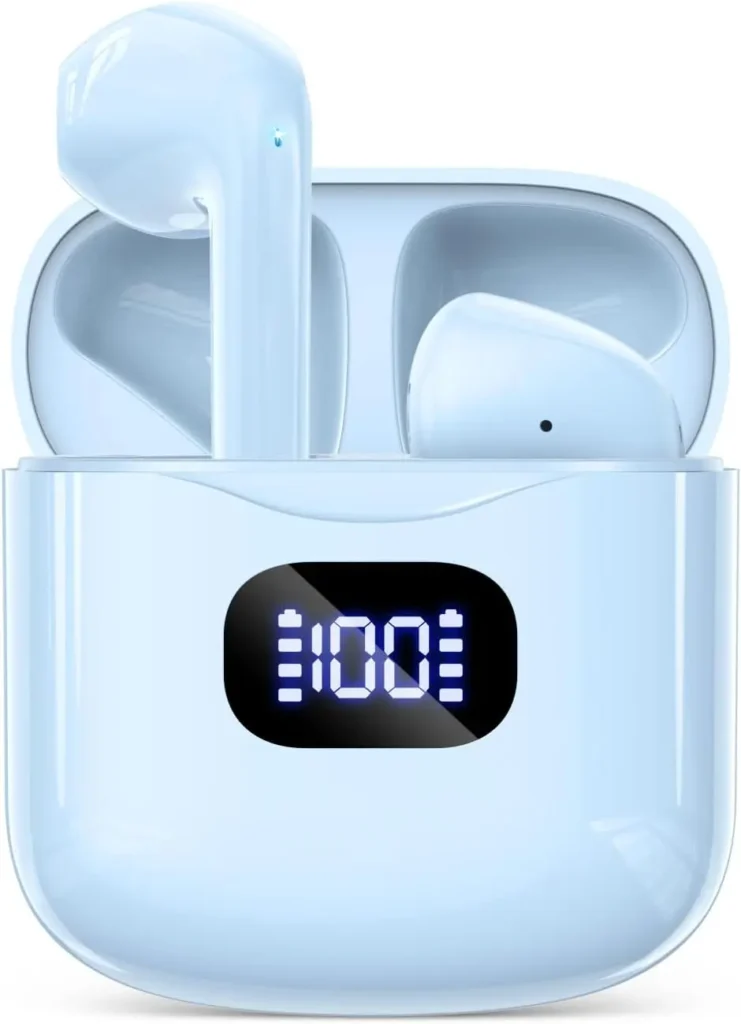
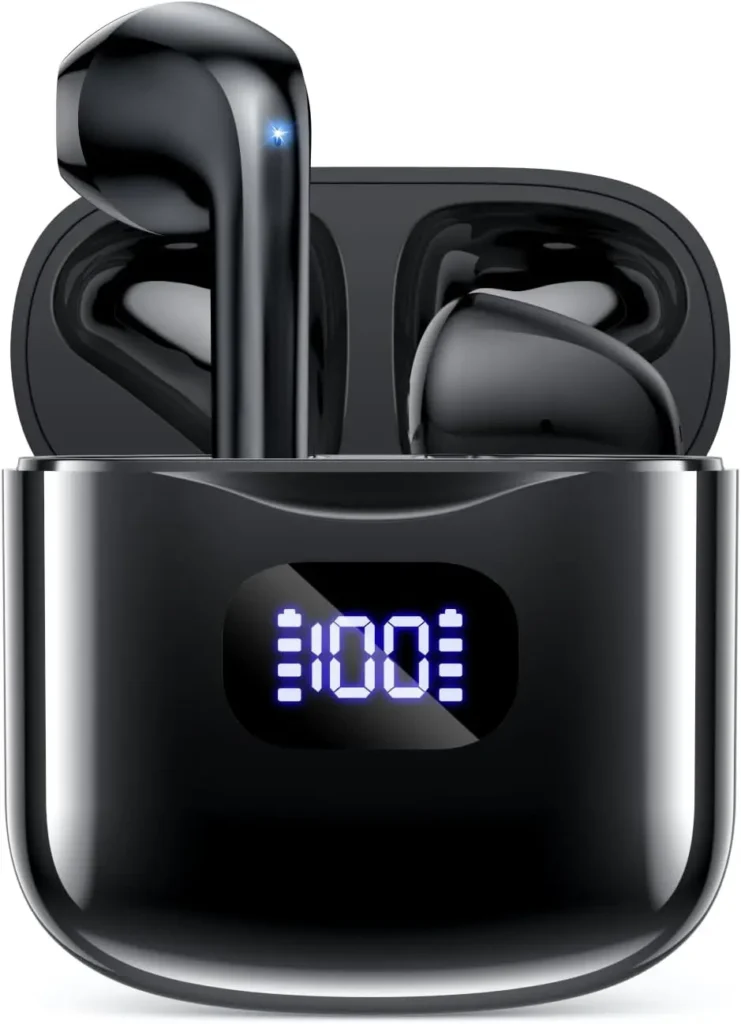
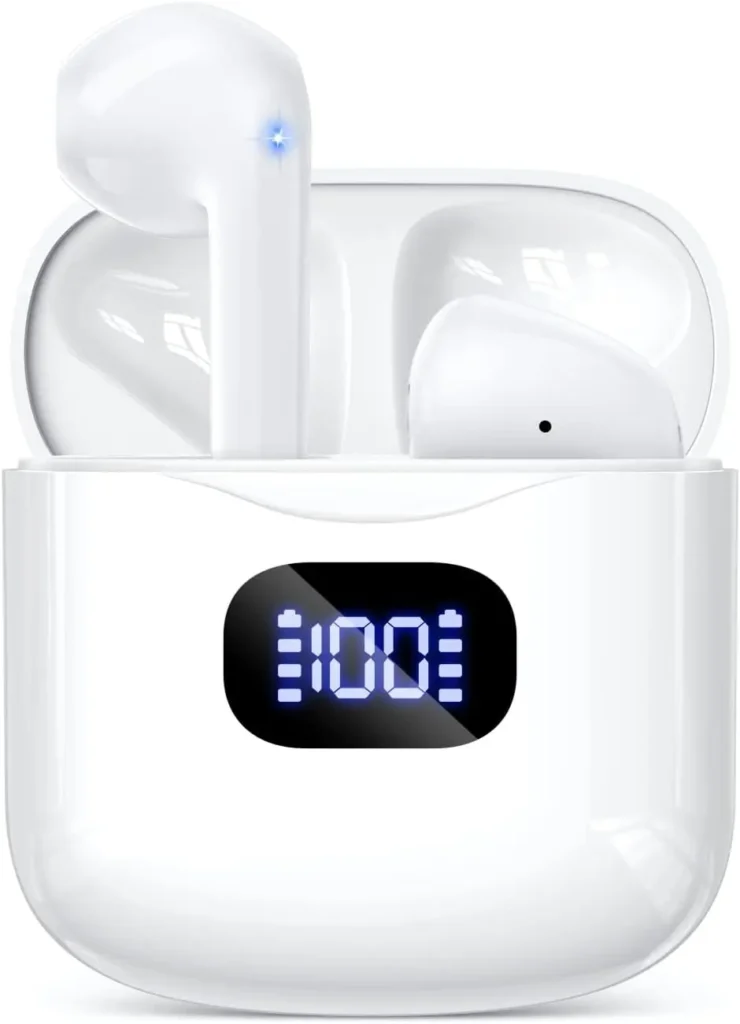
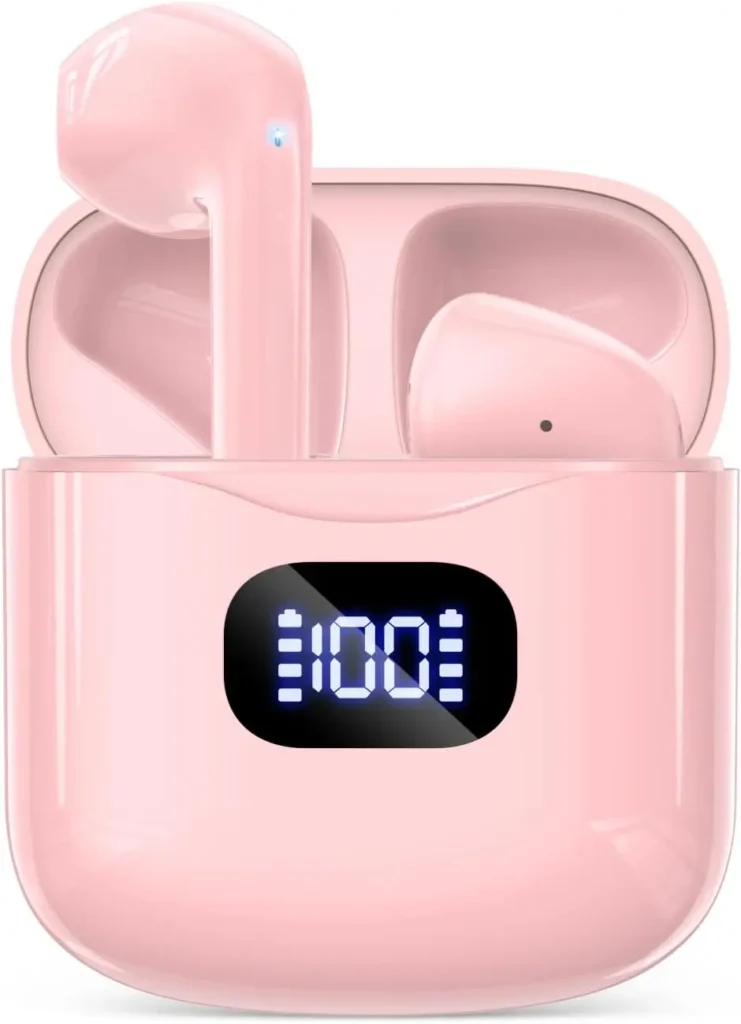
  • LED display for battery life
  • Available in 4 colors: white. black, blue and pink. That’s something Aplle may never offer for their earphones!
3 Cons to Consider:

  1. Sound Isolation Isn’t Stellar: While the sound quality is impressive for the price, these earbuds don’t offer much noise cancellation, especially compare to the Apple AirPods Pro. If you crave complete silence while you jam, they may be the better choice. On noisy commutes or in crowded spaces, some ambient sound will seep in.
  2. Comfort Might Not Be for Everyone: Much like the Apple AirPods, these come as a one size fits all. Personally, I achieved a comfortable seal. However, for those with smaller or sensitive ears, prolonged wear might cause some discomfort.
  3. Microphone Quality Could Be Better: During calls, the microphone picked up my voice clearly, but background noise was also quite noticeable. While perfectly usable for quick chats, the mic quality might not be ideal for important calls in noisy environments. This is in contrast to even the standard set of AirPods that feature noise cancelling microphones to improve call quality.

3 Pros That Shine:

  1. Battery Life is a Beast: 40 hours of playtime is no joke! I can go days without needing to recharge the case, which is a major win for someone who’s always on the go. Plus, the handy LED display keeps me informed about the remaining juice. This is much better than the current offering of Apple at any level.
  2. Sound Quality Punches Above Its Weight: Don’t underestimate these little earbuds! The 13mm drivers deliver surprisingly rich and balanced sound, with punchy bass and crisp highs. Whether I’m rocking out to upbeat tracks or indulging in acoustic melodies, the audio is clear and enjoyable.
  3. Convenience King: Ditch the tangled wires forever! These earbuds connect seamlessly to my phone via Bluetooth 5.3, offering a stable and lag-free connection. The touch controls are responsive and intuitive, allowing me to control music, volume, and calls without fiddling with my phone. In fact, it these offer even better ready access to more control commands than the Apple earphones.

ktgee bluetooth 5.3 wireless earbuds in white shown worn in-ear by happy woman enjoying music qtooth-review

The Verdict: A Solid Choice for Budget-Conscious Audiophiles

While the KTGEE Wireless Earbuds aren’t perfect, they offer exceptional value for their price. The long battery life, impressive sound quality, and convenient features make them a strong contender for anyone seeking a reliable and affordable wireless listening experience. If you can manage the slight sound leakage and prioritize long-lasting battery and clear audio, these earbuds are definitely worth considering. However, if you require top-notch noise cancellation or crystal-clear microphone quality, you might want to explore other options, including the AirPods.

Bonus Round: Real-World Usage Scenarios and a Special Deal

  • Gym Rat Approved: The sweatproof design held up admirably during my intense workout sessions. No need to worry about sweat ruining these little gems!
  • Commuting companion: Even on a noisy subway, I can still enjoy music because the audio quality is enough to mask most ambient noise
  • Workday Wonder: The intuitive touch controls made multitasking a breeze, allowing me to answer calls and adjust volume without interrupting my workflow.

Overall, the KTGEE Wireless Earbuds have become my go-to audio companions. They’re not without their flaws, but their strengths far outweigh them, making them a solid choice for music lovers on a budget. So, if you’re looking for a wire-free listening experience that won’t break the bank, give these earbuds a try! You might just be surprised by how much you love them. Oh, and they even sell these in a pair of pairs too, in case you want to grab them in different colors.

Filed Under: Entertainment, Headsets, Health & Fitness, Home & Office, Mobile, News, Reviews, Wearable

Misfit Introduces Shine 2 Fitness and Sleep Monitor

2015-10-26

Misfit recently announced Shine 2, the next generation of the award-winning Shine Fitness and Sleep Monitor. Fully redesigned and enhanced, Shine 2 leverages the best of Shine’s elegant aesthetic and introduces powerful new functionality.

Misfit Shine 2Shine 2 tracks activity and sleep more accurately with a 3-axis accelerometer and newly added 3-axis magnetometer. Users can now easily see progress and tell time in a halo of rainbow-colored lights, or get motivated with Misfit Move, a feature that encourages you to be active with a vibrational nudge. Text and call notifications and a silent vibe alarm are also new with Shine 2.

Shine 2 incorporates more advanced hardware and firmware—which means dramatically improved touch responsiveness with capacitive sensing technology, faster syncing, and extended Bluetooth range. Its 12 lights display over 16 million colors and are bright enough to be seen in direct sunlight.

Compatible with Misfit Link, the groundbreaking software experience, Shine 2 is more than just an activity tracker—it’s now a remote to connect with the world around you. Communicate with friends, turn your lights on, change your music, take a selfie, and more, all with a triple tap.

Misfit Shine 2Shine 2 references Shine’s iconic original design but features an even thinner aircraft- grade aluminum body, while retaining its signature 6-month battery life, 50 meters water resistance, and modular design. Wear it anywhere, all the time, without having to charge it.

“We’ve packed a lot into Shine 2, adding more functionality into an even thinner form factor with the same battery life, ”said Adam Mack, Misfit’s Director of Mechanical Design. “We didn’t compromise on craftsmanship or the user experience.”

Shine 2 comes in [easyazon_link identifier=”B015NUQYTC” locale=”US” tag=”uneomediacom-20″]Rose Gold[/easyazon_link] and [easyazon_link identifier=”B015NUQYQA” locale=”US” tag=”uneomediacom-20″]Carbon Black[/easyazon_link], is now available for purchase on misfit.com for $99.99, and will be available in retail locations worldwide in November.

About Misfit
Misfit invents and manufactures wearable and smart home products. The company was founded by Sonny Vu with John Sculley, the former CEO of Apple and Pepsi, and Sridhar Iyengar, co-founder of AgaMatrix and Elemental Machines.

Filed Under: Health & Fitness, News, Wearable

Bluefingers Labs Introduces Smart Headband on Indiegogo

2014-04-16

Photo: Bluefingers Labs UK

Billing itself as “The Worlds First Wireless Sports Headband”, England’s Manchester-based Bluefingers Labs have launched a new campaign on Indiegogo in order to raise funds to produce their new Smart Headband™. As you may recall, QTOOTH was a really big fan of their first product, the Smart Beanie. The beanie was simple, easy to use and good looking. It’s great to see them branching out into other products.

https://www.youtube.com/watch?v=mmCk4JtmbLY

The Smart Headband™ uses Bluetooth wireless to control integrated dynamic-stereo speakers and a discretely hidden microphone. This piece of wearable technology has been specifically designed for active use and it is Bluefingers Labs hope that users find it great for both sports and leisure activities. It should also make a great fit under a helmet, whether it’s for cycling or other sports.

Photo: Bluefingers Labs UK

Smart Headband™ will sync to your Bluetooth device and in few seconds your phone calls and tunes are available straight from your head gear. They’ve kept the design and layout very logical to make operating the controls as user-friendly as possible. The headband as features a technical sport fabric that is not only breathable, wind-proof and water and sweat resistant, but is fully washable to stay fresh after extreme workouts. Easily rechargeable using a USB cable, the Bluefingers Smart Headband has 60-hours of standby time and up to 6-hours of talk time.

Photo: Bluefingers Labs UK

We’ve seen other “smart” headbands on the market, but they were mostly just variations on a traditional wireless headset. It’s great that Bluefingers has seen fit to incorporate the microphone and the ability to make phone calls. We do hope that they’ll start to make these products truly “smart” by adding other sensors that could track things like heart rate and other biometrics. Maybe in some of their future versions, but these are a great start.

Photo: Bluefingers Labs UK

Speaking of smart, it’s great news that their products will soon be distributed in the US. This should help Bluefingers find a much larger market. In the meantime, give’em a go and check out their campaign on Indiegogo.

[easyazon_block add_to_cart=”default” align=”center” asin=”B009L7G8GI” cloaking=”default” layout=”left” localization=”default” locale=”US” nofollow=”default” new_window=”default” tag=”uneomediacom-20″]

[easyazon_block add_to_cart=”default” align=”center” asin=”B00FDWN8RM” cloaking=”default” layout=”left” localization=”default” locale=”US” nofollow=”default” new_window=”default” tag=”uneomediacom-20″]

[easyazon_block add_to_cart=”default” align=”center” asin=”B00A17I9AK” cloaking=”default” layout=”left” localization=”default” locale=”US” nofollow=”default” new_window=”default” tag=”uneomediacom-20″]

Filed Under: Health & Fitness, News, Wearable

New Smartwatches: The Debut of Samsung Gear 2 and Gear 2 Neo

2014-02-25

Samsung Gear 2 and Gear 2 NeoSamsung is using the Mobile World Congress that is being held in Barcelona this week to reveal its latest line of innovative products. First up was an update on their Galaxy Gear Smartwatch. Introduced in 2013, the original version was mostly greeted with indifference by the general press but found a lot of admirers among a growing user-base of dedicated fans. Samsung has shown that there is a viable market out there for smartwatches. These latest entries, the Gear 2 and the Gear 2 Neo, should help to further add to their level of acceptance.

By Any Other Name… and Oh, and What’s Tizen?

The first thing that gave an indication that serious changes were to be found was that Samsung has dropped “Galaxy” from the name. The two new smartwatches go simply by the names Samsung Gear 2 and Samsung Gear 2 Neo. This is most likely because Samsung wants to differentiate them from the rest of the Galaxy line up, like the S4 and new S5 smartphones. The reason, and perhaps the most important thing to know, is that these watches are no longer Android-based devices. Instead, Samsung has opted to switch to the open source, Linux-based mobile operating system known as Tizen.

tizen-logo-qtoothTizen isn’t that well-known outside of developers’ circles yet, but it is a very promising platform that may attract app developers who do not want to work within the constraints set by Apple for iOS or Google for Android. This will also help Samsung move yet one step further away from those two companies who are in effect their rivals. Samsung has been experimenting with smartphones based on Tizen, but they are smart enough not to release a phone to the market until there is enough of an ecosystem of apps to support it. Android and iOS have millions of apps, many of them free. Any phone attempting to compete will need to have a full complement of full featured, powerful apps. A lack of app choices is one of the main things holding back Windows and Blackberry phones from finding more of an audience. App development for these two new smartwatches may be Samsung’s way of laying the perfect foundation for building a Tizen-based ecosystem. We’ll see how things develop over the next year or two, but this move could prove very forward-thinking on the part of Samsung. However, users of the Gear 2 and Gear 2 Neo will not notice this switch. The nature of a smartwatch is much different than a phone. Wearable technology tends to focus on doing a limited number of tasks really well and Samsung already has this covered with over 100 available apps. It is also going to release an SDK (software developers kit) so third party developers can get in on the action.

What’s the Difference Between the Gear 2 and the Gear 2 Neo?

There are really only two differences between the Samsung Gear 2 and the Gear 2 Neo. The Gear 2 has a camera and the Gear 2 Neo does not. The Gear 2 has a brushed metal body and the Gear 2 Neo has a plastic body.

Samsung Gear 2 and Gear 2 Neo

What Makes the Samsung Gear 2 and Gear 2 Neo Different from the Original Galaxy Gear?

Well first, let’s start off with what’s the same: The display is still a 1.6-inch Super AMOLED screen with a 320×320 pixel resolution, the RAM is still at 512MB, internal storage remains at 4GB,  and they still work on Bluetooth 4.0. Just about everything else has changed.

The biggest improvement came from listening to the feedback of users of the the original Galaxy Gear. The camera, microphone, and antennae were all originally located on the strap. For the camera, this meant that shooting pictures required holding your wrist and arm at an odd angle. In order to speak into the device, the user had to flip their wrist over away from the watch face and the speaker because the microphone was located on the clasp of the strap. And because the camera, microphone, and antennae needed to maintain their electronic connections to the body of the watch, this setup prohibited the wearer from changing out the strap for different styles. The Gear 2 and Gear 2 Neo have moved all of these components to the body of the watch itself. This has made for a much improved shooting angle for the camera on the Gear 2 and, for both models, an easier time using the microphone while listening to the speaker and the ability to swap out the straps for any traditional watch wristbands on the market. This will help the user to truly customize the look of the watch. Plus, they’ve also added a couple of new watch body colors into the mix.

What else has changed besides the OS and the interchangeable straps? Processors have been improved from an 800MHz single core to a 1GHz dual core. A Bluetooth music player is included so that the user can stream music stored on their watch to any Bluetooth compatible audio system without the need for their phone. This could be handy for working out without worrying about carrying a phone. They also come with a built-in infrared projector which allows the included app to turn your watch into a remote for TVs and other entertainment systems.  Because it is one of the most used functions of any existing wrist-mounted wearable tech, a heart rate monitor and its accompanying app are also included. The screen glows when you tell it to check your vitals, pulsing every 90 seconds. If you use it with one of the personal coaching apps it will use haptic feedback, otherwise known as a vibration alarm, plus on-screen notifications to let you know you should pick up the pace.

Samsung Gear 2 and Gear 2 NeoThe size of these devices has also gotten a little smaller. Because it lacks a camera, the Gear 2 Neo is slightly smaller than the Gear 2. Both of the new units are also smaller than the original Galaxy Gear. This is due in part to the fact that the new versions have a slightly smaller battery. This has caused some to be concerned about battery life and how often they will need to be recharged. The original Galaxy Gear initially had issues with short battery life until a software update increased the average time to about a day to a day and a half. However, Samsung promises that the new devices will last between two and a half to five days between charges. this is most likely because of the new Tizen operating system. The smaller sizes also mean less weight. The Gear 2 is about 10% lighter and the Gear 2 Neo is about 25% lighter than the original Galaxy Gear. This should help improve comfort and their long term wearability.

The body of both versions is IP67 certified for dust and water resistance. This means that they can be submerged in water for up to 30 minutes at a depth of 3 feet/1 meter and should suffer no ill effects. This isn’t foolproof, but it is a great improvement and helps safeguard against one of the most common threats to electronics that no one likes to talk about or even think about… landing in a toilet. It also means that showering with it on should be okay.

Samsung Gear 2 and Gear 2 NeoWill the Samsung Gear 2 and Gear 2 Neo Work with My Device?

In addition to the new Samsung Galaxy S5, the Gear 2 series will work with Samsung’s Galaxy S III, Galaxy S4, Galaxy S4 Mini, Galaxy S4 Active, Galaxy S4 Zoom, Galaxy Mega, Galaxy Note 2, Galaxy Note 3, Galaxy Note 10.1 2014 Edition, Galaxy Note Pro, and Galaxy Tab Pro (12.2, 10.1, 8.4).

How much will the Gear 2 and Gear 2 Neo Cost?

Samsung hasn’t released any final pricing on these yet, but consensus says that the Gear 2 will probably be about the same as the current Galaxy Gear at $299 and the Gear 2 Neo is expected to be about $100 less. Although a specific date hasn’t been released, Samsung says that both models will be available for sale in April.

Do I Need a Gear 2 or a Gear 2 Neo Smartwatch?

This is a question many people are asking, even those who make these things! Traditional watches have fallen out of widespread use in general. We have clocks everywhere, on our car dashboards, on our appliances, and especially on our computers, tablets and phones. However, there are still quite a few people who do wear them, and the added functionality that a smartwatch provides may entice a few more to start wearing them again. They may never gain as much market share as a smartphone, but they do have their place and only time will tell how big the audience is. No matter what the answer ends up being, smartwatches will most likely be here to stay, in some form or another.

[easyazon_block add_to_cart=”default” align=”center” asin=”B00FH9I0FQ” cloaking=”default” layout=”left” localization=”default” locale=”US” nofollow=”default” new_window=”default” tag=”uneomediacom-20″]

[easyazon_block add_to_cart=”default” align=”center” asin=”B00BKEQBI0″ cloaking=”default” layout=”left” localization=”default” locale=”US” nofollow=”default” new_window=”default” tag=”uneomediacom-20″]

[easyazon_block add_to_cart=”default” align=”center” asin=”B00FI1678A” cloaking=”default” layout=”left” localization=”default” locale=”US” nofollow=”default” new_window=”default” tag=”uneomediacom-20″]

Filed Under: Featured Content, Health & Fitness, News, Wearable

The Dash – The Latest Entry in the Dawn of the Smart Headphone

2014-02-16

The latest product to make a splash on Kickstarter as of last week is The Dash, an in-ear wireless headphone. The Dash looks to be a strong entry into the growing class of devices known as smart headphones. In order to make the device qualify as “smart”, the creators of The Dash have included a variety of sensors that can be used to track the wearers health and to communicate and control connected devices wirelessly.

Although we have some questions about some of its component and design choices, the device shows a tremendous amount of promise. Here’s their promo video and info direct from their Kickstarter campaign:

bragi-dash-details-chart-qtoothbragi-dash-inside-details-chart-qtooth

Click for Zoomed View
Click for Zoomed View of Internal Components

Overall we are incredibly impressed with their choices of components and the featured functionality of The Dash. Here are what we think are some of the pros:

  • CSR’s AptX circuitry – for delivering quality audio over Bluetooth
  • The use of 3-axis and accelerometer sensors in both the left and right ear buds for greater accuracy of motion tracking
  • Onboard media/music storage (4GB) and playback for greater audio quality than available over Bluetooth and use even when not connected to another device or smart phone
  • The ability to use the built-in ambient mic to listen to the immediate environment – a great safety feature for when the ears are plugged by use of the device
  • The ability to turn features on and off via an app – Currently the practical battery charge is about 3 hours when all of the internal circuitry is on and working. Turning of functions that aren’t currently being used will allow the battery life to be extended
  • A companion storage case that will be able to recharge the ear buds within an hour several times before it too needs to be recharged

Here are some of our potential cons. Since the device may evolve yet before its official introduction to the world, and since we have not personally tried The Dash, these questions may not add up to a hill o’ beans. Here they are any way:

  • The use of an ear bone microphone for speech – In our experience, we are yet to find an ear bone microphone that really works well, especially for communicating speech. Microphones and speakers that rely on bone conduction are usually significantly lacking in treble response. This is where the clarity of any sound occurs and how we can differentiate one consonant sound from another. Without those high frequencies clearly articulated “P” can sound like “B”, “T” can sound like “D”, and so on. This can cause a lot of confusion for the person on the other end of the line. Perhaps the folks at Bragi have found the ultimate microphone for this, but there is a reason why Google recently abandoned the bone conduction audio on their much anticipate Google Glass. Used in tandem with a traditional microphone that picks up sound from airwaves, a bone conduction microphone can be a great asset (like the way it is used on the Jawbone headsets). In this case we are skeptical, especially since conduction microphones work best when they are held securely against bone. As far as we can tell, The Dash will mostly be surrounded by the softer flesh and cartilage of the folds of the inner ear. Perhaps they can still make it work in conjunction with their ambient mic? Or at least make it an option?
  • A claim of “waterproof” – Sure, they only claim water resistance to 1m (about 3 feet), but they also claim that it should be okay for daily swimming, albeit with reduced functionality. They also feature pictures of surfing a wave. I’m not sure who only swims to a depth of 1 meter. Diving into a pool, pushing off the wall at the turn of a lap, or getting hit by a wave will probably easily exceed the water pressure of 1 bar/ 1 meter that they claim. It will be interesting to see what real world use of actual customers demonstrates. But just to be clear, we are still thrilled with the direction that Bragi is taking with The Dash. This level of water resistance should mean that getting caught in the rain or keeping the music going or taking a quick call when hitting the post workout shower should be a non-issue.
  • Passive Noise Reduction – This is a rather cryptic way of saying that The Dash works as an ear plug. They lay claim to the fact that this will help isolate the wearer from noise from their environment. True! Bragi does make some effort to differentiate what they are doing from active noise cancellation circuitry, but we just wanted to clarify the terms for those who may be less familiar. Good active noise reduction circuitry will actually do a better job of reducing noise across a broader range of frequencies than an ear plug. Bragi states that they have kept out the more expensive active noise reduction because it would reduce the battery life. This makes sense, especially considering that the size of this device is quite small and leaves little room for the extra circuitry or increased battery size that might be required. We’d also like to point out that although The Dash provides an ambient microphone to help the user stay aware of their surroundings when necessary, this is not as accurate for positioning those sounds within the environment. All of the folds and curves of the human ear are not just there to make them look as pretty as a sea shell, they serve the purpose of helping us locate sounds. Even if a person is deaf in one ear, as long as the other ear is reasonable healthy, human hearing is incredibly accurate in determining location. This is super beneficial for survival and one of the main reasons I never ride my bike while wearing headphones. I rely on my hearing far too much to help me know exactly where that SUV is in relationship to my rear wheel! Even with the ambient mics active, plugging both ears with The Dash will greatly reduce the wearer’s hearing location abilities.
  • Reflectance Pulse Oximetry – Say what?! That’s the fancy term for the technology behind how The Dash measures heart rate and oxygen saturation (the amount of oxygen carried by the blood). Reflectance pulse oximetry uses two tiny LEDs to emit low intensity red and infrared light into the capillaries of the ear. The optical reflection of the emitted light reveals the relative amount of red and white blood cells and can be interpreted as both heart rate and oxygen saturation. So far in, other devices,  this approach has proven to be a less than perfect way to measure this information. Perhaps having it located on the inside of the ear and using whatever associated circuitry Bragi has developed will greatly improve accuracy. We hope so. This is one of the key features of The Dash and helps combine multiple wearable devices into one. We love the idea!
  • Comfort and secure mounting – Bragi claims that the 3 sizes that they offer for the ear molds will comfortably fit 94% of the population. Maybe so, but many other headset manufacturers offer the similar and make the same claim. We’ve found that ALL devices that are stuffed into the ear canal increase our desire to remove them the longer we wear them. And although we believe that The Dash mounts securely in the ear (see image below) we wonder what will happen if we do shake them loose, say when swimming or surfing. It would be nice if they added some optional, secondary means of attachment. Maybe an ear hook or some form of leash? Just a thought…

bragi-dash-in-ear-3-point-mounting-qtooth

So there you have it, our quick take on The Dash. We’re very excited for them and they are absolutely crushing it on Kickstarter. Check them out when you get a chance and maybe get in line for your own pair by making a pledge toward their campaign. We here at QTOOTH will definitely be keeping an ear out for any news as they get closer to release or when they become available next November!

Filed Under: Entertainment, Featured Content, Health & Fitness, Mobile, News, Wearable

Welcome to the Wireless World, Jawbone UP24!

2013-11-20

jawbone-up-orange-iphone-qtoothIt finally happened, the Jawbone UP Fitness Band has joined the world of wireless devices. This is a great move and many might say about time. There were some wrinkles when the UP first came on the market, but we have to give credit where credit is due: The Jawbone UP was one of the very first health tracking devices on the mass market.

Officially called the Jawbone UP24, this new version is touting Bluetooth connectivity. Besides a change in texture,  it is almost identical in appearance to the original versions.

jawbone-up-bands-black-orange-qtoothAs can be expected, adding Bluetooth to the device results in a little bit of a shorter battery life between charges. Originally the UP claimed 10 days per charge, which we found fairly accurate. The UP24 promises to last around 7 days. It will be good to test this out over time. With all things wireless, batteries can be drained more or less depending on how strong the signal needs to be. Environmental conditions and distance to the connecting device may cause this to vary.

Despite the  Jawbone UP24 now communicating wirelessly, it has retained a headphone jack style plug for connecting to its charger. However, it is now a 2.5mm instead of a 3.5mm. That’s fine, but it is interesting to note that it still has an end cap that might get lost during charging. Since all data is only transmitted wirelessly and not through the headphone jack like on previous models, it would’ve been interesting if they opted for a wireless charger. Not only would it be easier to do, but they would be able to truly make the UP24 waterproof. Currently the device is only water resistant.

There is a social component to using the Jawbone UP24 where users can track and compare their progress with friends, teammates, and others. However, the info that is traded is relatively minimal, and there is no way to tell if the person you are competing against is in the same demographic as you, such as sex, weight, height, age, etc… But perhaps this is a blessing in disguise. Besides, in this world of over-sharing nd lack of privacy, maybe there is a line there that needs to be drawn.

jawbone-up-one-million-steps-iphone-qtoothIn general, I feel myself wanting to call the Jawbone UP24 a wellness tracker more than a fitness tracker. Lack of a display for immediate feedback and the fact that it doesn’t connect to a scale for real-time weight, BMI and body fat percentage puts its information at a distance from those who are truly trying to get fit by staying… well, active.

jawbone-up-notifications-iphone-qtoothHowever, there are a few things that the Jawbone UP24 really gets right. It has its own highly functional app that does an amazing job with logging your dietary intake and then making suggestions for better food and beverage choices. It even has a bar code scanning function that allows instant nutritional information on many pre-packaged food products.

jawbone-up-dietary-suggestions-iphone-qtoothAnd after all that exercise and food, who wouldn’t need a nap? The sleep log functions measure the length and quality of your sleep, providing plenty of detailed stats. The Jawbone UP24 will tell you how many times you woke during the night, how much light or deep slumber you had, and how quickly you were able to reach your REM (dream) state.

jawbone-up-bedtime-success-iphone-qtoothUnfortunately, the UP24 has launched as an iOS-only device. For those lucky enough to be on an Apple iOS device, the selection of 3rd party apps is truly deep. However they are promising that Android support should be soon to follow. Like many app creators, Jawbone blames the delay on the difficulty the variety of Android devices that are on the market, as well as the fact that the adoption rate of the latest Android OS is hit or miss and can vary greatly depending on both the manufacturer and the telecom platform. Let’s hope it’s not far behind, because this is a really fun device and it would be great to see more people benefit from its use.

jawbone-up-friendly-apps-iphone-qtooth

Available for $149.99 directly from Jawbone, it should be available at other major retail outlets after November 19th. We’ll try to keep you posted and will list Amazon links below (the current links are for the original hardwired version).

[amzn_product_inline asin=’B00E1QW2IC’]

[amzn_product_inline asin=’B00A17IAO0′]

[amzn_product_inline asin=’B00BB9OWKI’]

Filed Under: Health & Fitness, News, Reviews, Wearable

  • Page 1
  • Page 2
  • Page 3
  • Go to Next Page »

Primary Sidebar

Affiliate Disclosure

This website uses affiliate programs for monetization. At no additional cost to you, links to various sites mentioned in posts may result in a commission that is credited to this site if you make a purchase.

Some affiliate programs and affiliations include, but are not limited to, Commission Junction, Apple, Google, Amazon.com and more.

For complete details
click here.

Copyright © 2026 · Preferred Hosting by WP Engine and Domain Name Registry by Namecheap

We are using cookies to give you the best experience on our website.

You can find out more about which cookies we are using or switch them off in .

QTOOTH
Powered by  GDPR Cookie Compliance
Privacy Overview

This website uses cookies so that we can provide you with the best user experience possible. Cookie information is stored in your browser and performs functions such as recognising you when you return to our website and helping our team to understand which sections of the website you find most interesting and useful.

Strictly Necessary Cookies

Strictly Necessary Cookie should be enabled at all times so that we can save your preferences for cookie settings.

3rd Party Cookies

This website uses Google Analytics to collect anonymous information such as the number of visitors to the site, and the most popular pages.

Keeping this cookie enabled helps us to improve our website.

Additional Cookies

This website uses the following additional cookies:

(List the cookies that you are using on the website here.)