• Skip to primary navigation
  • Skip to main content
  • Skip to primary sidebar

QTOOTH

News & Reviews for Living with Bluetooth Wireless

  • Reviews
    • Wearable
    • Gaming
    • Health & Fitness
    • Home & Office
  • How To Tips
  • Industry News
  • About QTOOTH

News

Bluetooth SIG Announces Mesh Networking Capability

2017-07-18

Brings proven, global interoperability and the mature, trusted ecosystem of Bluetooth technology to industrial-grade device networks

Kirkland, Washington – July 18, 2017 – The Bluetooth Special Interest Group (SIG) announced today that Bluetooth® technology, the global standard for simple, secure wireless connectivity, now supports mesh networking. The new mesh capability enables many-to-many (m:m) device communications and is optimized for creating large-scale device networks. It is ideally suited for building automation, sensor networks and other IoT solutions where tens, hundreds, or thousands of devices need to reliably and securely communicate with one another.

“By adding support for mesh networking, the Bluetooth member community is continuing a long history of focused innovation to help new, up-and-coming markets flourish,” said Mark Powell, executive director for Bluetooth SIG, Inc. “In the same way the connected device market experienced rapid growth after the introduction of Bluetooth Low Energy, we believe Bluetooth mesh networking can play a vital role in helping early stage markets, such as building automation and wireless sensor networks, experience more rapid growth.”

Industrial-grade solution

Commercial building and factory automation represent major market opportunities for wireless mesh networking technologies. These markets demand true industrial-grade solutions, which Bluetooth mesh uniquely delivers.

  • Reliability: Enables inherently self-healing networks with no single points of failure
  • Scalability: Supports thousands of nodes with industrial-level performance
  • Security: Provides industrial-grade security for protection against all known attacks
    Proven, global interoperability

Time and time again it has been shown that markets flourish when multi-vendor interoperability exists. Bluetooth mesh delivers proven, global interoperability that assures products from different vendors work together.

  • Full-stack solution: A unique full-stack approach that defines the low-level radio up to the high-level application layer, ensuring all aspects of the technology are fully specified
  • Interop-centric specification: Comprehensive, multi-vender interoperability testing is conducted during the specification development process, not after specification release
  • Time-tested tools and processes: A 20-year history of delivering the qualification tools and processes needed to ensure global, multi-vendor interoperability

“Multi-vendor interoperability is a major factor in determining how fast markets develop,” said Russ Sharer, VP Global Marketing and Business Development, Fulham. “Fulham is excited to finally see a wireless, multi-vendor, interoperable standard for lighting controls and we believe Bluetooth mesh networking will greatly expand the size and functionality of the market.”

Mature, trusted technology

Selection of a mesh networking technology is a critical decision for any developer, and it is a make or break factor in the success of a solution. By selecting Bluetooth technology, developers can deliver richer solutions with a faster time to market.

  • Value-added services: A mesh network built using Bluetooth technology can support additional services, such as asset tracking and way finding
  • A mature ecosystem: The Bluetooth ecosystem provides the best enabling technology, along with the tools and services that shrink the time to market
  • Global brand awareness: Bluetooth is a trusted global brand that stands for simple, secure wireless connectivity

“Within the building automation market, there is a growing focus on connected lighting and the role it can play as a platform for providing automation services throughout a facility,” said Szymon Slupik, president and CTO of Silvair and chairman of the mesh working group within the Bluetooth SIG. “A smart lighting platform built on top of Bluetooth mesh networking can also support asset tracking, point of interest, and way-finding services. These value-added capabilities are part of why we believe Bluetooth is an ideal technology for enabling a mesh network.”

Bluetooth Mesh Availability

The Bluetooth mesh networking specifications, as well as the tools required to qualify Bluetooth products with mesh networking support, are now available at the Bluetooth website. Bluetooth mesh networking operates on Bluetooth Low Energy (LE) and is compatible with core specification version 4.0 and higher.

To learn more about Bluetooth mesh, visit bluetooth.com/mesh.

Filed Under: IoT, News, Tech Talk

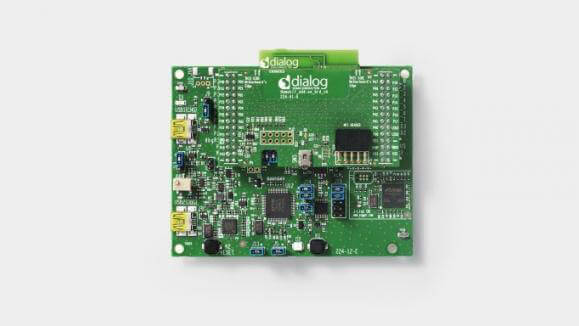
Dialog Semiconductor Ushers in the Bluetooth® 5 Era with SmartBond 5.0 DA14586: Smarter, More Flexible, and Even Lower Power

2017-03-01

One of the 1st Bluetooth 5 qualified SoCs, DA14586 integrates microphone interface for intelligent voice control of cloud connected products w/mic & speaker.

One of the first Bluetooth® 5 qualified SoCs, DA14586 also includes an integrated microphone interface allowing customers to add intuitive intelligent voice control to any cloud connected product that has a microphone and speaker.

London, United Kingdom – March 1, 2017 – As the connected devices market enters a new era of connectivity with Bluetooth 5.0, Dialog Semiconductor plc, a provider of highly integrated power management, AC/DC power conversion, solid state lighting (SSL) and Bluetooth® low energy (LE) technology, today announced the next generation in its SmartBond family – DA14586. The all-new System-on-Chip (SoC) is the company’s first standalone device that is qualified to support the latest Bluetooth 5.0 specification, delivering the lowest power consumption and unrivalled functionality for advanced use cases.

Derived from the SmartBond™ DA14580, which has proven to be the smallest, highest integrated and lowest power Bluetooth SoC in mass production over the past three years, the DA14586 maintains this leading flagship position for these benchmark metrics, offering even greater flexibility to create more advanced applications with the smallest footprints and power budgets. Other enhancements include an advanced power management setup with both buck and boost converters, which enable support of most primary cell battery types.

“The Bluetooth 5 standard is one of the most highly-anticipated developments in connectivity, and Dialog is amongst the first out of the gate to enable development on this standard with a qualified standalone SoC,” said Sean McGrath, SVP and GM, Connectivity, Dialog Semiconductor. “Not only is DA14586 following in the SmartBond tradition of flexibility and low power consumption, but now, with Bluetooth 5 support and an integrated microphone interface, we have an SoC that opens the door to a new era of connected devices and applications.”

In addition to Bluetooth 5 support, DA14586 has double the memory of its predecessor for user applications, making it ideal for adding Bluetooth low energy to proximity tags, beacons, connected medical devices and smart home applications. Meanwhile, an integrated microphone interface reduces the system cost of voice-command remote controls, a fast growing emerging market. Advanced features are also included allowing for Mesh based networked applications to be simply supported.

Like all Dialog SmartBond solutions, DA14586 is easy to design-in and supports fully-hosted applications. The SoC is supported by a complete development environment and Dialog’s SmartSnippets™ software to help engineers optimize software for power consumption. For cost-sensitive applications, the SmartBond family will also include the DA14585 with integrated One-Time Programmable (OTP) memory as an alternative to flash memory.

The DA14586 and DA14585 and their associated development kit will be available for purchase through Mouser and Digi-Key.

Dialog will also be showcasing the DA14586 and DA14585 devices at the upcoming Bluetooth World event in Santa Clara on the 28th and 29th of March 2017.

For more information, visit www.dialog-semiconductor.com/products/da14586

Filed Under: News, Tech Talk

5 Reasons to Go To Bluetooth World 2017

2017-01-30

Whether you are a developer or just interested in the rapidly advancing world Bluetooth technologies, there are probably more than 5 Reasons to go to Bluetooth World 2017. Here’s our list based on QTOOTH’s previous attendance to one of the best run conferences of the year:

  1. Play, test and experience amazing IoT gadgets in the interactive features at Bluetooth World.
  2. Discover what’s new with Bluetooth technology, including mesh, low energy and Bluetooth 5.
  3. Network with the visionaries pushing the boundaries of what Bluetooth technology can achieve.
  4. Meet with leading suppliers and discover what’s new and innovative in Bluetooth
  5. Discover the power of Bluetooth 5

Need a bonus reason? It’s FREE! That’s right, the exhibition area is entirely free. And if you do want to take part in their very comprehensive developer workshops it’s a mere $50 for BOTH days. Hard to deny that!

For us here at QTOOTH it’s all about Bluetooth 5. We’re looking forward to learning more about how Bluetooth 5 will expand upon Bluetooth® technology’s continuing evolution to meet the needs of the industry as the global wireless standard for simple, secure connectivity. With 4x range, 2x speed and 8x broadcasting message capacity, the enhancements of Bluetooth 5 focus on increasing the functionality of Bluetooth for the IoT. These features, along with improved interoperability and coexistence with other wireless technologies, continue to advance the IoT experience by enabling simple and effortless interactions across the vast range of connected devices. Yeah, we’re excited.

For more details go to the Bluetooth World website. Ready to register? Get on it and register today!

Filed Under: Events, News

Apple HomeKit Bluetooth Dev Kit for iOS 10 and WatchOS 3, from Dialog

2016-12-10

Dialog Semiconductor is aiming to simplify smart home device creation with its development kit, promising reduced time-to-market and increased functionality of smart home and other IoT devices.

Dialog Semiconductor is aiming to simplify smart home device creation with its development kit, promising reduced time-to-market and increased functionality of smart home and other IoT devices. With the recent introduction of iOS 10, Apple HomeKit is – Dialog observes – now an integral part of iOS, including its dedicated app that creates an enhanced user experience. The Apple Home app is compatible not just with iPhone, but is also optimized for iPad and the Apple Watch running watchOS 3. With the app, an Apple TV or iPad can easily be turned into a smart home hub, enabling home control from anywhere.

Dialog’s second-generation kit supports all current HomeKit Accessory Profiles within Apple’s updated IoT platform. The kit itself is built on Dialog’s DA14681 System-on-Chip (SoC), a highly-integrated single chip that is purpose-built for IoT development, providing connectivity to a variety of battery-powered devices. It is presented as the first SoC on the market with dedicated hardware acceleration for HomeKit security operations which ensures end-to-end application encryption, safeguarding personal information in transit.

“Our new development kit lowers the barriers for smart home device development,” said Sean McGrath, SVP and GM Connectivity, Automotive and Industrial Business Group. “Beyond the simplicity of the highly integrated connectivity SoC at the heart of the kit, its fastest response times create the best possible user experience for end devices, with initial pairing taking less than 2.8 seconds and responding faster than 250 msec whenever an iOS device issues a command. This creates an instant response whenever a user interacts with a HomeKit-powered light, door lock, smoke detector or other accessory.”

The DA14681 supports Bluetooth 4.2 to provide seamless connectivity, and balances power efficiency and performance, with an ARM Cortex M0 processor, expandable flash memory, a Power Management Unit (PMU) for sensors and motors, and built-in charger that supports a USB interface. The kit consumes less than 5 µA on standby, uses 170 kB of Flash memory and provides 64 kB of RAM for apps to utilize, even allowing user defined profiles to further customize applications on top of pre-configured HomeKit profiles.

To give developers all of the tools they need to create next-gen IoT applications, the DA14681 development kit consists of the HomeKit SDK, Basic and Pro versions of the kit, and a flexible add-on board to interface with the separately available MFi chip.

The HomeKit development kit and add-on board are now available from Avnet, Digi-Key and Mouser.

Dialog; www.dialog-semiconductor.com/products/da14681-homekit-development-kit

Filed Under: IoT, News, Tech Talk

Misfit Introduces Ray, Their Most Versatile Activity Tracker Yet

2016-01-05

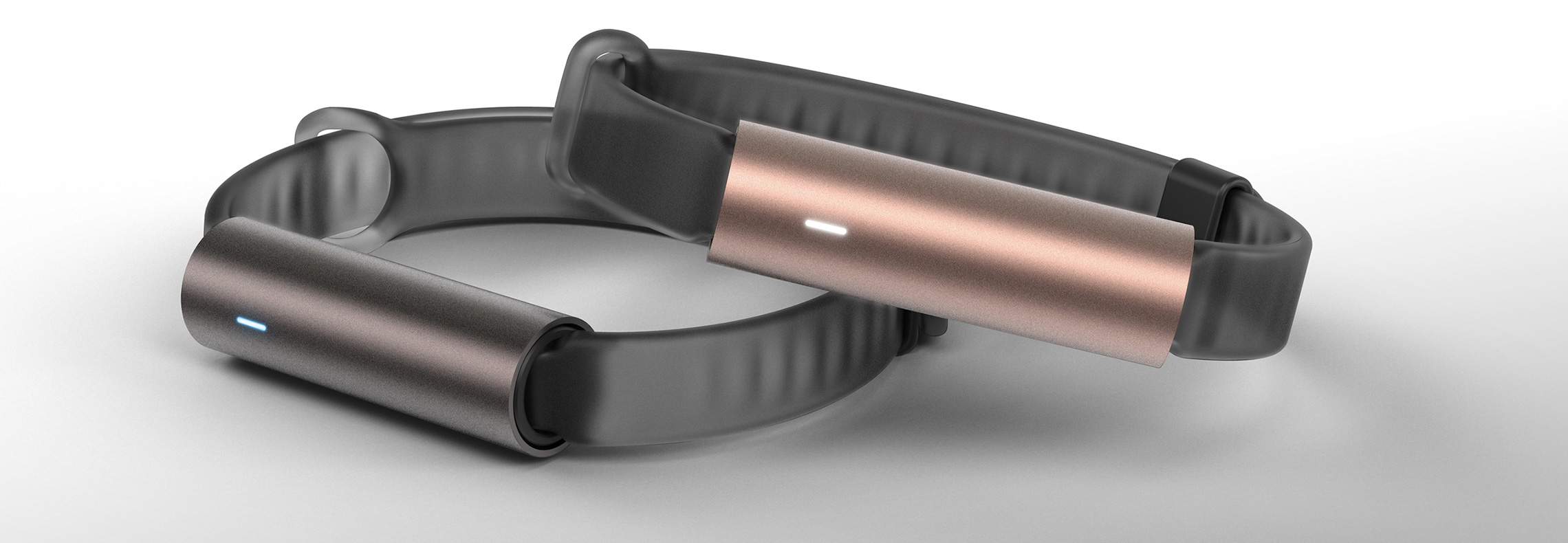
LAS VEGAS, NV January 5th 2016—Today Misfit announced Misfit Ray Fitness and Sleep Monitor, the newest product in the company’s [easyazon_link keywords=”misfit activity trackers” locale=”US” tag=”uneomediacom-20″]line of design-forward wearables[/easyazon_link]. Ray’s distinct deconstructed and modular design makes it Misfit’s most versatile activity tracker yet.

Only 12mm in diameter and 38mm long, Ray’s sleek form factor and clean lines make it uniquely wearable. Ray features a highly customizable cylindrical aluminum body, able to be worn with Misfit-branded or custom accessories on the wrist or as a necklace. Ray effortlessly complements watches, bracelets, and fine jewelry. Its elemental, interchangeable design makes it easy to personalize. Ray can be elegant or sporty, sensual or bold, striking or subtle.

Ray’s minimalist form conceals powerful engineering. It tracks activity and sleep with a 3-axis accelerometer and, like Misfit Shine 2, incorporates a vibration motor that allows for nuanced user feedback. Combined with a single multicolor LED eye, Ray provides inactivity nudges, text and call notifications, and a silent alarm. Like [easyazon_link keywords=”other wearables by Misfit” locale=”US” tag=”uneomediacom-20″]other wearables by Misfit[/easyazon_link], Ray never requires charging (the user-replaceable batteries last up to 6 months) and is water resistant to 50 meters.

misfit-ray-activity-tracker-wearable-tech-qtooth-1920-1080

Misfit Ray is compatible with [easyazon_link keywords=”Misfit Link” locale=”US” tag=”uneomediacom-20″]Misfit Link[/easyazon_link], the groundbreaking software experience that turns your wearable into a remote to connect with the world around you. Communicate with friends, turn on your lights, change your music, take a selfie, and more, all with a few taps.

“We designed Ray to be your most valuable accessory,” said Tim Golnik, Misfit’s VP of Product and Design. “Ray’s design distills the essential performance of our wearables and opens up a world of style possibilities.”

Ray comes in Rose Gold and Carbon Black, is now available for pre-order on misfit.com, and will be available in retail locations worldwide in Spring 2016.

Starting from $99.99, Misfit Ray is now on display at International CES at the Misfit booth (#73923, Tech West Sands Expo).

Filed Under: Featured Content, News, Wearable

Internet of Things World Academy 2015 – Put Your Company in the Know

2015-11-24

From theory to plan to proof of concept

Is your company investigating how to employ the Internet of Things in its business?

Register for the Internet of Things World Academy two-day intensive workshop to learn how to start your company’s IoT business and product line.  Bruce will start by presenting the business of IoT and its technical underpinnings and then demonstrate how to put the theory into action with his IoT Business Plan methodology he uses with his own clients.

Also, for readers of QTOOTH, there is a discount code. Use “Academy15” for a 15% discount off passes to the complete Internet of Things World Academy training course.

Download the workshop program and Register to Attend

Location & VenueDates
Chicago – Aloft Chicago City CenterDecember 10th-11th
Mountain View – Computer History MuseumDecember 14th-15th

Filed Under: Events, News

  • « Go to Previous Page
  • Page 1
  • Page 2
  • Page 3
  • Page 4
  • Interim pages omitted …
  • Page 22
  • Go to Next Page »

Primary Sidebar

Affiliate Disclosure

This website uses affiliate programs for monetization. At no additional cost to you, links to various sites mentioned in posts may result in a commission that is credited to this site if you make a purchase.

Some affiliate programs and affiliations include, but are not limited to, Commission Junction, Apple, Google, Amazon.com and more.

For complete details
click here.

Copyright © 2026 · Preferred Hosting by WP Engine and Domain Name Registry by Namecheap

We are using cookies to give you the best experience on our website.

You can find out more about which cookies we are using or switch them off in .

QTOOTH
Powered by  GDPR Cookie Compliance
Privacy Overview

This website uses cookies so that we can provide you with the best user experience possible. Cookie information is stored in your browser and performs functions such as recognising you when you return to our website and helping our team to understand which sections of the website you find most interesting and useful.

Strictly Necessary Cookies

Strictly Necessary Cookie should be enabled at all times so that we can save your preferences for cookie settings.

3rd Party Cookies

This website uses Google Analytics to collect anonymous information such as the number of visitors to the site, and the most popular pages.

Keeping this cookie enabled helps us to improve our website.

Additional Cookies

This website uses the following additional cookies:

(List the cookies that you are using on the website here.)