• Skip to primary navigation
  • Skip to main content
  • Skip to primary sidebar

QTOOTH

News & Reviews for Living with Bluetooth Wireless

  • Reviews
    • Wearable
    • Gaming
    • Health & Fitness
    • Home & Office
  • How To Tips
  • Industry News
  • About QTOOTH

Featured Content

Body Monitors Help Drive Healthy Behavior Change

2013-06-01

healthy-girl-body-media-qtoothBody tracking systems are demonstrating their value in successful interventions for weight management and other potential health applications, according to many studies being presented at the American University of Sports Medicine’s 60th Yearly Meeting and Fourth World Congress on Exercise and Medicine, opening today in Indianapolis. The studies, using the BodyMedia armband body monitoring system. recommend that technology can be utilized to help urge healthy and balanced habits and achieve successful health outcomes while also reducing the necessity for in-person consultations for therapy support.

One study, Effect of a Lifestyle Intervention Prior to Bariatric Surgery on Objectively Measured Physical Activity in Severely Obese Adults, demonstrated a six-month weight-loss amongst people in the intervention team participating in enhanced light and moderate-to-vigorous strength exercising verses those in common treatment. The research featured a pre-surgery diet plan and exercising program accompanied by a mix of in-person sessions, phone consults and using physical body monitors to gauge the changes in levels of activity.

In another study, The Comparison of a Technology-based System and In-person Behavioral Weight Loss Intervention in the Severely Obese, researchers looked at methods of weight-loss interventions that can be provided either by face-to-face meetings or through tech-based procedures, including Bluetooth-enabled activity monitors. The research team enlisted Class II and Class III obese people, and found that a three-month program utilizing the BodyMedia armbands and its web-based system to track dietary consumption and physical body weight, both with or without using a smartphone, in addition to one 10-minute intervention phone conversation each month resulted in weight loss similar to typical in-person behavioral interventions. The findings suggest that considerable short-term weight-loss in the significantly obese can be attained with less in-person interaction than today’s traditional support programs.

BodyMedia spearheaded the development of wearable body monitors that gather physical information for use in enhancing fitness, health and wellness. The data captured by BodyMedia’s tools is used by customers as well as health and wellness experts to lead behavior modifications to aid in regulating weight and promote an energetic lifestyle, two aspects that are consistently mentioned as tricks to combat and manage severe health care problems. The BodyMedia innovation has been made use of in hundreds of medical research studies covering health and wellness issues such as weight problems, diabetes, COPD, cancer, cystic fibrosis, bariatrics, intensive care, and sleep.

[amzn_product_inline asin=’B0049POHK6′]

[amzn_product_inline asin=’B0052KONSI’]

[amzn_product_inline asin=’B005PUONIK’]

Filed Under: Featured Content, Health & Fitness, News, Wearable

Plantronics – Legendary Dad Sweepstakes on Facebook

2013-05-29

Plantronics is holding a sweepstakes on Facebook honoring Legendary Dads. Sign up is easy, no purchase necessary, and the giveaway is for 2 of their Voyager 2 Legend headsets. You know we here at QTOOTH are all about it! Click below for more info.

Plantronics - Sweepstakes | Facebook

Plantronics – Sweepstakes | Facebook.

[amzn_product_inline asin=’B0092KJ9BU’]

[amzn_product_inline asin=’B009UNGYHG’]

[amzn_product_inline asin=’B009ZJ3MSY’]

Filed Under: Featured Content, News, Wearable

BRCK – Your Backup Generator for the Internet.

2013-05-26

Found this story through GOOD Magazine and their excellent daily email newsletter.

BRCK – the easiest, most reliable way to connect to the internet, anywhere in the world, even when you don’t have electricity.

Here is Their Story

Anyone who has worked in the field — or anyplace far from the world’s most wired urban areas — knows how hard it can be to get connected and stay online. And yet the equipment used to connect in Kenya, or India, or the rest of the developing world is the same as that used in New York and London, even though the conditions are completely different.

At Ushahidi, we face this problem all the time. We realized that what we really needed was a smart, rugged device that could connect to the internet any way it could, hop from one network to another, create a hotspot for multiple devices, while plugged in or running on battery power.

The idea behind BRCK is that all kinds of jobs require steady connectivity, even when infrastructure is spotty due to wireless connections that come and go, intermittent power, or devices that can’t share connections. Seeing this, we set out to redesign connectivity for the world we live in – Africa. As we laid out what such a device would look like — physically robust, able to connect to multiple networks, a hub for all local devices, enough backup power to survive a blackout — We realized that the way the entire world is connecting to the web is changing. We no longer only get online via desktops in our office, we have multiple devices, and we are all constantly on the move. So we designed the BRCK for the changing way we connect to the web around the world, from cafe-hoppers in San Francisco to struggling coders in Nairobi .

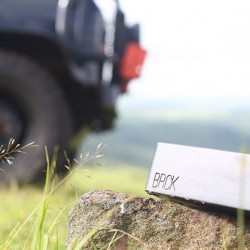
brck-in-the-field-qtooth

The BRCK is like a backup generator for the internet.

It works when the electricity goes out and it works when the internet goes down.

  • Portable and easy to set up,
  • It supports up to 20 devices,
  • WiFi powerful enough to cover multiple rooms,
  • 8 Hour battery backup,
  • 16 GB harddrive,
  • 8 GPIO pins to connect sensors,
  • Software infused allows for apps, remote management, and data collection,
  • Documented API.

Our motto has always been “if it works in Africa, it will work anywhere.” Our aim is to move the BRCK from its current prototype phase into a field-ready product. We need your help to achieve this goal of taking the prototype to production.

Check them out on Kick Starter:

via BRCK – your backup generator for the internet by Ushahidi — Kickstarter.

[amzn_product_inline asin=’B005WKIKA0′]

[amzn_product_inline asin=’B006L6X7PM’]

[amzn_product_inline asin=’B007PTCFFW’]

Filed Under: Featured Content, News, Tech Talk

Review: Fitbit Flex Activity Monitor

2013-05-21

FitBit

In well-defined markets, it’s rare to see a breakthrough device. And yet here we are. There are a lot of sleep and activity trackers to choose from right now, but none better than the Fitbit Flex. It is the most wearable, best-syncing device in the scrum, with the best app to boot. And it does all this at a great price.

The Flex is very similar to the Fitbit One, but smaller and housed and without a display. And instead of wearing it on your belt, bra or pocket, you slide it in and out of a slim, rubberized wristband. The band is extremely basic, and it lacks the design elements of the Jawbone Up or the display of the Nike+ FuelBand. Other than the LED lights it uses to give you feedback, it is visually flat. In short, it’s not obviously some sort of sensor.

What it is, however, is highly wearable. A fitted clasp keeps it locked on your wrist securely. Most of the time, at least — I managed to dislodge it once while getting my squirming two year old out of a car seat. But I found it stayed on better than the Up. Similarly, there are no parts to lose, unlike the Up’s end cap that has a tendency to pop off and disappear over time. It’s waterproof-ish — while you can’t take it diving, you can wear it in the shower. In a huge improvement over the One, you don’t have to put it in an armband (it’s already in one) at night to track your sleep. That lack of visual flair also means it doesn’t look out of place with a suit, or a track suit. It comes in black. You can buy a three-pack of other colors if you want for an extra $30.

It also has a fantastic battery life. Fitbit says it was able to push performance by improving the algorithms the Flex uses to track movement and slice up the collected data. It shows. Fitbit says single a full charge should last about two weeks. I still have not run my review sample down yet after five days of use, and the battery indicator still shows a mostly-full charge of around 60-ish percent.

Fantastically, it’s able to operate on very low power even while performing great feats of syncing. The Flex uses a low-energy Bluetooth connection to talk to a USB dongle on your computer or, more miraculously, your iPhone or Android device. (At least a small number of Android devices, that is. Check to make sure yours is supported before throwing down cash.) If you’ve got your phone in your pocket and a Flex on your wrist, the latter will trickle data to the former all day long. You can check your progress in the app (and get notifications) or tap the device itself to activate the LED lights which indicate how far along towards your goal you are.

All of that combined means you have little reason to ever take it off, which is exactly as an activity tracker should be. The most important thing an activity tracker can do is to be invisibly present. You need to be able to keep it with you all the time and forget you’re even wearing it — meanwhile, it sucks up data about your life, delivers it to an application, and reports back with numbers and charts that are easy to understand. You want something that just melts into your life. After trying very many of these devices over the past several years, I’m convinced that always-on wearability is the most important thing. The Flex pulls that off better than anything that has come before.

It also has good ecosystem capabilities. If you own the Fitbit scale, it will use that device’s data to dynamically report back on your weight and percentage of body fat. If you are a MapMyRun (or Endomondo, Lose It, MyFitnessPal, etc.) user, it will import that data so it can get a better idea of things like calories burned, for example.

It also has tools to help promote weight loss. You can enter a goal and it will tell you how many calories you are allowed per day to get there, based on your activity. But this means manually entering the caloric values of your meals into its database, which is still sort of a chore. You have to be really dedicated to keep up with it.

Finally, the sleep tracking stuff is also quite good. When you go to bed at night, you either tap the device five times, or hit a button in the app to tell it you are going to sleep (and again when you wake). If you forget, you can manually input the hours that you slept. Either way, it will look at your movements to report back with how well you slept during the night. It also has a vibrating alarm to wake you, which is really great.

If you’ve been on the fence about which tracker to get, this is the one. It beats the Basis B1 which still doesn’t have a smartphone app and still requires a cabled connection to sync (although it does track heart rate, which the Flex does not). It beats the Jawbone Up, which now integrates with more third-party apps but doesn’t sync via Bluetooth and doesn’t have an app nearly as good as Fitbit’s. It beats the Withings, which looks really promising but at this point is still vaporware. It beats the BodyMedia Fit which tracks far more about you and even delivers prescriptive feedback, but despite a recent redesign, is still too big to be truly wearable. And it trounces the Nike+ FuelBand, which doesn’t track sleep, and has lots of accuracy problems.

This is the one you’ve been waiting for. And it was worth the wait. Go get it.

via Review: Fitbit Flex Activity Monitor.

[amzn_product_inline asin=’B0095PZHPE’]

[amzn_product_inline asin=’B0095PZHZE’]

[amzn_product_inline asin=’B005PUONIK’]

Filed Under: Featured Content, Health & Fitness, Reviews

  • « Go to Previous Page
  • Page 1
  • Interim pages omitted …
  • Page 5
  • Page 6
  • Page 7

Primary Sidebar

Affiliate Disclosure

This website uses affiliate programs for monetization. At no additional cost to you, links to various sites mentioned in posts may result in a commission that is credited to this site if you make a purchase.

Some affiliate programs and affiliations include, but are not limited to, Commission Junction, Apple, Google, Amazon.com and more.

For complete details
click here.

Copyright © 2026 · Preferred Hosting by WP Engine and Domain Name Registry by Namecheap

We are using cookies to give you the best experience on our website.

You can find out more about which cookies we are using or switch them off in .

QTOOTH
Powered by  GDPR Cookie Compliance
Privacy Overview

This website uses cookies so that we can provide you with the best user experience possible. Cookie information is stored in your browser and performs functions such as recognising you when you return to our website and helping our team to understand which sections of the website you find most interesting and useful.

Strictly Necessary Cookies

Strictly Necessary Cookie should be enabled at all times so that we can save your preferences for cookie settings.

3rd Party Cookies

This website uses Google Analytics to collect anonymous information such as the number of visitors to the site, and the most popular pages.

Keeping this cookie enabled helps us to improve our website.

Additional Cookies

This website uses the following additional cookies:

(List the cookies that you are using on the website here.)