• Skip to primary navigation
  • Skip to main content
  • Skip to primary sidebar

QTOOTH

News & Reviews for Living with Bluetooth Wireless

  • Reviews
    • Wearable
    • Gaming
    • Health & Fitness
    • Home & Office
  • How To Tips
  • Industry News
  • About QTOOTH

Featured Content

Apple Applies to Trademark ‘iWatch’ Name in Japan

2013-07-03

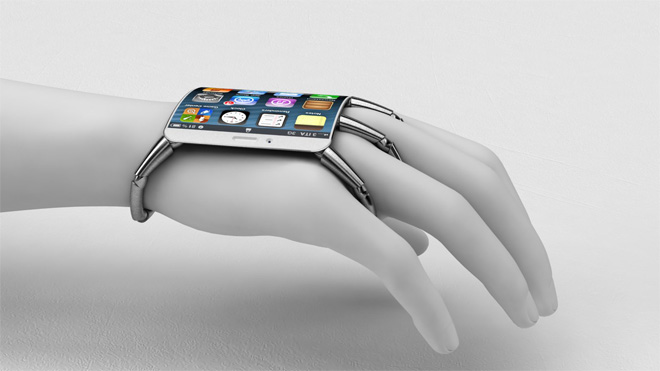
apple-iwatch-qtoothApple has filed an application to trademark the “iWatch” name in Japan, the first known patent application for the name in any country. The application was filed early last month but was not announced until last week. It has not yet been approved.

The patent application may or may not signal that Japan will be first to get an Apple iWatch, but there are compelling reasons for Apple to focus on Japan when it comes to wrist wear. According to Digital Luxury Group, about 50% of Japan’s online searches for luxury watches came from mobile phones in 2011, versus 17% of all searches worldwide for luxury watches. So many Japanese buyers of high-end watches are already very comfortable with mobile devices. And Japan is a major exporter to China, which has become the world’s top market for luxury watches.

Japan’s Sony has already launched a SmartWatch, which is compatible with Android phones, and last month it upgraded its product offering with the SmartWatch 2, which features more apps, a high-resolution display, longer battery life, and NFC. NFC (near field communication) enables wearers of the watch to share data with the Android smartphones by tapping the watch to the phone.

The other major connected wristwatch on the market is Pebble, made by a Kickstarter company which raised an unprecedented $10 million dollars in one month. Pebble is a Silicon Valley startup that manufactures its watches in China. They run Android and iOS apps. Until now Pebble watches have only been available online, and buyers have to pre-order and wait for their watch to ship. But today 9To5Mac reported that the Pebble watch is coming to Best Buy stores as soon as this weekend.

Nike also makes a smart watch, the Nike FuelBand. Apple CEO Tim Cook wears a FuelBand, which uses sensors to track a user’s movement throughout the day and report on their activity level.

via RCR U.S. Wireless News.

[amzn_product_inline asin=’B004FEEZMQ’]

[amzn_product_inline asin=’B009W8YQ6K’]

[amzn_product_inline asin=’B0013FRNKG’]

Filed Under: Featured Content, News, Wearable

Firefox Smartphone Hits the Market

2013-07-02

Firefox OS - QTOOTH

ZTE and Telefonica have launched the first Firefox OS smartphone, the ZTE Open. Priced as low as $51 ($90 retail, with $39 worth of free airtime for prepaid customers), the ZTE Open is clearly designed for the mobile phone user who has never before been able to afford a smartphone. It goes on sale today in Spain, and is headed for Colombia and Venezuela this summer as well.

Mozilla’s Firefox OS is based on HTML 5, and has the potential to build a large portfolio of apps quickly because of the widespread use of HTML 5 in the developer community. “There are 3 million HTML developers around the world,” Mozilla CEO Gary Kovacs said last year. “It is the language that they are speaking and when asked to choose, they choose HTML 5. HTML 5 is optimized for what the web has become today: apps, video, music, and immersive experiences.” Apps that are already part of the Firefox Marketplace include Facebook, Twitter, AccuWeather, Nokia HERE Maps, SoundCloud, Terra, Time Out, TMZ, and some Electronics Arts games.

Still, Firefox OS has a long way to go to catch up with Google’s Android operating system, clearly its main competitor in the entry-level smartphone space. At last count there were roughly 800,000 apps in the Google Play store, more than in any other app store including Apple’s iTunes.

But if Telefonica’s ZTE Open is an indicator of what’s coming, Firefox OS phones will definitely be competitive when it comes to value. The ZTE Open’s specs are comparable to those of Android phones like the new HTC Desire. The Open has a 3.5-­‐inch, HVGA TFT touchscreen display and is powered by a 1GHz Qualcomm Snapdragon processor. It has 256MB of RAM, a 3.2-megapixel camera, Bluetooth, A-GPS and Wi-Fi. It comes with a 4GM microSD card.

The phone is also meant to be intuitive for those who have not used smartphones before. Although many potential customers may not be used to using computers either, Mozilla has made the Firefox web search capability a central part of the OS experience. By swiping to the right on the touchscreen, the user can enter a term and get immediate search results, including videos and e-commerce options.

“We believe that smartphones need to be more open and that the web is the platform for making this possible,” said Luis Miguel Gilpérez, CEO of Telefónica España. “Consumers should not be locked to any one system but have the choice to consume the content they want and the flexibility to be able to take it with them when they change devices. This first open web device marks a significant milestone in making this possible. This is just the beginning as we plan to bring a wide range of Firefox OS devices to our customers.”

“In order for any mobile OS to gain critical mass, there needs to be a product that delights consumers, a platform that attracts and retains developers and an app ecosystem that can compete with iOS and Android,” said Jefferson Wang, partner at IBB Consulting. “Firefox OS has an entry-level international growth strategy which can help Mozilla build out these three key elements needed for a future offensive U.S. play.”

The next Firefox OS smartphone to hit the market is likely to be the Alcatel One Touch Fire, which was introduced along with the ZTE Open at Mobile World Congress. While the ZTE Open and the Alcatel One Touch Fire have both been approved by the FCC, but there is no word yet on when they might come to the United States. When Mozilla announced its roster of carrier and OEM partners for Firefox OS last year, the one U.S. carrier on the list was Sprint Nextel.

via Firefox smartphone hits the marketMobile Technology | Wireless Broadband | Wireless Carriers | RCR U.S. Wireless News.

[amzn_product_inline asin=’0471748994′]

[amzn_product_inline asin=’B007MZVRXA’]

[amzn_product_inline asin=’B004T9RR6I’]

Filed Under: Featured Content, Mobile, News, Tech Talk

New Samsung Galaxy S4 Features Qi Wireless Charging

2013-06-29

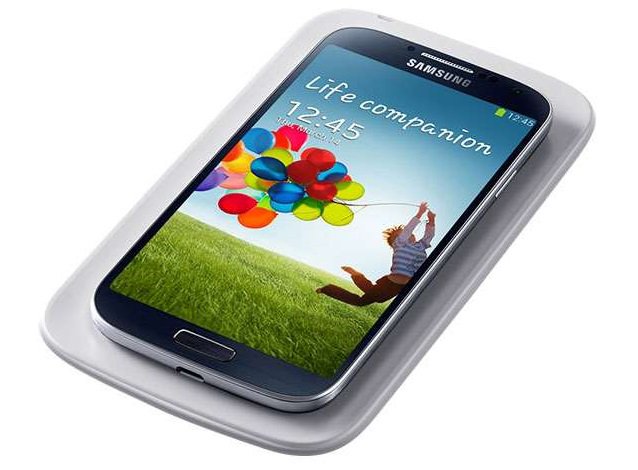
samsung-galaxy-s4-qi-wireless-charging-pad-qtoothNew Samsung Galaxy S4 Features Qi Wireless Charging and the rapidly expanding Qi ecosystem now includes compatible phones from Samsung, Nokia, LG, HTC, Panasonic, Sony, Motorola, Sharp, Fujitsu, NEC, and Pantech

The new Samsung Galaxy S4 has adopted the Qi wireless charging standard in its optional back battery cover and wireless charging pad accessories, as demonstrated at Samsung Unpacked 2013. The accessories are fully compatible with all Qi chargers and Qi-compatible phones. The announcement further solidifies Qi as the mobile industry’s choice for fully compatible wireless charging.

Qi is backed by more than 130 leading companies of the Wireless Power Consortium (WPC) like Blackberry, ConvenientPower, Delphi Automotive Systems, Energizer, Haier Group, Hitachi Maxell HTC, Huawei, LG, Motorola, Nokia, Panasonic, Philips Electronics, Samsung, Sony, TDK Corporation, Texas Instruments, Toshiba, and Verizon Wireless.

Qi cuts the last remaining cord in consumer electronics – the charging cord. Any Qi-certified device wirelessly charges using any Qi-compatible charger, regardless of brand. It’s easy, you just set your Qi-supported device on any Qi charging spot and it instantly starts charging.

The Galaxy S4 is the latest addition to the rapidly expanding Qi ecosystem of mobile devices, charging accessories, charging locations, and consumer electronics with an installed base of more than 15 million units. Recently, McDonald’s began testing wireless charging with Qi-embedded tables in some of its European locations. In addition, Toyota announced that the 2013 Toyota Avalon Limited includes integrated Qi charging in the center console. The universe of Qi products includes over 170 products and Qi is the only wireless power solution directly integrated into flagship smartphones and automobiles.

Qi is an open, fully flexible standard capable of evolving its technology and features to offer the best user experience while maintaining compatibility products that have the Qi logo. It offers the widest range of features to optimize user convenience and product choices: support for both inductive and resonant charging, spatial freedom, and intelligent power management.

For more information, visit: www.wirelesspowerconsortium.com

[amzn_product_inline asin=’B007WTAJTO’]

[amzn_product_inline asin=’B00CWQJX1W’]

[amzn_product_inline asin=’B00D1N3WFS’]

Filed Under: Featured Content, Mobile, News, Tech Talk

Google Wireless Network Perfect For High-Density Urban Centers

2013-06-25

Google Wireless Network - QTOOTH

So, when will Google wireless be coming to an environment near you? Here’s a blurb from a little while back from TechCrunch:

When Google experiments, it can have earth-changing consequences. That might be the case with its latest project: the building of a wireless network on-campus at its Mountain View headquarters, reported by the Wall Street Journal on Wednesday. The small-scale network wouldn’t have much range, and it would be incompatible with most current-generation iOS and Android mobile smartphones and cellular-capable tablets, given the frequency it would use, but it could work very well in dense urban centers.

Already, China, Brazil and Japan are building networks using the same frequencies, which means that eventually devices will likely be made to work on these networks, and if Google’s building a small-scale version of those networks, it’s probably going to be running experimental hardware that can take advantage of it, too. Google declined to share more info with the WSJ on what it was building the network for, but part of the application it filed with the FCC for its deployment includes launching the network in part from the building that houses the team responsible for Google Fiber.

Part of Google’s extended plan for the experiment could be eventually offering a wireless service for Google Fiber users, expanding their coverage to an entire metropolitan area when they’re outside of a house, for instance. That’s just speculation from BTIG analyst Walter Piecyk, in conversation with the WSJ, but it’s a plausible enough notion given where the project is spinning up at Google HQ.

There has been lots of talk in the past of Google’s potential desire to build its own wireless service, sparked recently by news that it was in discussion with Dish, the TV service provider that has said in the past it was seeking a partner for building a wireless network. The company also aims to deploy free Wi-Fi access in NYC, beginning in Chelsea where it has its East Coast headquarters. A new project at its Mountain View facility to build a network using licensed spectrum, rather than Wi-Fi, indicates it could be looking to ramp up those efforts to a whole new level down the road.

[amzn_product_inline asin=’B0083PWAPW’]

[amzn_product_inline asin=’B008GFRBBW’]

[amzn_product_inline asin=’B007PTCFFW’]

Filed Under: Featured Content, News, Tech Talk

Wireless Service for 30 New Underground Subway Stations

2013-06-24

nyc-skyline-qtoothTransit Wireless and the Metropolitan Transportation Authority (MTA)  announced a significant milestone in the multi-year project to build a state of the art wireless network in the New York City subway system. Thirty new subway stations in mid-town Manhattan, including Times Square, Rockefeller Center, Lincoln Center and Columbus Circle are now online, in addition to the initial six in Chelsea, which went online in September 2011.

MTA officials were joined by executives from Transit Wireless, AT&T, T-Mobile USA and Boingo Wireless to demonstrate the service at the Times Square Station.

In addition, representatives from Sprint and Verizon Wireless were also on hand to announce that both carriers are finalizing agreements to participate in the network, meaning that all four major carriers are expected to provide cell phone and data connectivity to their customers in New York’s underground subway stations.

“For the past three years, the MTA has been on a clearly defined mission to bring our mass transit system into the 21st century with upgrades to the station environment through several ambitious new-technology communications projects like this one, aimed at improving the travel experiences of our customers while offering another level of security,” said MTA Interim Executive Director Thomas F. Prendergast.”

“The New York City subway system is the most heavily trafficked system in the world and now riders have wireless service. We have been working closely with AT&T, T-Mobile USA and Boingo to bring wireless technology into one of the oldest and historic public transportation systems in the world and we’re thrilled to begin that work with Sprint and Verizon,” said William A. Bayne Jr., CEO of Transit Wireless, “This network benefits not only riders, but city workers and first responders, and it will be the backbone for future technology and safety improvements to the city’s subway stations.”

Public Safety Benefits

grand-central-qtoothWhile the network allows users to make and receive cell phone calls, send text messages, stream music, play online mobile games and more, all from underground subway station, it also enables important services that improve security such as E911 that allow dispatchers to know when a call is being placed from an underground platform and the forthcoming Help Point Intercom system, which will help riders get basic travel information or get help in an emergency with the push of a button, right on the platform.

“This goes beyond providing cell service underground, it brings our customers a new level of security – with the ability to dial 911 in an emergency,” said Acting MTA Chairman Fernando Ferrer. “Customers now know that when they see something, they can now say something using their device to call 911.”

Leading Wireless Providers Continue Partnership

Under agreements with the MTA and Transit Wireless, AT&T and T-Mobile USA customers can now use their cell phones to make and receive calls as well as use wireless data in more underground subway stations. Service should be available for Sprint and Verizon customers later this year.

“Bringing wireless to these busy subway platforms helps AT&T deliver on its commitment to provide our customers with the fastest and most reliable wireless service in New York City, including 4G LTE, whether above or below ground, at home, at work or in between,” said Tom DeVito, AT&T’s vice president and general manager for New York and New Jersey. “This initiative will also help spur transit innovation, which is one of the reasons AT&T is working with the MTA and NYU Poly on the AppQuest Challenge to develop the next generation of transit apps to improve the experience of every commuter.”

“Through this project, T-Mobile is extending our blazing fast nationwide 4G network coverage into the New York City subway, where New Yorkers often spend a significant part of the day,” said Tom Ellefson, regional vice president, Engineering and Operations at T-Mobile USA. “Our customers have really embraced the unlimited 4G experience T-Mobile offers, and now they can keep browsing, streaming and sharing when they go underground. We expect to launch 4G LTE in New York this summer, and this project has paved the way for it to extend into the subway as well.”

“Boingo has kept commuters connected since our managed and operated services launched in 2011. We look forward to expanding our network and introducing leading brands to consumers at stations across the city,” said Zack Sterngold, vice president of business development at Boingo Wireless. “Boingo’s advertising and sponsorship platform allows commuters to connect to subway Wi-Fi free-of-charge, and enables advertisers to reach the on-the-go, connected New Yorkers with location-based messages.”

Subway riders can currently access the sponsored Wi-Fi network provided by Boingo for free by choosing the SSID: FreeWifibyHTCONE.

“In the city that never sleeps, New Yorkers love to use their mobile devices 24/7 to stay connected to friends, loved ones and business associates. So, we are thrilled to include the subway in the buildout of our new network and deliver the robust benefits of 3G and 4G LTE to commuters, public safety representatives and first responders,” said Greg O’Connor, vice president of engineering at Sprint.

“Verizon Wireless is always exploring opportunities to provide our customers with the world-class experience of the nation’s largest 4G LTE network and most reliable 3G network, no matter where they are – above ground or below. In addition to the more than $3 billion that we’ve already invested in the Verizon Wireless network regionally, we’re working with Transit Wireless to finalize an agreement to bring Verizon Wireless service to 76 stations as we support the current and next phase of this project,” said Patrick Devlin, regional president for Verizon Wireless.

The list of stations now connected is as follows (* first six were part of the initial build):

*123 Street – 8 Ave.CE
*214 Street – 8 Ave.ACE
*314 Street – 7 Ave.123
*414 Street – 6 Ave.FM
*514 Street – 8 Ave.L
*614 Street – 6 Ave.L
796 StreetBC
886 StreetBC
928 Street1
1018 Street1
1181 Street-Museum of Natural HistoryBC
1272 StreetBC
1379 Street1
1423 Street1
1596 Street123
1666 Street-Lincoln Center1
1772 Street123
1857 StreetF
1947-50 Streets-Rockefeller CenterBDFM
2057 Street-7 Ave.NQR
2128 StreetNR
2250 Street1
2350 StreetCE
2423 StreetNR
2549 StreetNR
265 Ave.-53 StreetEM
2759 Street-Columbus Circle1
2859 St-Columbus CircleABCD
297 Ave.BDE
30Times Square-42 Street123
31Times Square-42 StreetNQR
32Times Square-42 Street7
33Times Square-42 StreetACE
34Times Square-42 StreetS
355 Ave.-59 StreetNR
3686 Street1


To quickly find stations that have wireless service, Transit Wireless today released a mobile-friendly website, available now at www.nycsubwaywireless.com.

Transit Wireless plans to outfit the remaining 241 underground stations within four years and has already begun work on the next 40 stations, which include Grand Central Station, 34th St. Herald Square and Bryant Park in mid-town Manhattan and stations throughout the Borough of Queens.

[amzn_product_inline asin=’B007OZNZG0′]

[amzn_product_inline asin=’B0083PWAPW’]

[amzn_product_inline asin=’B0051QVESA’]

Filed Under: Featured Content, Mobile, News, Tech Talk, Transportation

How the Internet of Things is Changing Our Lives

2013-06-22

infographic-zoom

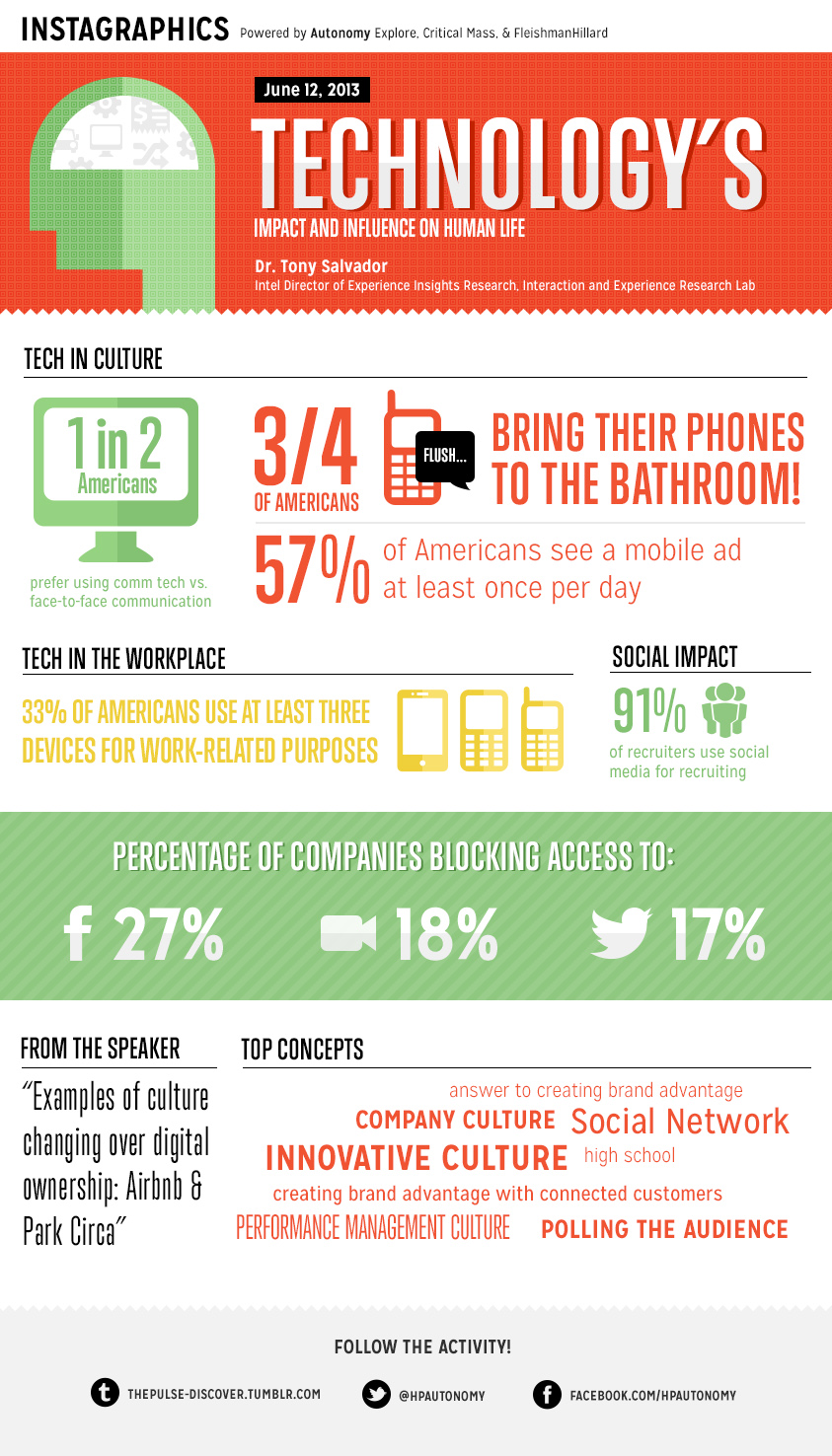
The billions of connected devices and sensors that make up the Internet of Things have transformed the technology landscape and revolutionized our day-to-day lives in the process. The impact of this mega-trend on the American consumer was brought into the limelight at this week’s HP Discover event.

According to an infographic that went out on the second day of the conference, one in two Americans would rather use communications technology to interact with peers than have a face-to-face conversation. 75 percent bring their phones to the bathroom, and 57 percent encounter at least one mobile ad every day.

The same chart shows that one third of Americans use at least three devices for work-related purposes, and 91 percent of recruiters use social media to find potential candidates. Surprisingly, only 27 percent of companies block Facebook, 18 percent prevent employees from watching videos on YouTube, and a mere 17 percent deny their workers access to Twitter.

The Internet of Things has become a reality for both consumers and enterprises. Today, CIOs are in hot pursuit of technologies that can help their organizations transform growing quantities of sensory data into tangible business value. Nick Illyadis, the Chief Technology Officer of Broadcom, shared his insights into this trend in a recent interview with SiliconAngle founder John Furrier and Wikibon’s Jeff Kelly. He explained that software-defined networking and analytics are what make it all possible:

“You have this wireless infrastructure that can reach out and pull this information in, but then you need the network fabric behind it to be able to bring it to where it needs to go to be processed,” Illyadis said. “There’s also an angle that says, we want to filter how much of that data gets to the core, because a lot of it is redundant. So you want to have [an] intelligence engine.”


via SiliconANGLE.

[amzn_product_inline asin=’B009GDHYPQ’]

[amzn_product_inline asin=’B007005364′]

[amzn_product_inline asin=’B004150PJG’]

Filed Under: Featured Content, News, Tech Talk

  • « Go to Previous Page
  • Page 1
  • Interim pages omitted …
  • Page 3
  • Page 4
  • Page 5
  • Page 6
  • Page 7
  • Go to Next Page »

Primary Sidebar

Affiliate Disclosure

This website uses affiliate programs for monetization. At no additional cost to you, links to various sites mentioned in posts may result in a commission that is credited to this site if you make a purchase.

Some affiliate programs and affiliations include, but are not limited to, Commission Junction, Apple, Google, Amazon.com and more.

For complete details
click here.

Copyright © 2026 · Preferred Hosting by WP Engine and Domain Name Registry by Namecheap

We are using cookies to give you the best experience on our website.

You can find out more about which cookies we are using or switch them off in .

QTOOTH
Powered by  GDPR Cookie Compliance
Privacy Overview

This website uses cookies so that we can provide you with the best user experience possible. Cookie information is stored in your browser and performs functions such as recognising you when you return to our website and helping our team to understand which sections of the website you find most interesting and useful.

Strictly Necessary Cookies

Strictly Necessary Cookie should be enabled at all times so that we can save your preferences for cookie settings.

3rd Party Cookies

This website uses Google Analytics to collect anonymous information such as the number of visitors to the site, and the most popular pages.

Keeping this cookie enabled helps us to improve our website.

Additional Cookies

This website uses the following additional cookies:

(List the cookies that you are using on the website here.)