• Skip to primary navigation
  • Skip to main content
  • Skip to primary sidebar

QTOOTH

News & Reviews for Living with Bluetooth Wireless

  • Reviews
    • Wearable
    • Gaming
    • Health & Fitness
    • Home & Office
  • How To Tips
  • Industry News
  • About QTOOTH

News

New Smartwatches: The Debut of Samsung Gear 2 and Gear 2 Neo

2014-02-25

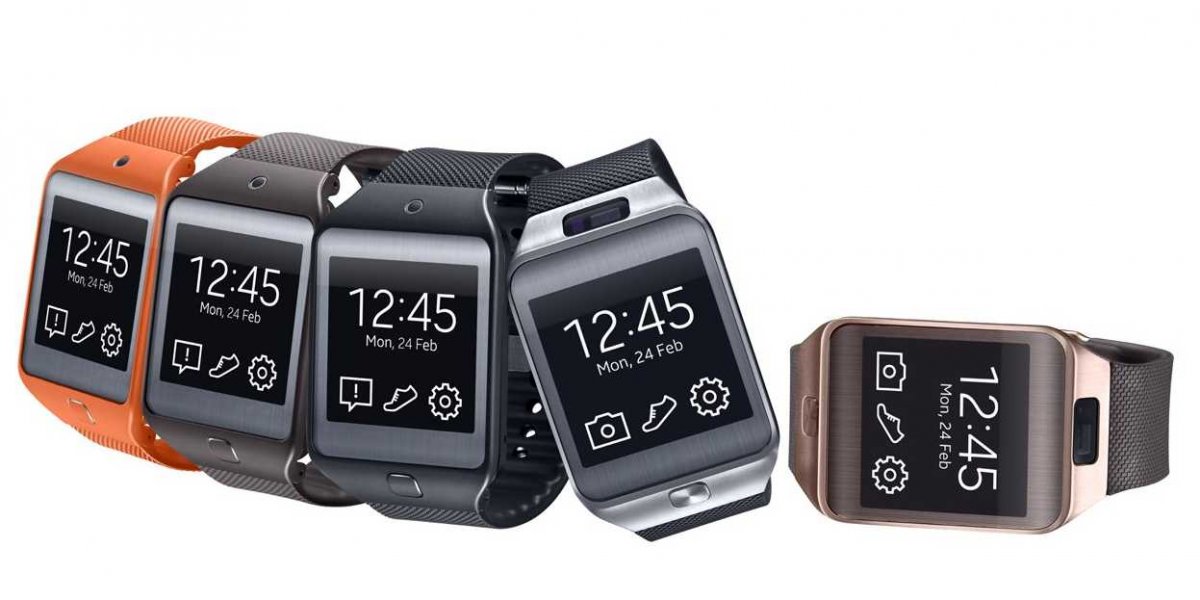
Samsung Gear 2 and Gear 2 NeoSamsung is using the Mobile World Congress that is being held in Barcelona this week to reveal its latest line of innovative products. First up was an update on their Galaxy Gear Smartwatch. Introduced in 2013, the original version was mostly greeted with indifference by the general press but found a lot of admirers among a growing user-base of dedicated fans. Samsung has shown that there is a viable market out there for smartwatches. These latest entries, the Gear 2 and the Gear 2 Neo, should help to further add to their level of acceptance.

By Any Other Name… and Oh, and What’s Tizen?

The first thing that gave an indication that serious changes were to be found was that Samsung has dropped “Galaxy” from the name. The two new smartwatches go simply by the names Samsung Gear 2 and Samsung Gear 2 Neo. This is most likely because Samsung wants to differentiate them from the rest of the Galaxy line up, like the S4 and new S5 smartphones. The reason, and perhaps the most important thing to know, is that these watches are no longer Android-based devices. Instead, Samsung has opted to switch to the open source, Linux-based mobile operating system known as Tizen.

tizen-logo-qtoothTizen isn’t that well-known outside of developers’ circles yet, but it is a very promising platform that may attract app developers who do not want to work within the constraints set by Apple for iOS or Google for Android. This will also help Samsung move yet one step further away from those two companies who are in effect their rivals. Samsung has been experimenting with smartphones based on Tizen, but they are smart enough not to release a phone to the market until there is enough of an ecosystem of apps to support it. Android and iOS have millions of apps, many of them free. Any phone attempting to compete will need to have a full complement of full featured, powerful apps. A lack of app choices is one of the main things holding back Windows and Blackberry phones from finding more of an audience. App development for these two new smartwatches may be Samsung’s way of laying the perfect foundation for building a Tizen-based ecosystem. We’ll see how things develop over the next year or two, but this move could prove very forward-thinking on the part of Samsung. However, users of the Gear 2 and Gear 2 Neo will not notice this switch. The nature of a smartwatch is much different than a phone. Wearable technology tends to focus on doing a limited number of tasks really well and Samsung already has this covered with over 100 available apps. It is also going to release an SDK (software developers kit) so third party developers can get in on the action.

What’s the Difference Between the Gear 2 and the Gear 2 Neo?

There are really only two differences between the Samsung Gear 2 and the Gear 2 Neo. The Gear 2 has a camera and the Gear 2 Neo does not. The Gear 2 has a brushed metal body and the Gear 2 Neo has a plastic body.

Samsung Gear 2 and Gear 2 Neo

What Makes the Samsung Gear 2 and Gear 2 Neo Different from the Original Galaxy Gear?

Well first, let’s start off with what’s the same: The display is still a 1.6-inch Super AMOLED screen with a 320×320 pixel resolution, the RAM is still at 512MB, internal storage remains at 4GB,  and they still work on Bluetooth 4.0. Just about everything else has changed.

The biggest improvement came from listening to the feedback of users of the the original Galaxy Gear. The camera, microphone, and antennae were all originally located on the strap. For the camera, this meant that shooting pictures required holding your wrist and arm at an odd angle. In order to speak into the device, the user had to flip their wrist over away from the watch face and the speaker because the microphone was located on the clasp of the strap. And because the camera, microphone, and antennae needed to maintain their electronic connections to the body of the watch, this setup prohibited the wearer from changing out the strap for different styles. The Gear 2 and Gear 2 Neo have moved all of these components to the body of the watch itself. This has made for a much improved shooting angle for the camera on the Gear 2 and, for both models, an easier time using the microphone while listening to the speaker and the ability to swap out the straps for any traditional watch wristbands on the market. This will help the user to truly customize the look of the watch. Plus, they’ve also added a couple of new watch body colors into the mix.

What else has changed besides the OS and the interchangeable straps? Processors have been improved from an 800MHz single core to a 1GHz dual core. A Bluetooth music player is included so that the user can stream music stored on their watch to any Bluetooth compatible audio system without the need for their phone. This could be handy for working out without worrying about carrying a phone. They also come with a built-in infrared projector which allows the included app to turn your watch into a remote for TVs and other entertainment systems.  Because it is one of the most used functions of any existing wrist-mounted wearable tech, a heart rate monitor and its accompanying app are also included. The screen glows when you tell it to check your vitals, pulsing every 90 seconds. If you use it with one of the personal coaching apps it will use haptic feedback, otherwise known as a vibration alarm, plus on-screen notifications to let you know you should pick up the pace.

Samsung Gear 2 and Gear 2 NeoThe size of these devices has also gotten a little smaller. Because it lacks a camera, the Gear 2 Neo is slightly smaller than the Gear 2. Both of the new units are also smaller than the original Galaxy Gear. This is due in part to the fact that the new versions have a slightly smaller battery. This has caused some to be concerned about battery life and how often they will need to be recharged. The original Galaxy Gear initially had issues with short battery life until a software update increased the average time to about a day to a day and a half. However, Samsung promises that the new devices will last between two and a half to five days between charges. this is most likely because of the new Tizen operating system. The smaller sizes also mean less weight. The Gear 2 is about 10% lighter and the Gear 2 Neo is about 25% lighter than the original Galaxy Gear. This should help improve comfort and their long term wearability.

The body of both versions is IP67 certified for dust and water resistance. This means that they can be submerged in water for up to 30 minutes at a depth of 3 feet/1 meter and should suffer no ill effects. This isn’t foolproof, but it is a great improvement and helps safeguard against one of the most common threats to electronics that no one likes to talk about or even think about… landing in a toilet. It also means that showering with it on should be okay.

Samsung Gear 2 and Gear 2 NeoWill the Samsung Gear 2 and Gear 2 Neo Work with My Device?

In addition to the new Samsung Galaxy S5, the Gear 2 series will work with Samsung’s Galaxy S III, Galaxy S4, Galaxy S4 Mini, Galaxy S4 Active, Galaxy S4 Zoom, Galaxy Mega, Galaxy Note 2, Galaxy Note 3, Galaxy Note 10.1 2014 Edition, Galaxy Note Pro, and Galaxy Tab Pro (12.2, 10.1, 8.4).

How much will the Gear 2 and Gear 2 Neo Cost?

Samsung hasn’t released any final pricing on these yet, but consensus says that the Gear 2 will probably be about the same as the current Galaxy Gear at $299 and the Gear 2 Neo is expected to be about $100 less. Although a specific date hasn’t been released, Samsung says that both models will be available for sale in April.

Do I Need a Gear 2 or a Gear 2 Neo Smartwatch?

This is a question many people are asking, even those who make these things! Traditional watches have fallen out of widespread use in general. We have clocks everywhere, on our car dashboards, on our appliances, and especially on our computers, tablets and phones. However, there are still quite a few people who do wear them, and the added functionality that a smartwatch provides may entice a few more to start wearing them again. They may never gain as much market share as a smartphone, but they do have their place and only time will tell how big the audience is. No matter what the answer ends up being, smartwatches will most likely be here to stay, in some form or another.

[easyazon_block add_to_cart=”default” align=”center” asin=”B00FH9I0FQ” cloaking=”default” layout=”left” localization=”default” locale=”US” nofollow=”default” new_window=”default” tag=”uneomediacom-20″]

[easyazon_block add_to_cart=”default” align=”center” asin=”B00BKEQBI0″ cloaking=”default” layout=”left” localization=”default” locale=”US” nofollow=”default” new_window=”default” tag=”uneomediacom-20″]

[easyazon_block add_to_cart=”default” align=”center” asin=”B00FI1678A” cloaking=”default” layout=”left” localization=”default” locale=”US” nofollow=”default” new_window=”default” tag=”uneomediacom-20″]

Filed Under: Featured Content, Health & Fitness, News, Wearable

The Dash – The Latest Entry in the Dawn of the Smart Headphone

2014-02-16

The latest product to make a splash on Kickstarter as of last week is The Dash, an in-ear wireless headphone. The Dash looks to be a strong entry into the growing class of devices known as smart headphones. In order to make the device qualify as “smart”, the creators of The Dash have included a variety of sensors that can be used to track the wearers health and to communicate and control connected devices wirelessly.

Although we have some questions about some of its component and design choices, the device shows a tremendous amount of promise. Here’s their promo video and info direct from their Kickstarter campaign:

bragi-dash-details-chart-qtoothbragi-dash-inside-details-chart-qtooth

Click for Zoomed View
Click for Zoomed View of Internal Components

Overall we are incredibly impressed with their choices of components and the featured functionality of The Dash. Here are what we think are some of the pros:

  • CSR’s AptX circuitry – for delivering quality audio over Bluetooth
  • The use of 3-axis and accelerometer sensors in both the left and right ear buds for greater accuracy of motion tracking
  • Onboard media/music storage (4GB) and playback for greater audio quality than available over Bluetooth and use even when not connected to another device or smart phone
  • The ability to use the built-in ambient mic to listen to the immediate environment – a great safety feature for when the ears are plugged by use of the device
  • The ability to turn features on and off via an app – Currently the practical battery charge is about 3 hours when all of the internal circuitry is on and working. Turning of functions that aren’t currently being used will allow the battery life to be extended
  • A companion storage case that will be able to recharge the ear buds within an hour several times before it too needs to be recharged

Here are some of our potential cons. Since the device may evolve yet before its official introduction to the world, and since we have not personally tried The Dash, these questions may not add up to a hill o’ beans. Here they are any way:

  • The use of an ear bone microphone for speech – In our experience, we are yet to find an ear bone microphone that really works well, especially for communicating speech. Microphones and speakers that rely on bone conduction are usually significantly lacking in treble response. This is where the clarity of any sound occurs and how we can differentiate one consonant sound from another. Without those high frequencies clearly articulated “P” can sound like “B”, “T” can sound like “D”, and so on. This can cause a lot of confusion for the person on the other end of the line. Perhaps the folks at Bragi have found the ultimate microphone for this, but there is a reason why Google recently abandoned the bone conduction audio on their much anticipate Google Glass. Used in tandem with a traditional microphone that picks up sound from airwaves, a bone conduction microphone can be a great asset (like the way it is used on the Jawbone headsets). In this case we are skeptical, especially since conduction microphones work best when they are held securely against bone. As far as we can tell, The Dash will mostly be surrounded by the softer flesh and cartilage of the folds of the inner ear. Perhaps they can still make it work in conjunction with their ambient mic? Or at least make it an option?
  • A claim of “waterproof” – Sure, they only claim water resistance to 1m (about 3 feet), but they also claim that it should be okay for daily swimming, albeit with reduced functionality. They also feature pictures of surfing a wave. I’m not sure who only swims to a depth of 1 meter. Diving into a pool, pushing off the wall at the turn of a lap, or getting hit by a wave will probably easily exceed the water pressure of 1 bar/ 1 meter that they claim. It will be interesting to see what real world use of actual customers demonstrates. But just to be clear, we are still thrilled with the direction that Bragi is taking with The Dash. This level of water resistance should mean that getting caught in the rain or keeping the music going or taking a quick call when hitting the post workout shower should be a non-issue.
  • Passive Noise Reduction – This is a rather cryptic way of saying that The Dash works as an ear plug. They lay claim to the fact that this will help isolate the wearer from noise from their environment. True! Bragi does make some effort to differentiate what they are doing from active noise cancellation circuitry, but we just wanted to clarify the terms for those who may be less familiar. Good active noise reduction circuitry will actually do a better job of reducing noise across a broader range of frequencies than an ear plug. Bragi states that they have kept out the more expensive active noise reduction because it would reduce the battery life. This makes sense, especially considering that the size of this device is quite small and leaves little room for the extra circuitry or increased battery size that might be required. We’d also like to point out that although The Dash provides an ambient microphone to help the user stay aware of their surroundings when necessary, this is not as accurate for positioning those sounds within the environment. All of the folds and curves of the human ear are not just there to make them look as pretty as a sea shell, they serve the purpose of helping us locate sounds. Even if a person is deaf in one ear, as long as the other ear is reasonable healthy, human hearing is incredibly accurate in determining location. This is super beneficial for survival and one of the main reasons I never ride my bike while wearing headphones. I rely on my hearing far too much to help me know exactly where that SUV is in relationship to my rear wheel! Even with the ambient mics active, plugging both ears with The Dash will greatly reduce the wearer’s hearing location abilities.
  • Reflectance Pulse Oximetry – Say what?! That’s the fancy term for the technology behind how The Dash measures heart rate and oxygen saturation (the amount of oxygen carried by the blood). Reflectance pulse oximetry uses two tiny LEDs to emit low intensity red and infrared light into the capillaries of the ear. The optical reflection of the emitted light reveals the relative amount of red and white blood cells and can be interpreted as both heart rate and oxygen saturation. So far in, other devices,  this approach has proven to be a less than perfect way to measure this information. Perhaps having it located on the inside of the ear and using whatever associated circuitry Bragi has developed will greatly improve accuracy. We hope so. This is one of the key features of The Dash and helps combine multiple wearable devices into one. We love the idea!
  • Comfort and secure mounting – Bragi claims that the 3 sizes that they offer for the ear molds will comfortably fit 94% of the population. Maybe so, but many other headset manufacturers offer the similar and make the same claim. We’ve found that ALL devices that are stuffed into the ear canal increase our desire to remove them the longer we wear them. And although we believe that The Dash mounts securely in the ear (see image below) we wonder what will happen if we do shake them loose, say when swimming or surfing. It would be nice if they added some optional, secondary means of attachment. Maybe an ear hook or some form of leash? Just a thought…

bragi-dash-in-ear-3-point-mounting-qtooth

So there you have it, our quick take on The Dash. We’re very excited for them and they are absolutely crushing it on Kickstarter. Check them out when you get a chance and maybe get in line for your own pair by making a pledge toward their campaign. We here at QTOOTH will definitely be keeping an ear out for any news as they get closer to release or when they become available next November!

Filed Under: Entertainment, Featured Content, Health & Fitness, Mobile, News, Wearable

Going Wacky for Wireless at the Sochi Olympics

2014-02-09

sochi-olympics-winter-logo-qtoothThere will be many firsts at the Sochi Olympics and we are not just talking about the sporting events. There is also a brand new public, state of the art ultrafast wireless network so people can make the most of their Olympic experience using their smartphones and tablets.

Two local phone companies were awarded contracts by President Vladimir Putin to install the half a billion dollar network. It promises to deliver plenty of network capacity and data speeds that should average ten times the Russian national average. Although the two companies, MegaFon and OAO Rostelecom, may never get a full return on their investment, they hope that it will raise their visibility and reputations as true global players in the wireless telecom market. We’re pretty sure Putin wouldn’t mind a bump in his street cred among the tech savvy either.

It’s interesting to note that they may have overdone it. MegaFon has installed 900 base stations and antennas on the two square kilometers (0.8 square mile) that will host most of the competitions. Tigran Pogosyan, head of MegaFon’s Sochi project, has reportedly said that according to their advisers at Qualcomm, the San Diego-based wireless technology company, it is the highest density of mobile equipment anywhere in the world. However, after the games are done this is far more than is needed for that area. Perhaps they could formulate a plan to re-use the equipment elsewhere.

Palm Trees at the Winter Olympics?

palm-tree-antenna-sochi-qtoothMost people do not associate palm trees with the Winter Olympics. However, due to its unique geography, Sochi is one of those places where warm body of water that keeps things relatively mild all year round but is still close enough that for a quick drive to mountains whose elevations provide the perfect conditions for snow. Being based in Los Angeles, QTOOTH is quite familiar with this arrangement. and it looks like the folks at Sochi have gotten hip to something that those in Southern California have made use of for quite a few years now: wireless base station towers disguised as palm trees.

Most stadiums and convention centers use as few as a single base station to transmit mobile phone calls and data. Each of Olympic venues in Sochi, on the other hand, have dozens. The main stadium, the Fisht, has thirty just to itself! Because of the sheer density of wireless towers and antennas, MegaFon wisely decided to camouflage them by disguising them as the local flora. Wise choice, and it definitely goes a long way to keeping Sochi beautiful.

It Looked Good in Practice. How About in Performance?

MegaFon expected data speeds to average 35 megabits a second at the Sochi Olympics. To give you a comparison, Verizon Wireless, the largest U.S. wireless carrier, advertises speeds of 5 to 12 megabits for its 4G connections.

So far, the performance of the network has seen mixed reviews. It works great… when it works. There seems to be spotty reception in some areas. Some have also experienced block outs where they can’t get on the network, most likely from the overload of too many users and not enough bandwidth. It’s seems a fair to cut the providers some slack, though. After all, this is virgin territory for all companies no matter where they are from. Similar issues were seen at the 2012 Olympics in London and the situation has only gotten to be more complicated. That was 2 years ago. Since then there has been an incredible worldwide explosion in the number of people using smartphones and tablets. This isn’t just an American or first world phenomenon, athletes and tourists from every corner of the globe are using these devices to surf the web, share photos and watch videos at ever-increasing rates.

Event Access Like Never Before- via Wireless

For the Sochi Olympics, MegaFon developed an application that lets tablet and smartphone users watch live broadcasts and repeats of the competitions. This means that a spectator at an Alpine event could also live stream a hockey game on a tablet screen at the same time. Want one more reason to become an Olympic champion beside getting a medal? Samsung, which sponsors the games, is handing out free Galaxy Note 3 tablets to athletes so they can stay in touch with fans, friends and family.

As we move forward into the wireless world of tomorrow, these types of services will become routine. Cities and venues will already have most, if not all, of the infrastructure in place. The whole thing will seem less of a big deal. Until then, here’s how it’s done. All we need to do is learn how to refine the experience.

Filed Under: Mobile, News, Tech Talk

Top Takeaways from the Wearable Technology Conference Europe 2014

2014-01-30

Earlier this week QTOOTH had the pleasure of being an official media sponsor for the Wearable Technology Conference Europe 2014 in Munich. We were very lucky to have one of our colleagues in attendance, the very talented Niki Grissmann from Grizzly New Media Technologies of Austria, to give us a first-hand account of the proceedings. There’s always a risk of information overload at any tech conference and this was no exception. We’ve done our best to sift through all of it for you and hope we have done justice to the proceedings. Here is a recap and our top takeaways:

 Day 1 – Monday January 27th

 There was an incredible roster of talent for the keynotes and presentations that were to be held throughout the event. It started on a very hopeful note when Nick Hunn of Wilfore Consulting delivered his keynote “To Ubiquity and Beyond – the Growth of Appcessories”. He is correct in thinking that the combination of well-designed wireless wearable technology that is connected to highly functional apps will definitely help increase the adoption rate of this fast developing sector.

esther-zahn-rainbow-warriors-childrens-wearable-tech-qtooth
Rainbow Warriors: Esther Zahn Children’s Wearable Tech – Images © Kirsten Becken

Nick Hunn was immediately followed by three top experts in the field of enabling wearable tech through new materials. Dr. Stylianos Mamagkakis represented Samsung, the event’s major sponsor, and gave some insight into how they are developing mobile components for our wearable devices. It seems all of the major electronics manufacturers realize that there are incredible business opportunities that will emerge from wearable tech in the next few years. Since all indications are that these new products will most likely be developed by small teams or individuals working outside of the major corporations, they are all trying to position themselves to be  suppliers of the components that are used in creating them. Then, from Cambridge Graphene Centre, University of Cambridge, scientist Richard C.T. Howe demonstrated how many of these new products will rely on the research they are doing into the interface between traditional electronics and printed graphene inks that can allow for the transmission of signals through textiles and  other flexible materials. Rounding out this segment was Esther Zahn, a designer with the Kunsthochschule Berlin Weißensee. She has been working on a line of wearable and sustainable technologies for children called Rainbow Warriors. We loved her idea that fun, wearable tech fashion may inspire kids to explore the science behind their clothes.

 The next group of speakers consisted of representatives of Texas Instruments, Microchip Technology, and Qualcomm Life. Their primary focus was on how all of this technology would communicate with each other and what information would be included in that communication. While Texas Instruments is focusing on the wireless aspects of communication, Microchip has come up with some very powerful gesture control interfaces. Here’s a cool demo video:

Qualcomm Life on the other hand is working towards turning all of our current mobile devices into the ultimate health and wellness platform. This will also include leveraging all of the health statistics that these sensors will deliver which may deliver significant insights into future medical treatments and  diagnostic tools.

Next was news from the developing world of sensors. Dr. Wolfgang Schmitt, Senior Manager of Strategic Marketing from Bosch Sensortec had an interesting take on how wearable tech might find wide-spread adoption. He feels that it will first occur in the consumer market and then be integrated into the industrial, manufacturing and commercial sectors. Personally, QTOOTH is unsure about how mass adoption might come about, but we have heard from other industry leaders that they thought it might happen in reverse order, industry first because they only care if it works, not if it’s fashionable whereas the opposite is true of consumers. Only time will tell how it plays out, but we suppose it is a race between which of those markets perceives a higher value first. Joining Dr. Schmitt in the discussion was Dr. Mark Melnykowycz, a scientist from Empa, the Swiss Federal Laboratories for Materials Science and Technology. They are currently working on flexible sensor materials for improving what is available for product development in all sectors of innovation.

One of the largest stumbling blocks for all technology, not just of the wearable kind, is where does it get its power? Energy is hard to store for long periods of time and is typically rather heavy. This obviously presents a challenge to incorporate a power source into something that is intended to be worn on the human body. No one wants to be weighed down by their devices and it can be a pain to frequently make sure they are charged. Either one of these things can quickly discourage any of us to say, “Ah! Never mind.” Luckily, there are many developments in the works that are trying to achieve two things: make batteries smaller and more powerful and make our devices use less energy. Two parties were on hand to offer solutions to these issues. First was a very intriguing  sensor that harvests its energy from the physical motions of the wearer. Created by EnOcean, it is similar to the idea of a self-winding watch except it provides electrical energy instead of mechanical energy.  We would LOVE for this to become the norm someday for as many devices as possible. Second was a new solid state thin-film battery from Applied Materials Inc. This powerful, small form battery should find immediate use among developers looking to make their products perform to their customer’s demanding expectations.

The second to last presentation of the day was from Thomas Fickert, founder and CEO of DEXPERIO, who introduced the audience to his company’s technology platform for rapid development of user interfaces for Google Glass. Hopefully this will encourage all of the  developers and hackers out there to consider applying their skills to creating a viable and sustainable eco-system around Google’s vanguard product.

The final event of the day was pure fun! It was cool to see all of the nominees for this year’s Wearable Technology World Cup prizes perform their rapid-fire elevator pitches one after another. The complete list of the nominees can be found on our site here. Congratulations to all for being nominated!

wearable-tech-world-cup-winners-qtooth
Wearable Technology World Cup Winners 2014 – Image N. Grissman

Category winners of the Wearable Technologies Innovation World Cup  awarded by the partners Texas Instruments, Samsung, Allianz Digital Accelerator, C. Schneider – New Solutions, Varta Microbattery and AiQ Smart Clothing, are:

Best Sports & Fitness – Myontec Ltd. convinced the jury with their MBody Shorts, which, in connection with a smartphone, tablet or computer monitor, transmit and analyze athletic performance.

Best Security & Prevention – Limmex AG won the category with its Limmex Emergency Watch. The watch has an integrated GSM module, a microphone and speaker. In case of an emergency, the watch calls a preset person with the press of a button.

Best Gaming & Lifestyle  – ViviTouch took the lead. The ViviTouch EAP over-the-ear-headphone promises a whole new 4D listening experience – close to what you’d experience at a concert or a movie theater.

Special prize “Evolve Insurance Award” – (provided by the Allianz Digital Accelerator) the experts awarded BodyTel Europe GmbH for their certified tele-monitoring system for chronic diseases. The device measures and transmits different parameters to a doctor for easy collection of all relevant data.

wearable-tech-world-cup-overall-winner-moticon-qtooth
Wearable Tech World Cup Overall Winner: Moticon – Image Wearable Technologies GmbH

Best Smart Clothing Solution – Smart Button by Artur Technologies LLC. The button can be attached to any pajama or nightgown to monitor sleep movements, activities, and breathing in real-time, streaming the data to a mobile device.

And the Overall Winner of the 2014 Wearable Technology World Cup went to Moticon. The company won with its insole OpenGo Therapist. OpenGo Therapist is equipped with sensors that measure a patient’s or athletes’ weight distribution and motion, providing data for gait training and overload prevention. The data is then transmitted wirelessly to a mobile device.

The Accidental Inside Scoop of Day 1 – Although the QTOOTH team was doing a fair amount of its reporting from its home office in Los Angeles, we may have inadvertently given away one of the biggest announcements of the Wearable Technology Conference Europe 2014. We were concerned when we saw the following come through our Twitter feed in what was for us the wee hours of the morning:

@Q_TOOTH Big announcement is tomorrow in Munich, Germany at @WearableTech by our @TimMoore – stay tuned!! #WTEU14

— Rochester Optical (@rocoptical) January 27, 2014

Whoops! We didn’t mean to steal anyone’s thunder. We had picked up that info in a tweet from one of the people working for Rochester Optical. The last thing we want to do is upset Rochester Optical and their new business partner… Google. So, congratulations to both and we wish them much success in providing prescription lenses and frames for Glass. This may be an indicator that the consumer version of Google Glass for the general public may be soon to be released. Stay tuned!

Day 2 – Monday January 28th

Day 2 of the Wearable Technology Conference Europe 2014 started with a very popular keynote address from Dr. Isabel Pedersen, Research Chair and Associate Professor, University of Ontario Institute of Technology Canada and author of “Ready to Wear: A Rhetoric of Wearable Computers and Reality-Shifting Media”. Provocatively titled “From Carryables to Wearables to Implantables and Beyond”, we found her talk very enlightening. One of the primary points that we took away was her belief that the strongest motivator for the adoption of anything, including technology, is pop culture. If the famous and the leading trendsetters start adopting and visibly extolling the virtues of wearable tech, the world will follow. Seems logical to us!

Neil Cox from Intel took the stage next and talked about “Make It Wearable”. “It” being just about any type of smart technology we can imagine. In fact, over the next year, Intel will challenge innovators to bring the next wearable technologies to life. If you have an idea that you think is a real winner, Intel wants to hear about it. That is what their “Make It Wearable” campaign is all about. This is a further demonstration that big companies are really trying to put their ear to the ground when it comes to finding the next big thing. Intel putting their expertise to work developing the tools and components that these developers may need to realize their ideas.

The following roundtable discussion featured Harry Strasser from Wearable Technologies,  the organizers of this conference, and Josh Flood from ABI Research. They discussed the outlook for growth in the wearable tech market. After looking at all of their hard numbers and projections for the next few years, what was the consensus? Excellent! ‘Nuff said.

The Growing Market for Wearable Technology - Image: N. Grissmann
The Growing Market for Wearable Technology – Image: N. Grissmann

Next up was a mini symposium that covered all things smartwatch and wristbands. This included representatives from Sony Mobile Companion Products, Kwamecorp Ltd., Nokia Growth Partners and Neptune Pine. For us here at QTOOTH, the two most interesting thing was two see the two main divergent approaches to wrist mounted technology represented among the participants. There is an ongoing debate whether it is wiser to create products for this market that either do only a few select functions very well and act as an extension to a greater network that centers around devices like computers, tablets and smartphones or to make these wrist-mounted devices do everything and potentially replace our other devices. The Bond from Kwamecorp follows the first approach and utilizes a modular design so that users can configure their wristband to perform only the specific functions which they feel they will most use. The Neptune, on the other hand, seeks to pack all of the functionality of a smartphone, and more, into a single device. Which one of these approaches ultimately wins out is anyone’s guess. There is also a distinct possibility that there will be plenty of room, and need, for both.

The big announcement of the show was from Tim Moore of Rochester Optical. They were happy to announce that they are partnering with Google Glass to provide prescription lenses and frames for Glass (see “The Accidental Scoop of Day 1” above). This is certainly yet another  an evolutionary step in making sure that Google Glass finds a home on people’s heads. This announcement was made as part of a history lesson of head-mounted displays delivered by Gernot Bahle, Senior Researcher at DFKI. There is certainly a mighty future in store for this technology, although who knows, it may eventually take the form of contact lenses or implants.

http://vimeo.com/83313462

One of the very first things about wearable technology that companies and developers have latched onto is the obvious application to improving people’s health and safety. Although not always well-known among the general public, the next group discussion involved three very major players in the field of health and safety. Equivital, Roche Diagnostics, and UL are all seeking to play key roles in the development of wearables for medical and industrial applications. This is also the realm of Big Data, where there will have to be ongoing discussions about the benefits of having access to unprecedented amounts of personal data from huge segments of the population and respecting the individual’s right to privacy. There will be no single answer to this dilemma and seeking a healthy balance between the two will be a part of humanity’s challenges for the foreseeable future.

Continuing on the theme of health, the next three presenters, Seraphim Sense, Fitbit, and Athos, showed how companies are trying to find a niche that will make them stand out in a very crowded field. Seraphim is making an effort to keep their platform entirely open source. This can be a smart way to make sure that as many people out there as possible will adopt your platform because anyone can easily and rapidly adapt it to their individual needs by creating apps without relying on someone else to do it for them. A potential downfall is that it can be easy for users to get lost in a sea of options. If there is no reliable guide to know which applications are good and which ones are poorly designed, it can be overwhelming. Fitbit is by far the most successful of the health bands on the market. Their approach is similar to Apple and the AppStore. A closed system that offers elegant design and seamless integration between hardware and software. This makes choosing an app and getting it to work as easy as possible. The potential shortcoming of this approach is that it confines the user’s choices to a single source with limited or non-existent opportunities to look for third party options. Athos represents an entirely different approach to health sensors. it incorporates them into what is being called smart fabric technology. These fabrics are embedded with networks of special filaments that extend the range and capabilities of the sensors and are made to create a network that covers most of the human body. All of these approaches have their merits and it is exciting to see all of them bringing incredibly imaginative products that can really help all of us meet our individual health goals. It’s a noble cause!

And to mark the closing of the conference, there was a little David and Goliath show between the European telecom giant Orange and innovative start-up Playtabase. Orange is looking to be the provider of choice when it comes to synching all of our fitness trackers to the cloud. Playtabase wants to empower us by being able to use gestures to control our everyday environments. Here’s their cute interpretation of a day in the life with reemo, their wrist worn mouse:

http://youtu.be/XH-rdYoj8H0

So there you have it! If you didn’t pick up on the theme running throughout this article, it is the strangely symbiotic relationship between the powerful, well-funded corporate giants and the fast-moving, rapidly innovating startups. When it comes to wearable technology, both sides are relying strongly on the other to get where they need to go in order to succeed. There will be corporate acquisitions of the smaller players and there will be small players growing into tomorrow’s behemoths. Trying to figure out who will do what is where the action is. So, are you in?

Special Thanks –

We would like to thank the folks at Wearable Technologies for putting on this great event.

QTOOTH would also like to thank Grizzly.cc for letting us borrow Niki Grissmann for a couple of days. His reporting from the conference, his images, and his personal insights were invaluable for the creation of this article. You can learn more about the amazing work they do in web and media development by clicking their logo:Grizzly_GmbH

Filed Under: News, Wearable

IoT or The Internet of Things – A Quick Guide Video

2014-01-21

The tech world is at a fevered pitch theses days when it comes to discussing the imminent arrival of “The Internet of Things” or IoT. Most of you who read QTOOTH and similar tech news websites are probably already well aware of it and its implications. There is a powerful convergence going on between the information and data provided by our communication systems, including the Internet, and any device that can be controlled or monitored electronically.

In fact, this movement towards the Internet of Things is expected to be so pervasive in our lives that some have taken to calling it the Internet of Everything, or IoE. Either way, if you don’t know about the Internet of Things, or would just like to get a deeper perspective on what it all means, the following video from the folks at IBM is an excellent introduction. Enjoy!

The Internet of Things – Explained

http://www.youtube.com/watch?v=sfEbMV295Kk

Filed Under: News, Tech Talk

The Count-down is on: Wearable Technologies Innovation World Cup Announces Finalists

2014-01-21

wearable-technology-innovation-world-cup-2013At the end of November, the leading competition for innovative wearable technologies, the Wearable Technologies Innovation World Cup, closed its database – and the excitement began. Since then, an international panel of experts has evaluated all entries. With over 600 participants from 69 countries, the panel had a huge number of groundbreaking solutions to choose from, showing how big the potential for the growth of wearable tech is and will continue to be. After a challenging evaluation time, the jury selected the five best of each category.
Andrea Onetti, General Manager of Analog and Audio Systems Division at STMicroelectronics says: “It was extremely difficult to narrow the field and choose the best solutions from among all these cutting- edge submissions the Innovation World Cup received. The submissions showed an outstanding level of innovation and ingenuity. The great number of submissions also proves how important the wearable technologies market is and what a great success the Wearable Technologies Innovation World Cup is.”
The finalists from the categories Sports & Fitness, Healthcare & Wellness, Security & Prevention, and Gaming & Lifestyle and the special categories Evolve Insurance Award and Smart Clothing will present their staggering solutions at the Wearable Technologies Conference 2014 Europe hosted at the International Congress Center Munich on January 27, 2014.These are the ingenious solutions submitted by the selected finalists:Sports & FitnessC-Touch introduces a concept of ultra-compact visual information displays based on a contact lens. It is a special contact lens that, combined with a camera (smartphone or mounted), translates visual information – basically photos – from the camera into tactile senses.

Instabeat submitted a waterproof heads-up monitor. It tracks and stores calories burned, number of laps and flip turns, and give instant color-coded feedback of the simmers heart rate.
Mbody shorts by Myontec combine modern bio signal sensors and electronics into a comfortable and fashionable sportswear selection. Combined with mobile devices and cloud services, it displays and analyses sports performance and is easy to use.

Reebok and MC10 [easyazon_link asin=”B00EJJSJLK” locale=”US” new_window=”default” tag=”uneomediacom-20″ add_to_cart=”default” cloaking=”default” localization=”default” nofollow=”default” popups=”default”]CHECKLIGHT[/easyazon_link] is a head impact indicator worn under or without a helmet to alert athletes, coaches, and parents to a potentially serious hit to the head. Rather than being a diagnostic tool for concussions, it is an extra set of eyes.

SenseCore submitted a revolutionary human performance monitoring tool, initially developed for astronauts. It offers biometrical data of the highest quality and enables the monitoring of unique biometrical data and the assessment of health, training, recovery and more.

Healthcare & Wellness

Avantari introduces a heart rate monitoring device for pregnant women and elderly people that can also be used for the treatment of malnourished kids. The easy to operate mobile device logs the user’s heart rate and transmits it via text or online to family members and doctors.

Biovotion submitted the VSM1, a wearable vital sign monitoring device, providing same accuracy as the machines in a hospital. True mHealth environments are enabled with cloud services, making the VSM1 an optimal tool for home monitoring.

Evena’s multi-spectral imaging, nurses are able to “see through” a patient’s skin to the vasculature. It images patients as well as the deeper veins with two hyper-sensitive, stereoscopic cameras and projects the images onto a screen in 3D.

With OpenGo Therapist, Moticon developed the world’s first fully integrated, wireless, and cost effective sensor insole. It measures plantar pressure distribution (PDM) and gives instant feedback to the wearer about gait training and overload prevention.

The SunFriend by Sensor Sensor is a skin protector and measures the recommended individual sun exposure time, meaning it tells the users when it is time to get out of the sun.

Security & Prevention

9Solutions’ real-time locating system is based on Bluetooth low energy and cloud technologies. A local network of 9Solutions nodes, connected via CCU to the internet and the cloud, ensuring an optimized workflow and safety in hospitals, nursing homes and home care environments.

BlueFinger by Toplink Pacific combines fingerprint with Bluetooth security access tokens. It allows the fingerprint ID information to be flashed into the token during registration at the security pass.

GuideMe helps the visually impaired navigate in unknown, complex environments. The system, which is implemented in shoes, scans the surroundings using a sensor and transmits it to a smartphone application. This app translates those signals into sound to prevent the user to collide with obstacles.

The Limmex emergency watch is an impressively simple, discreet emergency watch. Its GSM module, loudspeaker and microphone enable the wearer to call a selected person with the simple press of a button, in case of an emergency.

Smart Skull, developed by Manav Rachna College of Engineering, is an in-helmet crash detection system, alerting the family as well as the nearest EMC in case, the motor-bike rider has an accident. It is a wireless device in the helmet connected to the user’s cell phone and measures the impact on the head and analyses the data.

Gaming & Lifestyle

Innovative Development LLC introduces the Mycestro, a four button mouse of the size of a Bluetooth ear piece. It slips onto the index finger and can be connected to any computer and is controlled through a touch sensitive panel that is controlled with the thumb.

Rockatoo manufactures loudspeakers for motorcycle helmets. The helmet is equipped with loudspeakers that use surface transducing technology and connected to the Rockatoo App, that transmits the music, via Bluetooth.

Third Eye by the Suez University is a sensory device developed for blind people that wraps around hand and wrist. By passing it over a surface, a book or magazine for instance, the sensor scans the text and transforms it into sound, enabling visually impaired to read without the need of Braille.

Ulocs introduces the Mood Player. Using the same sensors as haptic response devices in combination with control mechanisms and algorithms, behavior libraries as well as response mechanisms, interprets the mood a person is in and turns it into actionable input for apps/software/services and more.

ViviTouch ́s solution is a 4D headphone with EAP (Electroactive Polymers), designed into an over-the-ear headphone. Its polymer motors move the skin around the user’s ears and generate a very realistic subwoofer experience, similar to a concert or movie theater.

Special Prizes Evolve Insurance Award and Smart Clothing

Bodytel Europe GmbH introduces a telemedicine solution, used for the remote monitoring of patients with cardiac and real failure, COPD, asthma, diabetes, hypertension, and obesity. The vital sensors measure and transmit the parameter via Bluetooth to and Android App and web portal, enabling the easy collection of therapy relevant activities and events.

With its WaterBlockTM the US-company HzO submitted a unique solution for water and liquid protection in all kinds of electronics and wearables. It is a robust nano coating that creates a protective barrier on the inside of the device, enabling damage to the vulnerable circuitry inside the gadget.

KeLiWei Electronic Equipment submitted “the smallest portable monitor” that measures heart rate, blood pressure, oxygen saturation, and respiration rate. Equipped with a Bluetooth low energy chip, the system can transmit the data and the real time waveform to a smartphone and upload the measured results to the “cloud” healthcare server for further diagnosis.

The “Smart Button” by Artur Technologies LLC is a universal sleep analyzer that can be attached to any article of clothing and is applicable to all ages. It measures movements, activity, and breathing in real- time and streams this data to a smartphone app via Bluetooth Low Energy.

After the finalists’ presentations the part of the evening, everybody has been waiting for starts: The awarding of the best solution in each category, including the special prizes Smart Clothing and Evolve Insurance Award.

However, there can only be one WT Innovator of the Year. Out of these exciting finalists, the WT Innovator of the Year will be announced. The award ceremony will take place at the Wearable Technologies Conference 2014 Europe on January 27, 2014 hosted at the International Congress Center Munich in the Blue Hall.

To register for the Wearable Technologies Conference 2014 Europe visit: http://www.wearable- technologies.com/events/wearable-technologies-conference-2014-i-europe

About the WT Innovation World Cup

The Innovation World Cup was first launched in 2009. The world’s leading innovation competition in wearable technologies invites contestants from all over the world to submit innovative solutions for wearable technologies in the areas of sports & fitness, healthcare & wellness, gaming & lifestyle and security & prevention. This year the WT Innovation World Cup also includes three Special Prizes. An international panel of industry experts will select the most innovative products according to criteria such as level of innovation, marketability, and usability.

The WT Innovation World Cup is sponsored by STMicroelectronics, Texas Instruments, Samsung Semiconductor Europe, Allianz Digital Accelerator, AiQ Smart Clothing, C. Schneider – New Solutions, VARTA Microbattery. Further partners include SIIA, Medica, ISPO, Continua Health Alliance and Wearable Technologies Group, as well as the regional and media partners Plug and Play Tech Center, Cluster 55, Taitra, Team Cote D’Azur, Comm4Innov, Innovative City Convention, CSEM, and AlpICT.

About Wearable Technologies AG

Wearable Technologies AG is the pioneer and leading innovation and market development platform for technologies worn close to, on, and even in the body. Since 2006 the platform has successfully established a network of more than 3,000 companies, consisting of market leaders and highly innovative companies. Wearable Technologies AG aims to drive business development, technology marketing, and innovation through the Wearable Technologies Innovation World Cup, content management, strategy and technology consulting services, as well as international conferences and trade shows in partnership with leading trade organizations, associations, and other high-ranking partners.

Filed Under: News, Wearable

  • « Go to Previous Page
  • Page 1
  • Interim pages omitted …
  • Page 8
  • Page 9
  • Page 10
  • Page 11
  • Page 12
  • Interim pages omitted …
  • Page 22
  • Go to Next Page »

Primary Sidebar

Affiliate Disclosure

This website uses affiliate programs for monetization. At no additional cost to you, links to various sites mentioned in posts may result in a commission that is credited to this site if you make a purchase.

Some affiliate programs and affiliations include, but are not limited to, Commission Junction, Apple, Google, Amazon.com and more.

For complete details
click here.

Copyright © 2026 · Preferred Hosting by WP Engine and Domain Name Registry by Namecheap

We are using cookies to give you the best experience on our website.

You can find out more about which cookies we are using or switch them off in .

QTOOTH
Powered by  GDPR Cookie Compliance
Privacy Overview

This website uses cookies so that we can provide you with the best user experience possible. Cookie information is stored in your browser and performs functions such as recognising you when you return to our website and helping our team to understand which sections of the website you find most interesting and useful.

Strictly Necessary Cookies

Strictly Necessary Cookie should be enabled at all times so that we can save your preferences for cookie settings.

3rd Party Cookies

This website uses Google Analytics to collect anonymous information such as the number of visitors to the site, and the most popular pages.

Keeping this cookie enabled helps us to improve our website.

Additional Cookies

This website uses the following additional cookies:

(List the cookies that you are using on the website here.)