• Skip to primary navigation
  • Skip to main content
  • Skip to primary sidebar

QTOOTH

News & Reviews for Living with Bluetooth Wireless

  • Reviews
    • Wearable
    • Gaming
    • Health & Fitness
    • Home & Office
  • How To Tips
  • Industry News
  • About QTOOTH

News

Samsung Galaxy Gear – The Evolution of the Smartwatch

2013-09-04

Amid great fanfare, Samsung introduced their Galaxy Gear. The occasion for the introduction was the IFA 2013 Consumer Electronics Show, the largest of its kind in the world. It is even bigger than the CES trade show that is held every year in Las Vegas. There are so many exciting things coming out of this year’s event that it may take a while for us here at QTOOTH to even cover it all. For Samsung, this is their first foray into the brave new world of smartwatches. Let’s take a look at some of the exciting things that it represents, where they got it right and where they might want to improve the product.

samsung-galaxy-gear-smartwatch-front-view-with-band-qtooth

First, let’s talk about the fact that smartwatches will not be for everyone. The wearing of watches is at an all time low no matter how smart they are. People are quite comfortable with getting thew time and just about every other type of data from the smartphones, or their computers, cars, tablets, radios, etc… So even despite this limited market, it is interesting to see so many manufacturers getting on the bandwagon i the rush to provide some form of smartwatch. There are already ones on the market from major players like Casio, Nike and Sony, and the leading edge of this mania came from the small upstarts like the Pebble, Agent, and others. It is also a very strong rumor that Apple will be introducing their own smartwatch within the next few weeks.

Of course the reason we here at QTOOTH have our reservations when it comes to any form of smartwatch is the fact that they are not hands free. For us the reason to go wireless is so that we can “un-tether” ourselves from our technology. Just by the very nature of a wrist mounted device means that it will take not just one hand to operate but two! One to wear the device and the other to operate whatever interface is included. Plus, the watch is located near your hand which is often located in a position that makes it difficult to see, or to hear. Of course some things on a watch can be voice-controlled, but so far we haven’t seen a lot of functionality that can be accessed by voice alone on these first smartwatches.

That said, the Galaxy Gear is one of the best options in a smartwatch that we have seen so far. Seeing that all of the might of a behemoth like Samsung is behind the project, including all of their available technologies, this shouldn’t come as a surprise. Starting with its screen, the Galaxy Gear has a 320 x 320-pixel, 1.63″ diagonal AMOLED touchscreen. The brain of this smartwatch is provided by an 800 MHz processor powered by a 315mAh battery. For audio, it has a speaker and a pair of mics for recording and playing back video content.  This also allows for communicating with phone calls using the built-in dialer that works with whatever Galaxy device to which it is paired. Mounted into the wrist strap itself is a BSI (back-illuminated sensor, or back-sided illumination) sensor with an autofocus lens so that the wearer can capture 1.9-megapixel still images or 10-second videos at 720p, 640 or VGA quality resolution with sound. We have yet to get clarification as to whether the sound is captured in stereo via the two onboard mics or whether those mics are only paired for noise cancellation purposes when in use for making phone calls. Samsung states that the camera is designed more for convenience than it is for image quality. The camera also comes with a pre-installed app called Memographer for media management.

[amzn_product_inline asin=’B00FH9I0OC’]

So far there are a few dozen apps that will be available for the Galaxy Gear upon launch. This may be what sets this watch apart from the others. If Samsung can get a large amount of truly useful apps available quickly it will give it a real edge over the other entrants into this field. Like most of the other smartwatches, Gear can only display one app at a time due to its limited screen size and resolution. Each app is displayed as what’s known as a “card”, which is basically a slightly over-sized icon. To navigate your way around from one app to the next all you need to do is swipe the touchscreen with your finger. The other means of navigating your way through the watch’s offerings is to use the single button that is located on the right side of the body. A single press of this button will bring you to the home screen. Double pressing the button launches Samsung’s S Voice for voice controlling options and as triple press activates the “safety assistance” feature which will send your location info and a message to a saved contact in the event of an emergency.

samsung-smart-watch-lime-green-qtooth

As much as it seems like the Galaxy Gear should exhibit some real power, it seems a bit slow when executing some pretty basic functions, like launching an app. This is surprising considering that its processor is faster than what many of us had in our main computers just a few years ago. Part of the reason for this may be because it is communicating and synching with the wirelessly attached device. This might be something that will improve as updates become available, even with its current hardware configuration. Some of the apps that did perform very well though were the watch faces, of which optional ones can be uploaded from the Gear’s Android companion app, as well as the Music app which is basically a remote control for any native or 3rd party app currently active on the connected device.

There are some odd limitations that come with what we are sure is the first generation of this device. Only 10 3rd party apps can be uploaded at a time. The interface could use a little bit of refining for a smoother experience. But one of the most interesting things is the fact that the S Voice feature can only be accessed by tapping the side button twice. That might be hard to do if your hands are otherwise occupied and misses the point of being hands-free. It would be nice if they included a specific voice command that would activate the voice control functions. That can be done as shown by Google Glass’ “Ok, Glass” to activate its voice command. As much as we’ve slagged on their device, that is one of the things that Google definitely got right.

samsung-galaxy-gear-smartwatch-side-view-with-band-qtooth

We have a mixed review as far as the look of the device is concerned. Leaked reports had the Galaxy Gear looking pretty hefty but the one on display today was much more svelte. However, it is still pretty big and considering the color options that they have so far. Two of the colors are Rose Gold and Mocha Gray which are definitely aimed at a more feminine fashion sense. The size of this device look plenty awkward in our opinion when worn on even slightly petite wrists. For men it seems to be just about right in size and proportion. Men may prefer the JET Black or Oatmeal color, but for the sporty or flashy of any persuasion they may opt for the Wild Orange or Lime Green. Speaking of which, because of the utilitarian/industrial funkiness of the design this may not be what many people would want to wear on more formal occasions, but we suppose that is a subjective call.

samsung-smartwatch-orange-qtooth

Battery life on this device is pretty much limited to a single day of “regular” use. We are not sure what that means exactly yet, but that certainly puts it in a different class of fashion accessory than the average watch which can be worn for months at a time, or longer, depending on a person’s needs. That means that the Samsung Galaxy Gear will need to spend a fair amount of time on its included micro-USB-equipped plastic charging dock. The dock connects through five metal pins, or leads, located on the rear of the watch.

[amzn_product_inline asin=’B00FH9I0FQ’]

Another limitation, and perhaps its most significant, is that it is only compatible so far with the Galaxy Note 3 and the new Note 10.1. It is most likely to work with the Galaxy S4 phone when it gets the Android 4.3 update. What’s really unfortunate though is the fact that it will most likely never work with any non-Samsung smartphone or tablet.

So, to be honest, the future has arrived and the Dick Tracy watch is now a reality. In fact, it’s better and more powerful than anything he could’ve imagined. And yet will people want it? We’d love to get your feedback in the comments below or contact us directly.

The Samsung Galaxy Gear Smartwatch will cost $299 when it starts shipping on September 25th to the world, except to the US and Japan who will have to wait until October. Strange release dates. Perhaps they just want to tease the two biggest markets for a bit? Or perhaps they’re afraid that they’ll sell out immediately once the US and Japan csan get them directly. We’ll see!

[amzn_product_inline asin=’B00892N53U’]

[amzn_product_inline asin=’B00AZOA5EC’]

[amzn_product_inline asin=’B009ELZ8ZS’]

[amzn_product_inline asin=’B007VG6ZC8′]

Filed Under: Featured Content, Mobile, News, Reviews, Wearable

Tips on How to Stop Mobile Text Spam

2013-08-20

How to Stop Text Spam - QTOOTHMobile text spam is on the rise. Bloomberg news reports that more than  4.5 billion spam text messages were received this past year, and that is just in the United States. This growing trend ends up costing carriers money and frustrating their subscribers who have to pay for the messages and deal with determining which of their texts are potentially fraudulent.

Here are some steps that you can take to help stop mobile text spam:

  1. Forward spam texts to your cell phone provider to “7726”. Verizon Wireless, AT&T Inc., T-Mobile USA and Sprint Nextel Corp. all support this service.
  2. Take advantage of the Do Not Call Registry at www.donotcall.gov. Register your phone number with them and this free service should make your phone number off limits to marketers within a month. If you are still receiving calls after that time, file a complaint against abuser on the same site.
  3. The most immediately effective thing to do is to adjust the settings on your cell phone provider’s website to block the specific numbers from which you are receiving spam.
  4. There are special apps specifically made to cope with this type of spam. “Mr. Number” for Android devices can block communication from unwanted numbers. There is also the McAfee Mobile Security app for Android, BlackBerry and Symbian comes with an SMS/text filter.
  5. And last but not least, call your cell phone provider’s customer service.

Some people may suggest replying to unwanted messages with the word “STOP”. Although some legitimate advertisers may respect this, most spammers could care less and will actually list your number as active and be MORE likely to text spam you in the future.

QTOOTH hopes these tips help. After all, the whole point of going wireless in this world is for less of a hassle, not more!

If you have any tips to share for stopping mobile text spam, please let us know in the comments below.

[amzn_product_inline asin=’B007FHX9OK’]

[amzn_product_inline asin=’B0043XZEEC’]

[amzn_product_inline asin=’B00BZD6QCW’]

Filed Under: Featured Content, How To Tips, News

What is Bluetooth Wireless Technology ?

2013-08-19

Bluetooth Technology Basics:

Bluetooth is a form of short-range wireless communications technology that is simple and easy to use, secure, and found in an increasing array of devices. Literally billions of devices ranging from cell phones, tablets and computers to home entertainment products, game consoles and medical devices. The reason Bluetooth was created was to replace the cables connecting devices, while maintaining high levels of security.

Bluetooth technology was developed around three main criteria: robustness, low power, and low cost. By requiring manufacturers and developers of compatible devices to adhere to a uniform Bluetooth Specification a wide variety of devices are able to connect and communicate with each other.

“Pairing” refers to when two Bluetooth enabled devices connect to each other. Because of its features and its global acceptance, any Bluetooth enabled device, in almost location anywhere in the world, can connect to other Bluetooth devices as long as they are located relatively close to one another.

When Bluetooth devices connect to each other wirelessly they form a short-range temporary network that is called a “piconet”. These devices can be setup by the user to automatically connect or disconnect to these piconets at any time, whether on command or by simply moving in and out of the range of the piconet’s wireless range.

Each device in a piconet can communicate simultaneously with up to seven other devices within that same piconet. Each device can also belong to several piconets at the same time. This means Bluetooth devices can connect to each other in virtually an infinite number of ways.

A key strength of Bluetooth wireless technology is the ability to handle data and voice transmissions at the same time. Bluetooth can be used to create devices that will perform a near limitless variety of tasks. Good examples would be hands-free headsets for voice calls, printing and fax capabilities, synchronization of PCs and mobile phones, device controllers for video games, remote access to environmental controls, and more. Bluetooth promises to be at the very heart of achieving the “Internet of Things”, where almost any device in our day-to-day lives can be accessed from anywhere in the world and controlled wirelessly through the internet.

Bluetooth Core Specification:

Unlike other wireless standards the Bluetooth Core Specification provides developers with both link layer and application layer definition in order to support both data and voice applications. For more information visit the Bluetooth.org website (some sections of the site require a password which can be obtained by becoming a member of the Bluetooth Special Interests Group, or BSIG).

Wireless Signal;

The Bluetooth wireless signal operates in the unlicensed industrial, scientific and medical (ISM) band, between the 2.4 to 2.485 GHz range. The 2.4 GHz ISM band is available and unlicensed in almost all countries. Bluetooth makes use of a spread spectrum, frequency hopping, full-duplex signal at a nominal rate of 1600 hops per a second. Because it can detect other signals within its operating spectrum it can avoid them, allowing for a minimum of interference from other wireless signals that may be already exist in the immediate environment. By using adaptive frequency hopping, otherwise known as AFH, it can constantly shift from one frequency to the next and make it very difficult for hackers to intercept or corrupt the signal. This adds an extra layer of security for the users of an enabled device.

Range:

The effective range of Bluetooth wireless technology depends on its application.  The Core Specification requires a minimum range of 10 meters, or just over 30 feet. However, there is no predetermined limit and manufacturers can modify the range to support the how their application will be used.

Bluetooth devices are typically rated as being of one of three Classes which gives an indication of both their range and their power consumption:

Class 3: Has a range of up to 1 meter, or 3 feet
Class 2:  Has a range of 10 meters, or approximately 33 feet (most common class found in mobile devices)
Class 1: has a range of 100 meters, or just over 300 feet (primarily used in industrial applications)

Power:

The most commonly used signal is Class 2. It uses a mere 2.5 mW of power. Since most application are battery powered, Bluetooth technology is designed to have very low power consumption. This is reinforced in the specification by allowing Bluetooth radios to be power down when inactive for certain periods of time.

Bluetooth Low Energy technology, optimized for devices requiring maximum battery life instead of a high data transfer rate, consumes between 1/2 and 1/100 the power of classic Bluetooth technology.

It is because of these low power specifications that Bluetooth is widely considered to be the ideal wireless solution for devices that are meant to be safely used on or near the human body, especially over extended periods of time.

[amzn_product_inline asin=’B0054JJ0QW’]

[amzn_product_inline asin=’B005IMB5NG’]

Filed Under: Featured Content, News, Tech Talk

Wireless Devices Go Battery-Free – Introducing Ambient Backscatter

2013-08-16

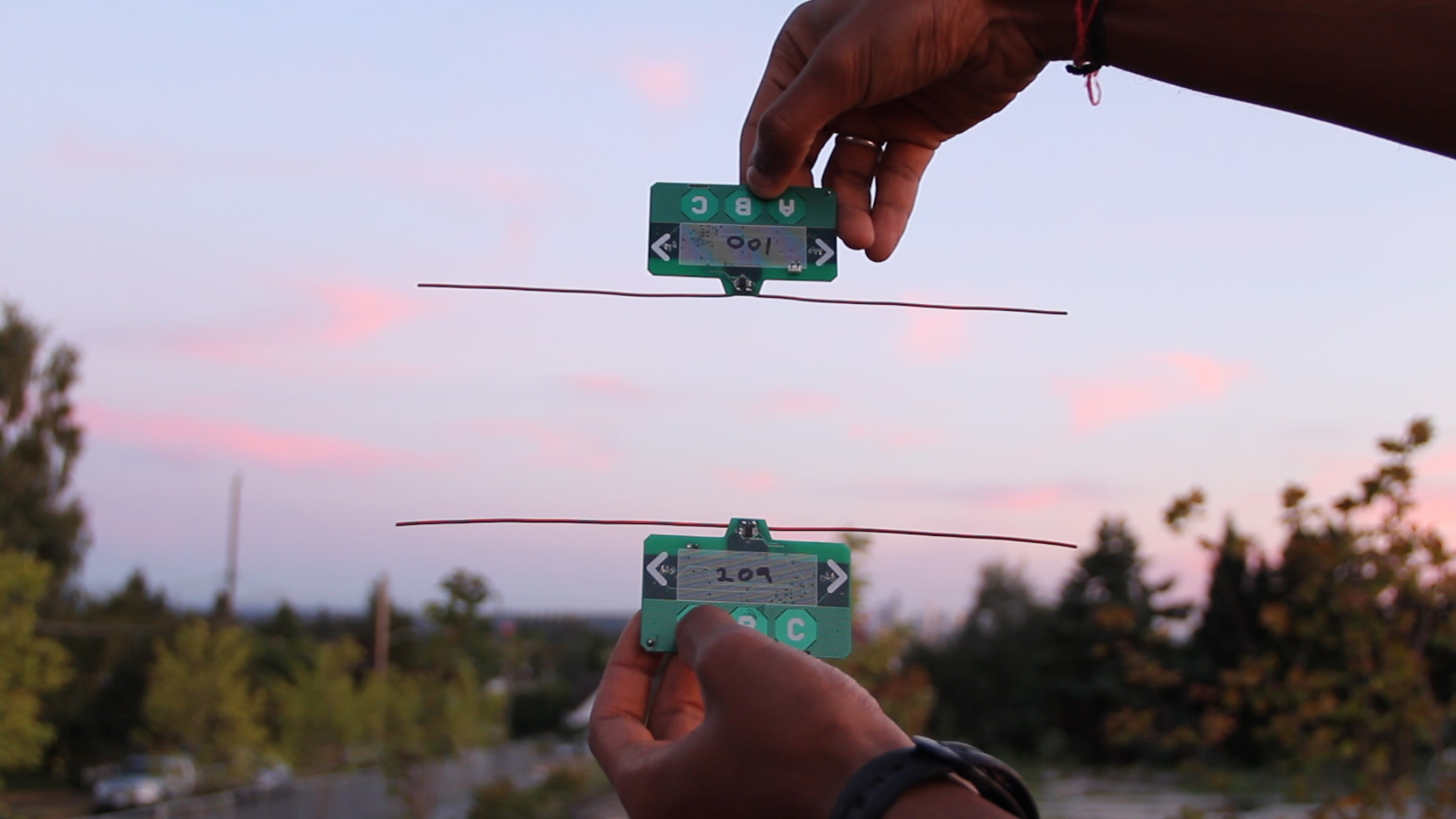
Ambient Backscatter Devices - QTOOTHSome are saying ambient backscatter technology is bringing us one step closer to an Internet-of-things reality. QTOOTH says why stop there? How about one wireless protocol, that uses zero-energy, to rule them all? Why not have one wireless signal to carry ALL communication and controller information across the whole planet? This might be a little way off… but perhaps not. First, an explanation of ambient backscatter technology:

A new wireless communication system created by University of Washington engineers allows devices to interact with each other without relying on wires or batteries for power.

These devices use ambient backscatter to interact with users and communicate with each other without using batteries. This is achieved by exchanging information by reflecting or absorbing pre-existing radio signals.

Called “ambient backscatter” by researchers, the new communication technique takes advantage of the cellular, radio and TV transmissions that already surround us 24/7. Devices communicate with one another by reflecting existing signals to exchange information. Researchers created small, battery-free devices with antennas that can detect, harness and reflect a TV signal, which then is picked up by other similar devices.

A network of devices and sensors that use this technology to communicate would be able to do so with no power source or human interaction necessary.

“We can re-purpose wireless signals that are already around us into both a source of power and a communication medium,” said lead researcher Shyam Gollakota, a UW assistant professor of computer science and engineering. “It’s hopefully going to have applications in a number of areas including wearable computing, smart homes and self-sustaining sensor networks.”

Congratulations to the research team for receiving the “best paper” award at the Association for Computing Machinery’s Special Interest Group on Data Communication 2013 conference in Hong Kong, which began Aug. 13.

“Our devices form a network out of thin air,” said co-author Joshua Smith, a UW associate professor of computer science and engineering and of electrical engineering. “You can reflect these signals slightly to create a Morse code of communication between battery-free devices.”

ambient-backscatter-iphone-app-qtooth

University of Washington

Everyday objects could be enabled with battery-free tags to communicate with each other. A couch could use ambient backscatter to let the user know where his keys were left.

Smart sensors could be built and placed permanently inside nearly any structure, then set to communicate with each other. For example, sensors placed in a bridge could monitor the health of the concrete and steel, then send an alert if one of the sensors picks up a hairline crack. The technology can also be used for communication – text messages and emails, for example – in wearable devices, without requiring battery consumption.

The researchers tested the ambient backscatter technique with credit card-sized prototype devices placed within several feet of each other. For each device the researchers built antennas into ordinary circuit boards that flash an LED light when receiving a communication signal from another device.

Groups of the devices were tested in a variety of settings in the Seattle area, including inside an apartment building, on a street corner and on the top level of a parking garage. These locations ranged from less than half a mile away from a TV tower to about 6.5 miles away.

ambient-backscatter-wireless-device-qtooth

University of Washington

Researchers demonstrate how one payment card can transfer funds to another card by leveraging the existing wireless signals around them. Ambient RF signals are both the power source and the communication medium.

They found that the devices were able to communicate with each other, even the ones farthest from a TV tower. The receiving devices picked up a signal from their transmitting counterparts at a rate of 1 kilobit per second when up to 2.5 feet apart outdoors and 1.5 feet apart indoors. This is enough to send information such as a sensor reading, text messages and contact information.

It’s also feasible to build this technology into devices that do rely on batteries, such as smartphones. It could be configured so that when the battery dies, the phone could still send text messages by leveraging power from an ambient TV signal.

The applications are endless, the researchers say, and they plan to continue advancing the capacity and range of the ambient backscatter communication network.

The other researchers involved are David Wetherall, a UW professor of computer science and engineering, Vincent Liu, a doctoral student in computer science and engineering, and Aaron Parks and Vamsi Talla, both doctoral students in electrical engineering.

The research was funded by the University of Washington through a Google Faculty Research Award and by the National Science Foundation’s Research Center for Sensorimotor Neural Engineering at the UW.

[amzn_product_inline asin=’B00DR0PDNE’]

[amzn_product_inline asin=’B0090Z3SPU’]

[amzn_product_inline asin=’B004G1EBOU’]

Filed Under: News, Tech Talk

PetziConnect – A Wireless Remote Camera & Treat Dispenser For Pet Owners

2013-08-09

petziconnect-dog-qtooth

Pet owners have gone boffo crazy for gadgets that allow them to remotely monitor and care for their pets. How modern! Taking advantage of this developing mania, err… we mean need, is Petzila who has created the PetziConnect wireless monitor. It includes not only a wireless HD camera and microphone but also a dispenser that will provide treats for your pet when triggered remotely.

Where other devices, like the FitBark or the Tagg Pet Locator are more for tracking either the fitness or the location of your pet, the PetziConnect allows you to interact with your pet even while you are at another location, like work, school, vacation, etc…

petziconnect-box-front-side-back-qtoothUsing the camera and microphone allows pet owners to remotely summon their furry four-legged family member from their mid-day nap and then watch as they react to the disembodied voice of their master coming out of a box plugged into the wall. The PetziConnect can also record video or take photos. The owner then has the option to reward their feigned interest by dispensing a treat using a button on either the iOS or the Android app or through the internet.

Petzila was seeking funding on Indiegogo to manufacture the first batch of its wirelessly connected pet monitor/treat dispensers but easily passed its crowdfunding $30,000 goal. And in case you were wondering, PetziConnects says its device is made rugged enough to survive being mauled by a frenzied pet hoping to get more treats or to liberate its owner from inside the box. The lowest price-tag for crowdbackers to purchase a device is $99 and is scheduled for a December delivery.

In the meantime, check out all of the alternatives that are already available in the links below.

[vimeo http://vimeo.com/69582864]

[amzn_product_inline asin=’B006ZP8UOW’]

[amzn_product_inline asin=’B0077I42S4′]

[amzn_product_inline asin=’B001COT8LU’]

[amzn_product_inline asin=’B003WF0LDG’]

Filed Under: Featured Content, Home & Office, News

PlayStation 4 More Specs & Latest Updates

2013-08-06

Sony PlayStation 4 Availability - QTOOTH

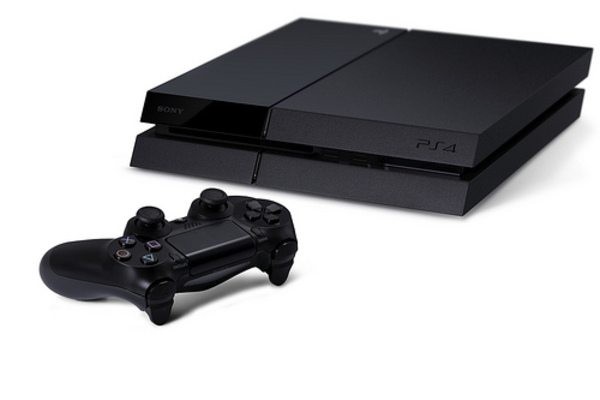
The next generation Sony PlayStation 4 was announced back in February 2013 with a few hardware specs but not much else. Now more fully revealed at E3 2013, the PS4 attempts to be Sony’s answer to a gaming focused console, rather than trying to be an all-in-one media center. Based on a “supercharged PC architecture,” it features 8GB of GDDR5 unified high-speed memory, an X86 processor, and enhanced PC-style GPU, the PS4 seems to be a bit smaller of a unit than the XBOX One while still managing to be slightly more powerful.

The  launch date of the Sony PlayStation 4 is still set to make it available for the holiday 2013 season. It should be priced at $399.00. Luckily there won’t be any restrictions on first-party used games, meaning that you will be able to freely trade and re-sell, however third party developers likeActivision or EA will now be able to add DRM to games to limit the user’s ability to do that if they should choose. Unfortunately, while there is no backwards compatibility with PS3 games, it will support Gaikai cloud game streaming in 2014.

[amzn_product_inline asin=’B00CMQTVQO’]

[amzn_product_inline asin=’B00D6LPE2E’]

[amzn_product_inline asin=’B00BIZQE10′]

Filed Under: Gaming, News, Reviews

  • « Go to Previous Page
  • Page 1
  • Interim pages omitted …
  • Page 12
  • Page 13
  • Page 14
  • Page 15
  • Page 16
  • Interim pages omitted …
  • Page 22
  • Go to Next Page »

Primary Sidebar

Affiliate Disclosure

This website uses affiliate programs for monetization. At no additional cost to you, links to various sites mentioned in posts may result in a commission that is credited to this site if you make a purchase.

Some affiliate programs and affiliations include, but are not limited to, Commission Junction, Apple, Google, Amazon.com and more.

For complete details
click here.

Copyright © 2026 · Preferred Hosting by WP Engine and Domain Name Registry by Namecheap

We are using cookies to give you the best experience on our website.

You can find out more about which cookies we are using or switch them off in .

QTOOTH
Powered by  GDPR Cookie Compliance
Privacy Overview

This website uses cookies so that we can provide you with the best user experience possible. Cookie information is stored in your browser and performs functions such as recognising you when you return to our website and helping our team to understand which sections of the website you find most interesting and useful.

Strictly Necessary Cookies

Strictly Necessary Cookie should be enabled at all times so that we can save your preferences for cookie settings.

3rd Party Cookies

This website uses Google Analytics to collect anonymous information such as the number of visitors to the site, and the most popular pages.

Keeping this cookie enabled helps us to improve our website.

Additional Cookies

This website uses the following additional cookies:

(List the cookies that you are using on the website here.)