• Skip to primary navigation
  • Skip to main content
  • Skip to primary sidebar

QTOOTH

News & Reviews for Living with Bluetooth Wireless

  • Reviews
    • Wearable
    • Gaming
    • Health & Fitness
    • Home & Office
  • How To Tips
  • Industry News
  • About QTOOTH

Wearable

Jawbone ERA – Is It Really The Best? – Review

2013-08-13

We’re very hard on Bluetooth headsets here at QTOOTH and the Jawbone ERA is no exception. Here’s our take on one of the most universally praised headsets on the market.

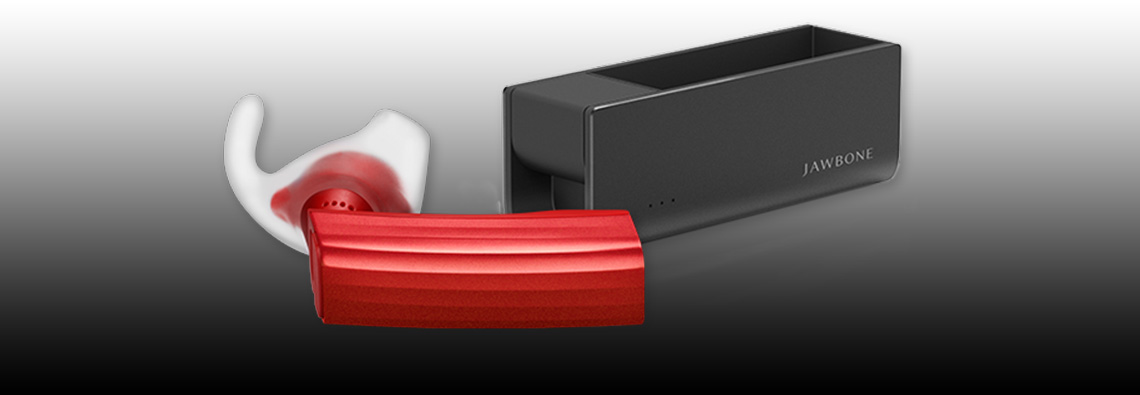
jawbone-era-review-man-riding-bike-qtoothThe [easyazon_link asin=”B00H2RP71G” locale=”US” new_window=”default” nofollow=”default” tag=”uneomediacom-20″ add_to_cart=”default” cloaking=”default” localization=”default” popups=”default”]Jawbone ERA Bluetooth Headset[/easyazon_link], manufactured by the Aliph company who are also the makers of the Jawbone Up, was introduced as an update from their popular and successful Jawbone Icon. It was meant to have superior audio and to improve on the fit and comfort of its predecessor. Unfortunately in our opinion it didn’t quite do either. Please keep in mind that we have owned several of both models and have used them extensively. It is from this experience that we are drawing our opinions.

First up is the audio quality. The audio fidelity on this might be just fine… except that it is not nearly loud enough. This lack of volume is true for either the user or for the person on the other end of the call. The ERA uses what is known as “adaptive volume” control. That means that the audio level should automatically increase or decrease depending on the volume level of the wearer’s environment. We’re fine with that if the it actually did a good job of matching, or competing with, the surrounding noise. We found that it is lacking in this department. It would be great if there was some way to manually set a base volume level from which the adaptive circuitry could then make its adjustments. Instead the user is stuck with whatever volume the circuit decides it should be. It just didn’t do its job to our satisfaction. We much prefer the quick and easier manual controls that were on the Jawbone Icon.

Second, the positioning of the Voice Activity Sensor is far more finicky than the Jawbone Icon. The Voice Activity Sensor, or VAS (see diagram below), rests on your cheek and turns on the microphones by detecting when you are speaking by the vibrations that are conducted through your jawbone (hence the name).

jawbone-era-review-web-tech-specsWe’ve found that even small variations on where the VAS is placed means the difference between a normal sounding voice when we speak versus the ERA switching to its conduction mode which essentially makes us sound like a robot. The conduction mode means that the normal microphones are shut off and all audio is picked up only through the vibrations of the voice that are transmitted through the body. FYI: Conduction is the same technology being used for both transmitting and receiving audio with the Google Glass project. It is another of Google’s many feature missteps with Glass’ introduction. Bone conduction just can’t replace normal hearing fidelity experienced by the human ear. However it must be said that bone conduction technology is an absolute miracle when it comes to hearing aids and helping those with hearing loss. Once again, the Voice Activity Sensor feature was far more forgiving and workable in the Jawbone Icon.

jawbone-era-review-woman-driving-car-qtoothThird, we must take issue with Jawbone advertising these as having HD (high definition) audio. HD audio means something very specific and these headsets do not met the criteria. The Jawbone ERA uses the A2DP audio protocol for Bluetooth which is limited to 320 kbit/s for mono and 512 kbit/s for stereo. This means that it is impossible for these headsets to transfer audio information at the rate required to deliver HD audio which is specified as 1,411.2 kbit/s (CD quality) or up to 6.144 Mbit/s (Dolby Digital Plus) or even 18 Mbit/ s. True, there are some “lossless” formats that can be in the 400 – 1,411 kbit/s like FLAC but they are not standards accepted by the industry as being HD. Now that said, 320 kbit/s isn’t bad. In fact, that’s considered to be on the high end for the MP3 format. You know, the quality at which iTunes and similar services decide they can charge you about a dollar extra per track? So, yes, it is good quality audio for the format but to call it HD is very misleading.

jawbone-era-review-portable-charger-qtoothAnd finally, the last thing we want bring up is how they came so close to turning the world of Bluetooth headsets on its ear, so to speak, by the inclusion of motion sensors. Right now they are using this circuitry for a “shake to pair” and “tap-to-answer” functions. Although we find these features fun, they are a bit gimmicky. It would’ve been so cool if it could be used for controlling a cursor, for instance, or for controlling any other type of device by motions of the head. This could also be incredibly enabling for those with motor issues, think quadriplegics or amputees for example. Jawbone says they have plans in the works for a pedometer that utilizes this circuitry and for releasing the API so that other people can develop apps for it, but it’s been close to two years or so and still no word. Maybe they were too busy developing and re-developing their UP Fitness Band. It uses similar electronics and had flaws upon its initial entry into the market. This just seems like a missed opportunity when it comes to the Jawbone ERA.

jawbone-era-review-phone-apps-qtoothSo, now that we’ve taken Aliph to task for their Jawbone ERA, please know that we are still fans and think that their Jawbone Icon is still one of the very best on the market. There is strong competition from the likes of Plantronics, Jabra, Blue Ant, Motorola and Bose, but Jawbone’s got game. We just look forward to seeing where they might be able to take it next. And if you are going to buy, you might want to go for the Jawbone Icon.

[easyazon_block add_to_cart=”default” align=”center” asin=”B00H2RP7BQ” cloaking=”default” layout=”top” localization=”default” locale=”US” nofollow=”default” new_window=”default” tag=”uneomediacom-20″]

[easyazon_block add_to_cart=”default” align=”center” asin=”B005MHGBX6″ cloaking=”default” layout=”top” localization=”default” locale=”US” nofollow=”default” new_window=”default” tag=”uneomediacom-20″]

For more details, check out the videos at the bottom of this post.

https://www.youtube.com/watch?v=0GPYwxvqW7s

https://www.youtube.com/watch?v=dUjKai_fccM

https://www.youtube.com/watch?v=OpN22N3lIaQ

Filed Under: Featured Content, Mobile, Reviews, Tech Talk, Wearable

The ReLax Kit – OP Innovations Introduces Easy-to-Use Bio-Sensor to Help Manage Stress

2013-08-05

OP Innovations has just introduced their ReLax Kit. It takes measurements of multiple factors that can reveal the stress level of the wearers, monitoring users’ brain waves, body posture and more. The ReLax Kit uses advanced bio-signal tracking, allowing users to monitor and manage their stress levels. The ultra-compact bio-sensor and easy-to-use app empowers users to gain control over stress.

OP Innovations Bio-Sensor – The ReLax Kit - QTOOTH

The ReLax Kit is perfect for anyone who is trying to gain control over their stress levels by letting them see an easy to understand graphical representation. This can be great for just about anyone: students, office workers, athletes, yoga and meditation enthusiasts or those with stress-induced health issues, the leading cause of almost all health issues. The ReLax Kit’s versatile bio-sensor can monitor facial muscle tension, body posture, and brain waves throughout a variety of activities at any time, day or night. So whether exercising, working, sleeping or meditating you can get feedback about your overall stress level versus while engaged in a specific activity. Meanwhile, the kit’s app can display your compiled brain wave and facial muscle wave data in an easy-to-read color-coded graph and quickly determine your level of stress. Over time, you can learn to control or influence the output toward a desired direction. Spend too much time at your desk? Or, heaven forbid, your couch? The ReLax Kit’s app can raise poor posture awareness by also displaying a visual history of your body posture.

OP Innovations Introduces Easy-to-Use Bio-Sensor to Help Users Manage Stress – The ReLax Kit - QTOOTHIncluded in the kit is the advanced TrueSense bio-sensor. Weighing approximately the same as a penny (3g), users will most likely forget they are even wearing it. Unlike many competitors’ devices, the TrueSense bio-sensor can distinguish brain waves from muscle waves, and is even able to individually track the different classifications of brain waves – from super beta to delta waves – giving users an in-depth look at their mental state. A single charge of the TrueSense bio-sensor can provide over 16 hours of real-time wireless bio-feedback tracking.

It includes the ReLax App, a TrueSense bio-sensor, and accompanying accessories, and is capable of monitoring brain wave and posture data in real time. OP Innovations has also developed two additional kits that utilize the remarkable capabilities of the TrueSense bio-sensor:

The Special Edition ReLax Science Kit is designed for science education, and is perfect for high school and college students conducting experiments regarding brain waves. Thanks to the downloadable ReLax App and the Science Learning Booklet, users can conduct science experiments and begin understanding data within minutes. The ReLax Science Kit is available for preorder at www.taipeitrading.com.

The TrueSense Exploration Kit is the most advanced and versatile of the kits, and can be used for research and in-depth tracking. To encourage independent development, data streams and data sets are available in Open Format, and the OPI console and SDK (software development kit) are available with open source licenses. The TrueSense Exploration Kit is now available at www.taipeitrading.com.

OP Innovations Introduces Easy-to-Use Bio-Sensor to Help Users Manage Stress – The ReLax Kit

Exploration Kit Technical Specifications:

  • 2-electrode (bipolar) signal acquisition, 2000X high gain amplifier
  • 512Hz sampling rate, 13bit effective dynamic range
  • Built-in 3D (XYZ) accelerometer for motion and posture capturing
  • Rechargeable LIR1220 button cell
  • Support for multiple sensors, multiple controllers, and time synchronized operations


Available now on www.op-innovation.com ($47) with more product photos and detailed specs. Hopefully coming to other retailers soon. In the meantime check out the other well-reviewed versions already on the market:

[amzn_product_inline asin=’B000E22DFE’]

[amzn_product_inline asin=’B004YHKUX2′]

[amzn_product_inline asin=’B001B8PIIE’]

Filed Under: Health & Fitness, Wearable

Muzik’s Smart Headphones Claim to be Google Glass For Your Ears

2013-07-30

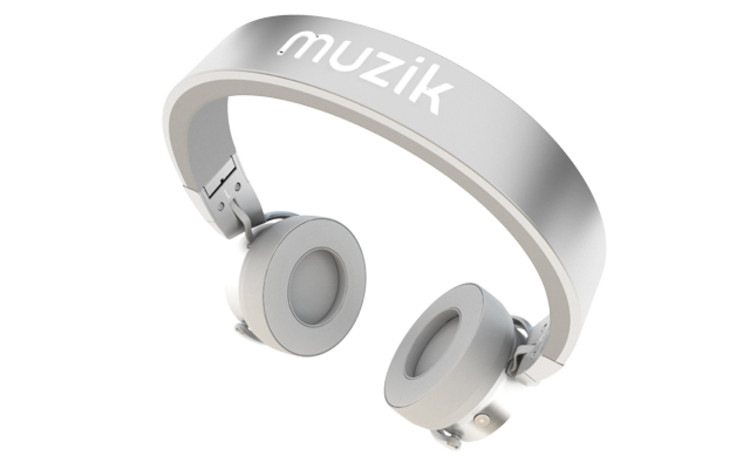
Muzik's Smart Headphones - QTOOTH

Muzik’s Smart Headphones claim to be “Google Glass For Your Ears”. Wearable technology is certainly quite the buzz-phrase these days and QTOOTH is certainly all about cool products that both enable us with technology and liberate us from that same technology at the same time. A company called Muzik has created a pair of “smart” headphones CEO Jason Hardi describes as “Google Glass for your ears.” Do they live up to that claim?


Muzik's Smart Headphones - Top View - QTOOTH

The headphones will be available for a retail price of $299 in October. Although Hardi mentioned Spotify, he didn’t confirm any specific partners but states that it will work with best-of-breed music software services. The headphones feature four built-in hotkeys that control different social sharing options, so that you can post the tracks you’re listening to on Facebook or Twitter, or sharing a song directly with a friend. The headphones also include an accelerometer which is a motion sensitive switch that cues the headphones to stop playing music when you take them off.

These wireless headphones seek to be a solution to what Muzik sees as the current problem with discovering music through social sharing on current popular services such as Spotify, RDio, SoundTracking, etc… Listeners often feel inundated with too much material and lack direction.

Muzik's Smart Headphones - Music Sharing - QTOOTH

“A lot of people don’t know where to find good music, and the many options available make it increasingly difficult for content to be served up to you, because it’s in so many different places,” Hardi says.

After Muzik launches in the fall they will release its API to third-party developers.  This will allow them to take advantage of the headphones’ proximity sensors and even re-purpose hotkey functionality. Because they are at the same price as the new Beats by Dre Studio headphones ($299) Muzik will need to deliver both device quality and a rich selection of third-party apps to be successful and find its place among its rivals.

[amzn_product_inline asin=’B008EQ1YWA’]

[amzn_product_inline asin=’B0001FTVEK’]

[amzn_product_inline asin=’B009A6CZYO’]

Filed Under: Entertainment, Wearable

Polar Stride Sensor Bluetooth Smart for iPhone 5 and 4S

2013-07-13

polar-smart-stride-sensor-qtooth

One of the the world’s first, the Polar Stride Sensor Bluetooth Smart connects directly to iPhone 5 or 4S to deliver speed, distance and run cadence. The sensor provides all the data needed for running with the exception of heart rate and you can add a Polar H7 heart rate monitor to receive that data. A great way to realize the full potential of the Smart Stride Sensor is to pair it with the Polar H7 Bluetooth Smart Heart Rate Sensor, an armband for iPhone and a tube of heart rate monitor electrode cream.

polar-smart-stride-sensor-product-qtooth

The Polar Stride Sensor Bluetooth Smart comes with a Polar S3+ Stride Holder that threads directly into the show laces. It is worth having a couple of these if you have more than one pair of running shoes so you don’t have to re-thread the pod, simply move it from holder to holder.

The Polar Bluetooth Stride Sensor also has a user changeable battery and complete stride sensor calibration instructions are available on the Polar website.

For folks that bring an iPhone 5 or 4S with them for exercise, or have to have it for work, this is a good solution. Competitive runners will be much more apt to stick with GPS watches.

[amzn_product_inline asin=’B00CCASIMS’]

[amzn_product_inline asin=’B007S088F4′]

[amzn_product_inline asin=’B00CELI5HI’]

Filed Under: Featured Content, Health & Fitness, News, Reviews, Wearable

Fitbit Flex vs Jawbone Up

2013-07-06

Fitbit Flex vs. Jawbone Up

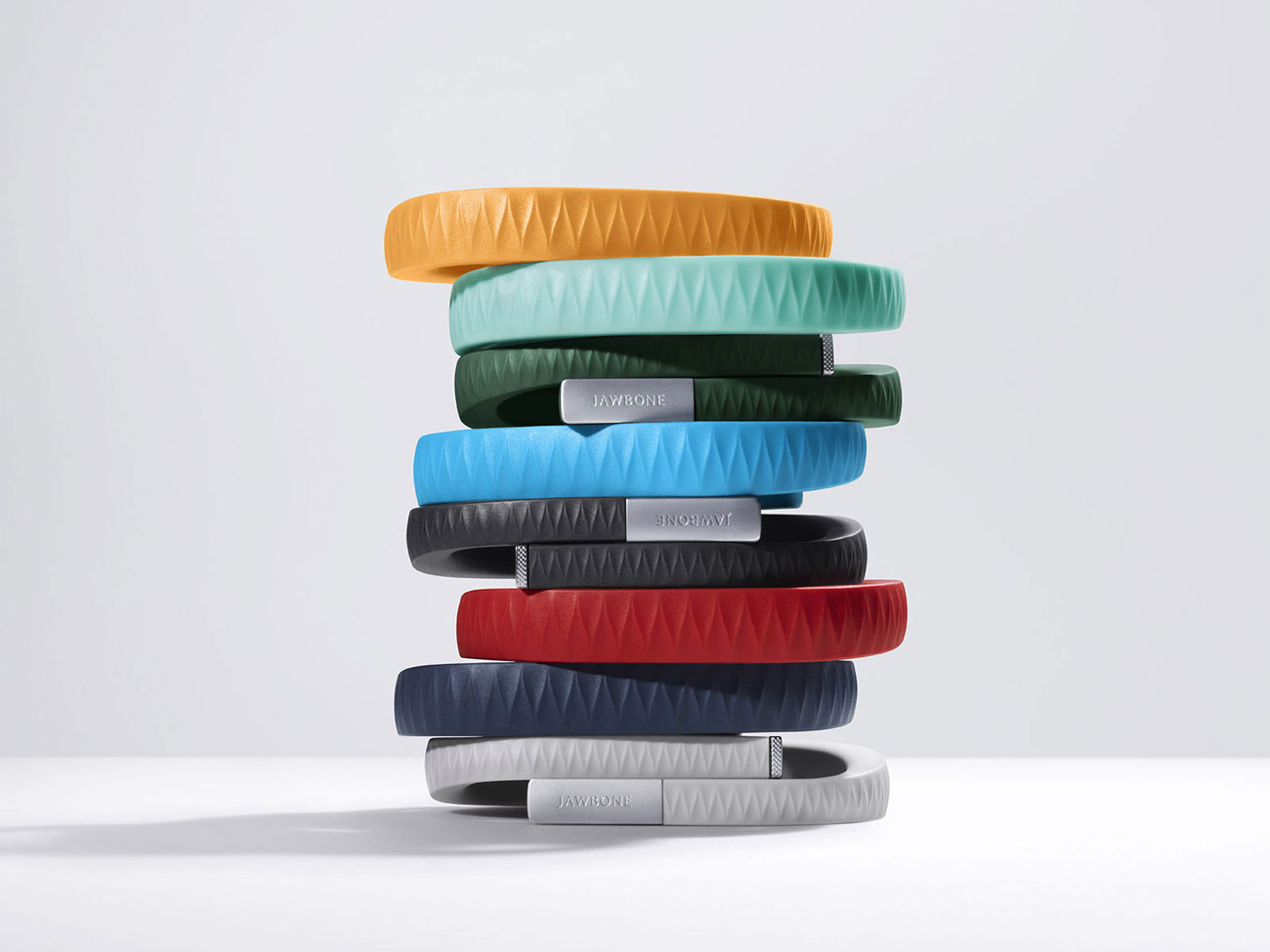
FitBitjawbone-up-bands-stacked-qtooth

The race to be the best in wearable fitness technology is heating up. Check out this comparison of the Fitbit Flex vs Jawbone Up:


[amzn_product_inline asin=’B0095PZHPE’]

[amzn_product_inline asin=’B00BGO0Q9O’]

[amzn_product_inline asin=’B00CIX260Y’]

Filed Under: Health & Fitness, Reviews, Tech Talk, Wearable

Wearable Technology Market Will Top $6 Billion by 2016

2013-07-05

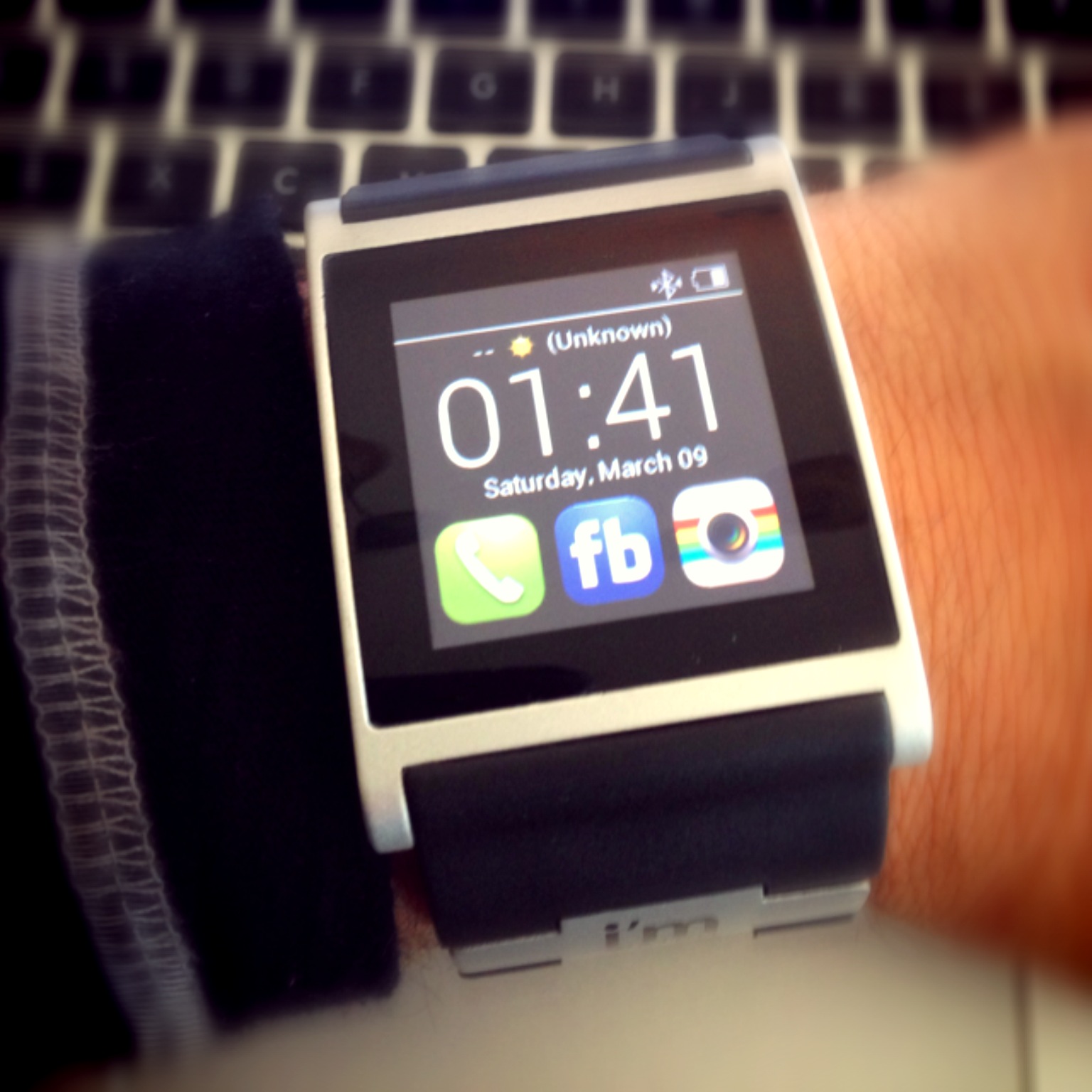
smartwatch-qtooth

Demand for real-time data, including personal health information, is driving the market for wearable, wireless devices that will grow from 14 million items this year to as many as 171 million in 2016. In four years, the market for wearable wireless devices is expected to achieve minimum revenues of $6 billion, according to new research from IHS iSuppli subsidiary IMS Research.

Smart wearable device market to boom. A $6 billion market in 2016 is our most conservative forecast which assumes that the adoption of wearable technology will be limited by factors including lack of suitable technology, poor user compliance and lack of an overall enhanced experience from devices that are wearable as compared to non-wearable products,” said Theo Ahadome, senior analyst at IMS Research. The majority of wearable devices are concentrated around a few products mainly for healthcare and wellness applications, such as glucose and heart rate monitors.

In the future, devices for personal entertainment and military use will increase dramatically. For example, the introduction of Google’s Smart Glasses and the rumoured Apple Smart Watch” will be part of a new wave of wireless wearable devices. Sleep sensors, hand-worn terminals, and industrial and military head’s up displays — transparent screens that provide data and are attached to helmets — will provide users with actionable data, leading to even more rapid expansion in the market for wearable technology.

Most wearable, wireless devices today are used to transmit vital signs or to track user exercise performance or fitness metrics. Dominating the market are continuous glucose monitors, such as devices from Abbott and Medtronic, and activity monitors, such as those from Fitbit, Adidas miCoach and Nike Fuelband. Fitness and heart-rate monitors from Garmin, Polar and Suunto are also market leaders, Ahadome said.

The US Federal Communications Commission recently approved a Medical Body Area Network MBAN radio spectrum for use in hospitals. The MBAN spectrum first is expected to be used in hospitals, but over time, medical instrument vendors say MBAN devices could be used at home, where 80% of health care services are delivered.Unlike traditional medical telemetry systems, which require separate links for each function being monitored, wireless MBAN systems could monitor all required functions and then aggregate the results and transmit them to a remote location for evaluation. The data could be uploaded to private clouds within hospital data centers and also to public cloud providers, such as Microsoft’s HealthVault.While medical wireless devices and their data will be regulated under HIPAA the Health Insurance Portability and Accountability Act, one problem with consumer-grade wearable devices is that the information will likely be sent over unsecured networks to public cloud service providers.For example, consumers may upload workout and sleep monitoring data into online personal health records. “You don’t necessarily want many applications in different places, but in one centralized place,” Adhadome said. “Personal fitness records will be cloud based. It becomes a free-for-all in terms of where your data goes.”

Last year, the amount of information created and replicated surpassed 1.8 zettabytes 1.8 trillion gigabytes, growing by a factor of nine in just five years, according to IDC’s Digital Universe study.While 75% of the information in the digital universe is generated by individuals, less than one-third of all stored data today has even minimal security or protection. Only about half the information that should be protected is protected at all, IDC stated.

via Techworld.com

[easyazon_block add_to_cart=”default” align=”left” asin=”B007L3O4BA” cloaking=”default” layout=”left” localization=”default” locale=”US” nofollow=”default” new_window=”default” tag=”uneomediacom-20″]

[easyazon_block add_to_cart=”default” align=”left” asin=”B007X72DVW” cloaking=”default” layout=”left” localization=”default” locale=”US” nofollow=”default” new_window=”default” tag=”uneomediacom-20″]

[easyazon_block add_to_cart=”default” align=”left” asin=”B00892N53U” cloaking=”default” layout=”left” localization=”default” locale=”US” nofollow=”default” new_window=”default” tag=”uneomediacom-20″]

Filed Under: News, Wearable

  • « Go to Previous Page
  • Page 1
  • Interim pages omitted …
  • Page 6
  • Page 7
  • Page 8
  • Page 9
  • Page 10
  • Go to Next Page »

Primary Sidebar

Affiliate Disclosure

This website uses affiliate programs for monetization. At no additional cost to you, links to various sites mentioned in posts may result in a commission that is credited to this site if you make a purchase.

Some affiliate programs and affiliations include, but are not limited to, Commission Junction, Apple, Google, Amazon.com and more.

For complete details
click here.

Copyright © 2026 · Preferred Hosting by WP Engine and Domain Name Registry by Namecheap

We are using cookies to give you the best experience on our website.

You can find out more about which cookies we are using or switch them off in .

QTOOTH
Powered by  GDPR Cookie Compliance
Privacy Overview

This website uses cookies so that we can provide you with the best user experience possible. Cookie information is stored in your browser and performs functions such as recognising you when you return to our website and helping our team to understand which sections of the website you find most interesting and useful.

Strictly Necessary Cookies

Strictly Necessary Cookie should be enabled at all times so that we can save your preferences for cookie settings.

3rd Party Cookies

This website uses Google Analytics to collect anonymous information such as the number of visitors to the site, and the most popular pages.

Keeping this cookie enabled helps us to improve our website.

Additional Cookies

This website uses the following additional cookies:

(List the cookies that you are using on the website here.)