• Skip to primary navigation
  • Skip to main content
  • Skip to primary sidebar

QTOOTH

News & Reviews for Living with Bluetooth Wireless

  • Reviews
    • Wearable
    • Gaming
    • Health & Fitness
    • Home & Office
  • How To Tips
  • Industry News
  • About QTOOTH

QTOOTH

Who Wouldn’t Want Waterproof Electronics? – Check Out HzO (Video)

2013-10-28

hzo-iphone-in-beer-liquid-proofing-electronics-qtooth

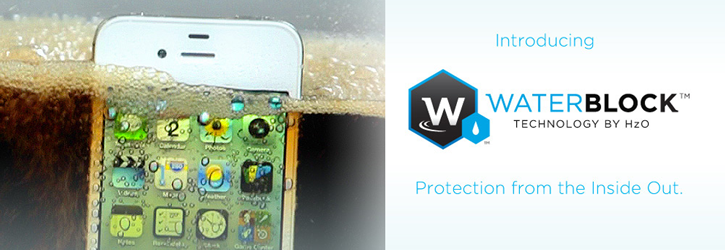
HzO is the developer behind WaterBlock, a special coating that uses nanotechnology to make sure our favorite electronics stay working no matter what liquid we try to drown them in. HzO has been making the rounds of all of the technology trade shows this past year and has one numerous awards. Check out this video and you’ll easily see why:

QTOOTH had the honor of being an official media partner for the 2013 Wearable Technologies Conference. that was held as part of the Taiwan International Cloud Technology & Internet of Things Show. One of the cool things that was on display was the amazing properties of HzO’s waterproofing technique. I’ve certainly lost at least one cell phone to water immersion and, as a lifetime musician, have had at least several prized pieces of musical equipment ruined by the careless drink “placement” of excited audience members. Where were you then, HzO, where were you then?

How does it work? HzO uses a vapor process that allows a layer of their organic polymer coating to form a barrier around every component of a device, This makes it not only liquid proof, but also virtually eliminates humidity and corrosion from wreaking havoc with these sensitive, and often expensive, pieces of technology. And we’re not talking mere water resistance, either. We’re talking water immersion. HzO’s WaterBlock technology can even work at considerable depths. In fact, it seems the pressure of the deep will probably have an effect on crushing the device before the waterproofing give out.

There are two things we wanted to bring focus to concerning HzO’s WaterBlock. First, most wireless devices that we enjoy here at QTOOTH are meant for real world living. If wireless technology makes things wearable and integrated into everyday devices (a la Internet of Things) then they will absolutely need to be waterproof. Second, we are on this quest of making technology transparent and unobtrusive. Being toxic to the environment is hardly being transparent or unobtrusive. Luckily, HzO makes the point that their coating, which is made of organic polymer,  has been FDA approved for use as “non-hazardous,” certifying each ingredient as being both non-toxic and bio-compatible for use in medical devices, such as implants inside the human body. Plus, Hzo Makes the point that the fewer electronics that are being dying prematurely due to immersion in liquid, the fewer devices end up a e-waste in landfills. Sounds good to us!

So when can you get your devices coated? Unfortunately not yet. HzO is focusing on working with manufacturers on new devices. They fill they can have the biggest, most pervasive effect by working with manufacturers during the assembly process so that their coating is done correctly from the start and performs to their high expectations. Perhaps someday soon either they’ll license it or develop a program that will retro-waterproof our current devices. But at least it’s good to know that in the near future, more and more of our devices will already be waterproof. In fact, we might just assume that they all are. Let’s hope so! Until then, where’s my clunky Otterbox for my iPhone…?

[amzn_product_inline asin=’B00AK1GN4Q’]

[amzn_product_inline asin=’B00B59NKRK’]

[amzn_product_inline asin=’B00EEB5NWG’]

Filed Under: Featured Content, Tech Talk

Logitech G930 Headset Review – Wireless Gaming Performance with Surround Sound

2013-10-09

The Logitech G930 Wireless Headset has become the “go to” headset for many gamers and frequent online chatters, and we understand why. Here’s a closer look at how it got to be that way.

Overall Physical Design

First, the headsets themselves are very comfortable to wear. Solid construction while staying lightweight, they feel built to last. Big, chunky, and with a simple plastic finish,we have to admit they are not one of the better looking headsets out there. But they are highly functional. Each feature is logically located and well-thought out. The headband that arches between the two ear cups is uniquely cushioned with memory foam that forms to the wearer’s head. This lends extra stability to how they mount and can be especially handy when the tunes are rockin’ or you are instinctively ducking when under heavy fire in your gamer’s world. The ear cups are well padded and should easily surround most players ears. Take it from someone who’s got some pretty big ears! These are a sealed back ear cups, which is great for isolating you from getting distracted by ambient sound in your immediate environment but may make the side of your head sweat a bit if you tend to run on the hot side.

logitech-g930-wireless-headset-front-view

What Makes this Wireless Headset Different

The Logitech G930 Wireless Headset has very good sound characteristics. This begins with the fact that Logitech has chosen to use a style of wireless signal that is similar in nature to WiFi. And just like some WiFi signals, it transmits on the 2.4GHz frequency spectrum. Why is this a good thing? Well, because many wireless headsets use Bluetooth wireless for their signal. Bluetooth is an excellent form of wireless that is perfect for voice and some other basic audio. Although it has been steadily improving in sound over the last few years, courtesy of companies like AdaptX, it still uses highly compressed audio data that limits the depth and detail of your audio. This will probably change over the next few years, but for now utilizing a wireless signal like the one that Logitech has for the G930 gives you full spectrum, uncompressed audio today. What good are the best speakers and microphones in a headset if the audio signal through which it is being delivered can’t take advantage of that quality? Logitech’s claims their proprietary wireless technology is up to 38% faster than Bluetooth. They hope that this means you won’t experience any delayed audio. Not sure if there really is that much of a difference in the end result, but if you rely on audio cues to give you an edge in video game perhaps that will mean one more check in your win column. The Logitech G930 can also automatically hop between frequencies to avoid other signals that might create interference and should keep the signal clear and strong. The claimed range of the wireless signal is 40 feet (12m) and we’ve found this to be pretty consistent. So kudos to Logitech for doing it right and choosing a great wireless protocol.

[amzn_product_inline asin=’B003VANOFY’]

logitech-g930-wireless-headset-usb-transmitter

The signal begins at the transmitter which takes the form of a simple, black USB device that will fit directly into any USB port. It will also plug in to the included hub-like charging base. This handy accessory comes with a long standard USB cable on one end and a micro USB cable on the other. In the middle of the charger is a USB port. Here you can plugin the transmitter and then use the micro USB cable to charge the headset. You can even use the charging base to power the headset and use it like a wired device when the battery gets low. Very flexible!

logitech-g930-wireless-headset-charger

Controls

All of the controls are located on the left ear cup . This consists of three customizable buttons, a mute button for the microphone, a Dolby Digital switch and a power button.  We should note we like having the controls here instead of inline on the cable or on a separate mixer. You will always know where they are and won’t find yourself scrambling to find the controls.

logitech-g930-wireless-headset-main-view

Microphone

The flip-down microphone is also located next to the controls, putting everything you need quick access to in one place. The microphone is of decent quality, providing clear communication. It has built-in noise cancelling so your listeners will only hear you, not whatever is going on in the room near you. The microphone auto-mutes when in the up position and un-mutes itself when in the down position, ready for use. There is a convenient red light on the microphone arm that turns on when it is muted. This gives you a visual cue as to whether or not you can be heard. So, light on? Talk smack! Light off? Be careful what you say!

logitech-g930-wireless-headset-front-mic-up-view

Sound

The Logitech G930 Wireless Headset does a great job at recreating the full spectrum of audio. Although not reference quality like you’d find in a recording studio they had crisp, well-defined treble response, smooth mids and a well rounded, full bass sound. Sure, the bass could’ve been tighter and punchier, but in this price range AND being wireless we thought they performed well.  They can get very loud without breaking up at all. Although note to users!! You may want to go easy on setting the EQ controls. Some people have complained of some distortion in the audio at higher volumes. In our experience over boosting the EQ was the cause. Use the EQ to sculpt the sound, not boost the volume, and you should be fine. As for the Dolby 7.1 surround sound circuitry, we found it to be quite convincing. It can certainly help you locate opponents and other elements more quickly in a gaming situation.

Conclusion

Make no mistake, although most users will be buying these for gaming, they also make a great choice for internet chats, phone calls, and watching movies and television. It’s also great that Logitech has made all of the included accessories easily replaceable through retailers. It’s always a pain in the butt when we accidentally break an accessory to one of our devices and then have to beg the manufacturer to “allow” us to buy it separately. Versatile, easy to use, good performance and well supported are the reasons why the Logitech G930 has become one of the most popular choices in a full-size wireless headset.

[amzn_product_inline asin=’B003VANOFY’] [amzn_product_inline asin=’B006WLBEPQ’] [amzn_product_inline asin=’B008GP73TW’]

Filed Under: Gaming, News, Reviews, Wearable

Why Apple’s iBeacon May Mark the End of NFC

2013-09-20

iphone5c-selection-hero-2013What is iBeacon? And why do most of us not have a clue as to why it is so important to… well, pretty much everyone?

Face it, we are all used to Apple putting on one heck of a show when it releases some new revolutionary product. They are so good at it that, even if you are a pretty low tech kind of person, it is hard to avoid hearing the news. Well here’s one that they have barely mentioned in their last to big product reveals: iBeacon. Although iBeacon showed up in a slide during their Worldwide Developers Conference last June as a feature of their new iO7 mobile operating system, it wasn’t mentioned at all during that products presentation. And what did they say about it last week when they revealed the new line of iPhones that sport the new system? Nothing!

This is amazing since it could lead to a huge wave of new apps for such things as indoor mapping, in-store marketing, mobile payment systems and will probably make a true “internet of things” possible even sooner. Perhaps it is because it isn’t news for the general public yet. Apple is probably more concerned with creating an environment of applications and partnerships with other companies to ensure adoption. Only then will they really have something that is easy to demonstrate to their end-user. However it is a HUGE deal to companies that want to leverage it for their own uses. Here’s a video from one of those companies, Estimote, that also does a good job of showing a few of the many ways that iBeacon can be used:

So, What is iBeacon?

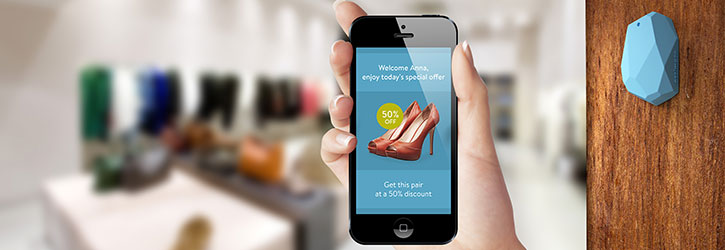
iBeacon uses Bluetooth Low Energy, otherwise known as BLE, and creates a beacon around a physical area so that an app can be alerted when a user enters them. The beacons come in the form of small wireless sensors which, when placed inside any physical space, will transmit data to your iPhone using Bluetooth.

The most used real-world example of this is typically when a person goes to a store with the new Apple iPhone 5s that comes is equipped both iO7 and iBeacon.  When they enter the store’s beacon field it can interact with the iBeacon on their phone and give them customized information such as special promotional offers, directions to where the product they wish to purchase is located, or recommendations based on their current location or purchasing history. This is what is known in the industry as “personalized microlocation-based notifications and actions”. doesn’t exactly roll off the tongue does it? Perhaps that’s why Apple is waiting to slowly roll out this new concept to the public. Something this new, complex and pervasive could be perceived as being scary and big brother-ish as much as empowering.

As a note on the empowerment side: it has been shown that the iBeacon can actually communicate in both directions. In other words when you go into that fictitious store or restaurant, what if you and your phone communicated to them, “I’m not buying today” or “I’m looking for a new shirt in a large” or “I’m vegan”. Then they can accommodate you and provide you with a higher level of service without the hassle or miscommunication.

These days everyone in the tech world is hot for context. This means that they want to provide or take advantage of information that is placed within real world context. This gives the information real value. A system like the one that iBeacon promises can provide this type of contextual information when it is needed. Just like one of the more common uses for NFC, or Near Field Communication, iBeacons will even allow you to make payments using your smart phone. Here’s where it gets good: iBeacon runs on a single coin battery that can run for up to two years and includes an accelerometer, flash memory, a powerful ARM processor and Bluetooth connectivity. And the more sensors that are added to a system the better and more precise the context will be provided to the iBeacon.

What is NFC and Why is iBeacon Better?

NFC, otherwise known as Near Field Communication, is a very low power, short range form of wireless. It’s primary use so far has been for exchanging information and files between smartphones and as a means of using the phone to transfer funds at a payment terminal. There are a couple of significant limitations with NFC. It’s real world range is less than 2 inches (4cm). That means that when it is used to communicate with sensor tags in an environment like a retail store, the user has to be within 2 inches for it to communicate. The range for an iBeacon is up to 165 feet (50 meters). Another limitation is that NFC functionality on a phone requires its own chip. This chip is in addition to the ones already included on a device that will almost always have Bluetooth as well. Why not take advantage of a Bluetooth chip that is already there instead of adding another one?

Google and NFC Versus Apple and Bluetooth

What we are really witnessing is a war between Google and their support of NFC and Apple and their support of BLE (also known as Bluetooth 4.0 or Bluetooth Smart). Google has only started to support BLE with the release of Android version 4.3 and this was only done under extreme pressure from app developers. Many app developers couldn’t create their products for Android phones because of the lack of BLE.

Meanwhile Apple had been mysteriously avoiding NFC. Even when the iPhone 5s and 5c rolled out recently many were confused by its lack of NFC support. But as we start to wrap our heads around iBeacon and what it means and what it can do, it is easy to understand why. They do not feel the need to support yet another form of wireless and are committed to Bluetooth and WiFi. In the words of Apple’s mobile development chief Craig Federighi, “There’s no need to wander around the room, bumping your phone”. ANd Apple’s AirDrop allows their phones to share files across WiFi, so unless you are in a remote part of the ocean, why bump phones together? We agree! Between NFC, gesture controls, and the crazy smart watch phenomenon, we at QTOOTH are wondering what’s up with all this hands on approach to technology? Wireless is what will make our world hands-free so we can use them for more important things, like sports, hobbies, carrying things or holding hands! (Hey, why not? I guess we’re romantics at heart!)

Conclusion

There’s a few more things that iBeacon will do that NFC can’t: indoor mapping with navigation (hey, I’m in aisle 5!), share files with ANYONE on ANY PLATFORM using BLE, and the promise of making the sensors ever smaller and less obtrusive.

There’s the wise view of “the world is what it is, not as it should be”. QTOOTH is gonna go out on a limb and say how we think it should be: iBeacon in. NFC out.

Filed Under: Featured Content, Mobile, News, Tech Talk

QTOOTH is an Official Media Partner for the Wearable Technologies Conference 2013 – Taipei

2013-09-20

wearable-tech-conference-taipei-240We here at QTOOTH are excited to see some of the developments and new technologies that promise to be part of the Wearable Technologies Conference. This will be the first time that the conference will be held in Asia. Taking place on October 9th, 2013, the conference will be hosted at the Taipei World Trade Center Nangan during the Taiwan International Cloud Technology & Internet of Things Show.

If you want to know what the future might hold when it comes to any technology, the best source is to hear it directly from the people responsible for creating it.  The main focus of this edition of the Wearable Technologies Conference is Body to Cloud. Confirmed speakers include high-level representatives from Texas Instruments, Quanta, EuroCloud, Ericsson, Telit Communications, AiQ Smart Clothing, imec Taiwan, VARTA Microbattery, T.Ware, HzO, and mc10. They will be discussing the latest developments, presenting exciting innovations, and will provide new insights into wearable technologies, cloud computing and machine-to-machine communications. Select examples of enabling wearable technologies will be featured, as well as stars of the wearable technologies market.

QTOOTH.COM is honored to be one of the conference’s official media partners, and we will be reporting on all of the cool updates revealed at the show as it becomes available.

If any of our readers would like to join in the fun at the original Wearable Technologies Conference that is representing one of the fastest growing tech markets, you can register here.

Filed Under: News, Wearable

PrioVR – Full-Body Immersion to Interact Naturally with Virtual Worlds

2013-09-07

Okay, okay, we know! Sure the PrioVR project is only at the Kickstarter stage, but this exactly the kind of thing that gets our juices flowing here at QTOOTH. What is it exactly?It is inertial sensing technology, which basically means that you can control virtual 3D realities, like a video game, with movements of the body.

Well, so far it is actually just a Developer’s Kit so that inventors and others of the creative persuasion can get in on the technology that they are offering. But take a look at this video to see what it promises to deliver:

[youtube=http://www.youtube.com/watch?v=MSTge5IDxF4]

Yost Engineering, the company behind this technology, claims that their system offers several advantages over optical systems such as the Microsoft Kinect. Because the use high-performance inertial sensors along with a centralized, wearable wireless hub architecture, the PrioVR will provide 360 degrees of fast, real-time motion capture without the need for cameras, optics, line-of-sight, or special environments. In fact, the PrioVR should perform at an 8x or better improvement over optical systems such as the Kinect. The system will be wireless, allow multiple simultaneous users, and will work anywhere – indoors or out. Additionally, the system will exhibit performance characteristics comparable to high-end inertial motion capture systems that cost tens of thousands of dollars, but at a cost that makes VR and motion capture affordable for everyone.

yost-priovr-wearable-tech-vr-immersion-qtooth

There is so much happening in wearable tech and wireless human-electronics/computer controllers that it is hard for anyone to keep up on who is doing what, never mind make a determination about which is really the best for which application. So, if you see a system out there that intrigues you like the Yost PrioVR that you think we should know about, please hit us up in the comment section or through your channel of choice. We don’t want to miss out on anything and would love to keep our readers in the loop, too!

[amzn_product_inline asin=’B005LDY0KC’]

[amzn_product_inline asin=’B002BSA298′]

[amzn_product_inline asin=’B00D9FQ9CQ’]

Filed Under: Gaming, News, Wearable

Samsung Galaxy Gear – The Evolution of the Smartwatch

2013-09-04

Amid great fanfare, Samsung introduced their Galaxy Gear. The occasion for the introduction was the IFA 2013 Consumer Electronics Show, the largest of its kind in the world. It is even bigger than the CES trade show that is held every year in Las Vegas. There are so many exciting things coming out of this year’s event that it may take a while for us here at QTOOTH to even cover it all. For Samsung, this is their first foray into the brave new world of smartwatches. Let’s take a look at some of the exciting things that it represents, where they got it right and where they might want to improve the product.

samsung-galaxy-gear-smartwatch-front-view-with-band-qtooth

First, let’s talk about the fact that smartwatches will not be for everyone. The wearing of watches is at an all time low no matter how smart they are. People are quite comfortable with getting thew time and just about every other type of data from the smartphones, or their computers, cars, tablets, radios, etc… So even despite this limited market, it is interesting to see so many manufacturers getting on the bandwagon i the rush to provide some form of smartwatch. There are already ones on the market from major players like Casio, Nike and Sony, and the leading edge of this mania came from the small upstarts like the Pebble, Agent, and others. It is also a very strong rumor that Apple will be introducing their own smartwatch within the next few weeks.

Of course the reason we here at QTOOTH have our reservations when it comes to any form of smartwatch is the fact that they are not hands free. For us the reason to go wireless is so that we can “un-tether” ourselves from our technology. Just by the very nature of a wrist mounted device means that it will take not just one hand to operate but two! One to wear the device and the other to operate whatever interface is included. Plus, the watch is located near your hand which is often located in a position that makes it difficult to see, or to hear. Of course some things on a watch can be voice-controlled, but so far we haven’t seen a lot of functionality that can be accessed by voice alone on these first smartwatches.

That said, the Galaxy Gear is one of the best options in a smartwatch that we have seen so far. Seeing that all of the might of a behemoth like Samsung is behind the project, including all of their available technologies, this shouldn’t come as a surprise. Starting with its screen, the Galaxy Gear has a 320 x 320-pixel, 1.63″ diagonal AMOLED touchscreen. The brain of this smartwatch is provided by an 800 MHz processor powered by a 315mAh battery. For audio, it has a speaker and a pair of mics for recording and playing back video content.  This also allows for communicating with phone calls using the built-in dialer that works with whatever Galaxy device to which it is paired. Mounted into the wrist strap itself is a BSI (back-illuminated sensor, or back-sided illumination) sensor with an autofocus lens so that the wearer can capture 1.9-megapixel still images or 10-second videos at 720p, 640 or VGA quality resolution with sound. We have yet to get clarification as to whether the sound is captured in stereo via the two onboard mics or whether those mics are only paired for noise cancellation purposes when in use for making phone calls. Samsung states that the camera is designed more for convenience than it is for image quality. The camera also comes with a pre-installed app called Memographer for media management.

[amzn_product_inline asin=’B00FH9I0OC’]

So far there are a few dozen apps that will be available for the Galaxy Gear upon launch. This may be what sets this watch apart from the others. If Samsung can get a large amount of truly useful apps available quickly it will give it a real edge over the other entrants into this field. Like most of the other smartwatches, Gear can only display one app at a time due to its limited screen size and resolution. Each app is displayed as what’s known as a “card”, which is basically a slightly over-sized icon. To navigate your way around from one app to the next all you need to do is swipe the touchscreen with your finger. The other means of navigating your way through the watch’s offerings is to use the single button that is located on the right side of the body. A single press of this button will bring you to the home screen. Double pressing the button launches Samsung’s S Voice for voice controlling options and as triple press activates the “safety assistance” feature which will send your location info and a message to a saved contact in the event of an emergency.

samsung-smart-watch-lime-green-qtooth

As much as it seems like the Galaxy Gear should exhibit some real power, it seems a bit slow when executing some pretty basic functions, like launching an app. This is surprising considering that its processor is faster than what many of us had in our main computers just a few years ago. Part of the reason for this may be because it is communicating and synching with the wirelessly attached device. This might be something that will improve as updates become available, even with its current hardware configuration. Some of the apps that did perform very well though were the watch faces, of which optional ones can be uploaded from the Gear’s Android companion app, as well as the Music app which is basically a remote control for any native or 3rd party app currently active on the connected device.

There are some odd limitations that come with what we are sure is the first generation of this device. Only 10 3rd party apps can be uploaded at a time. The interface could use a little bit of refining for a smoother experience. But one of the most interesting things is the fact that the S Voice feature can only be accessed by tapping the side button twice. That might be hard to do if your hands are otherwise occupied and misses the point of being hands-free. It would be nice if they included a specific voice command that would activate the voice control functions. That can be done as shown by Google Glass’ “Ok, Glass” to activate its voice command. As much as we’ve slagged on their device, that is one of the things that Google definitely got right.

samsung-galaxy-gear-smartwatch-side-view-with-band-qtooth

We have a mixed review as far as the look of the device is concerned. Leaked reports had the Galaxy Gear looking pretty hefty but the one on display today was much more svelte. However, it is still pretty big and considering the color options that they have so far. Two of the colors are Rose Gold and Mocha Gray which are definitely aimed at a more feminine fashion sense. The size of this device look plenty awkward in our opinion when worn on even slightly petite wrists. For men it seems to be just about right in size and proportion. Men may prefer the JET Black or Oatmeal color, but for the sporty or flashy of any persuasion they may opt for the Wild Orange or Lime Green. Speaking of which, because of the utilitarian/industrial funkiness of the design this may not be what many people would want to wear on more formal occasions, but we suppose that is a subjective call.

samsung-smartwatch-orange-qtooth

Battery life on this device is pretty much limited to a single day of “regular” use. We are not sure what that means exactly yet, but that certainly puts it in a different class of fashion accessory than the average watch which can be worn for months at a time, or longer, depending on a person’s needs. That means that the Samsung Galaxy Gear will need to spend a fair amount of time on its included micro-USB-equipped plastic charging dock. The dock connects through five metal pins, or leads, located on the rear of the watch.

[amzn_product_inline asin=’B00FH9I0FQ’]

Another limitation, and perhaps its most significant, is that it is only compatible so far with the Galaxy Note 3 and the new Note 10.1. It is most likely to work with the Galaxy S4 phone when it gets the Android 4.3 update. What’s really unfortunate though is the fact that it will most likely never work with any non-Samsung smartphone or tablet.

So, to be honest, the future has arrived and the Dick Tracy watch is now a reality. In fact, it’s better and more powerful than anything he could’ve imagined. And yet will people want it? We’d love to get your feedback in the comments below or contact us directly.

The Samsung Galaxy Gear Smartwatch will cost $299 when it starts shipping on September 25th to the world, except to the US and Japan who will have to wait until October. Strange release dates. Perhaps they just want to tease the two biggest markets for a bit? Or perhaps they’re afraid that they’ll sell out immediately once the US and Japan csan get them directly. We’ll see!

[amzn_product_inline asin=’B00892N53U’]

[amzn_product_inline asin=’B00AZOA5EC’]

[amzn_product_inline asin=’B009ELZ8ZS’]

[amzn_product_inline asin=’B007VG6ZC8′]

Filed Under: Featured Content, Mobile, News, Reviews, Wearable

  • « Go to Previous Page
  • Page 1
  • Interim pages omitted …
  • Page 15
  • Page 16
  • Page 17
  • Page 18
  • Page 19
  • Interim pages omitted …
  • Page 29
  • Go to Next Page »

Primary Sidebar

Affiliate Disclosure

This website uses affiliate programs for monetization. At no additional cost to you, links to various sites mentioned in posts may result in a commission that is credited to this site if you make a purchase.

Some affiliate programs and affiliations include, but are not limited to, Commission Junction, Apple, Google, Amazon.com and more.

For complete details
click here.

Copyright © 2026 · Preferred Hosting by WP Engine and Domain Name Registry by Namecheap

We are using cookies to give you the best experience on our website.

You can find out more about which cookies we are using or switch them off in .

QTOOTH
Powered by  GDPR Cookie Compliance
Privacy Overview

This website uses cookies so that we can provide you with the best user experience possible. Cookie information is stored in your browser and performs functions such as recognising you when you return to our website and helping our team to understand which sections of the website you find most interesting and useful.

Strictly Necessary Cookies

Strictly Necessary Cookie should be enabled at all times so that we can save your preferences for cookie settings.

3rd Party Cookies

This website uses Google Analytics to collect anonymous information such as the number of visitors to the site, and the most popular pages.

Keeping this cookie enabled helps us to improve our website.

Additional Cookies

This website uses the following additional cookies:

(List the cookies that you are using on the website here.)