• Skip to primary navigation
  • Skip to main content
  • Skip to primary sidebar

QTOOTH

News & Reviews for Living with Bluetooth Wireless

  • Reviews
    • Wearable
    • Gaming
    • Health & Fitness
    • Home & Office
  • How To Tips
  • Industry News
  • About QTOOTH

Mobile

NewerTech NuGuard KX Protective Cases and KX Screen Armor – Complete Review and Real World Tests

2015-01-02

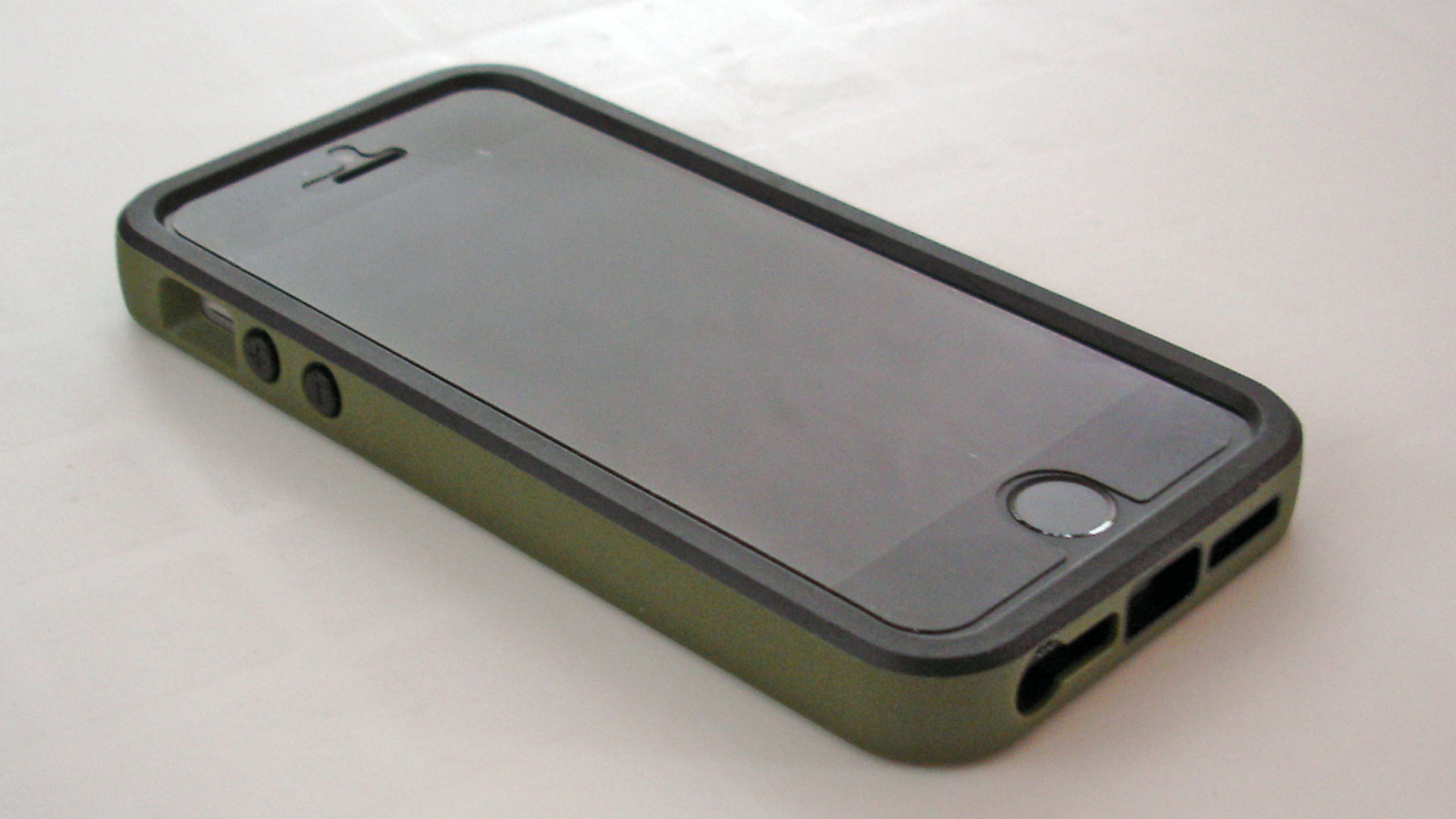
We’ve had the NewerTech NuGuard KX Protective Case and Screen Armor for the Apple iPhone 5s in our possession for a while now and we’ve had ample opportunity to put it through some real world tests. NuGuard makes some bold claims about the level of protection that their products provide and we’ve had a chance to see it for ourselves.

NuGuard KX iPhone Case Installed FrontBut first, let’s give credit to the amazing job that the human body does at being resilient. Daily living immerses us in a surprisingly harsh environment. Just think of how many falls, bumps, crashes, and exposure to liquids that we experience every day with little or no ill effect. Now any time we use phones, smart watches, tablets, fitness trackers, etc… we bring them into that same mix. I’m sure you already know how quickly and easily they can get damaged when we subject to them to the same abuses. It’s understandable why the products that aim to protect these devices are such a huge part of the market that surrounds our wireless and wearable technologies. Go to any trade show, or any mall, or any gas station kiosk, and you will find a seemingly infinite number of companies making cases and covers intended to save our devices from certain destruction. Because there is such a glut of “me too” products in this field, only a few of these have really caught our eye. One such offering is from the company HzO, which is a manufacturing process that makes electronics nearly 100% liquid proof. However, it can only be applied during manufacturing and is not meant be added to the device by owner. The NuGuard KX Protective Cases and Screen Armor, on the other hand, can be used and installed by any of us at any time.

What makes the NuGuard KX products unique? The use of impact absorbing reactive gel. We first became aware of reactive gel about 7 years ago when athletic apparel and protective gear companies started using it in their products. As far as we know, it was the 3DO company that developed the first versions of it and licensed it to other manufacturers. How does it work? Here’s 3DO’s explanation but to us, it just means that under normal conditions the gel is soft and flexible. However, the more violently it is hit with force by another object, the more the gel hardens and disperses the blow across a greater surface area and diminishes the effect of the impact. We’ve already personally experienced the benefits of this type of technology while crashing into things on our mountain bikes (thank you body armor!). We immediately recognized the potential of using it for protecting our favorite electronic wireless devices.

The first thing we did was to install the NuGuard KX Screen Protector. Here’s what it looks like in the package:
nuguard-kx-screen-protector-packaging-exterior-front-qtooth

nuguard-kx-screen-protector-packaging-exterior-qtoothAnd besides the screen protector itself, here’s what is included inside that package: lint free cloth, adhesive dust removal tool, and application tool.

nuguard-kx-screen-protector-package-contents-qtooth

Here’s what it looks like halfway through the application process:

nuguard-kx-screen-protector-iphone-review-application-install-qtooth

The blue layer is a tear-away film that is provided as a surface by which you can apply the smoothing tool without having to worry about scratching the actual screen protector. That color really helps distinguish it from the clear layers as well as the phone’s screen itself so that you don’t accidentally try to remove the wrong layer at the wrong time. As soon as the screen protector is positioned and smoothed to your satisfaction, simply peel the blue layer off and enjoy a virginal, blemish-free NuGuard KX Screen Protector. The install went very smoothly and we were able to achieve a clear, air bubble-free application.

PLEASE NOTE! The following image is actually somewhat misrepresentative of the results. The NuGuard KX Screen Protector is nearly entirely transparent. So much so that it was exceptionally hard to actually have it visible in our photos! We had to over-light, over-expose the shot and use some funky, macro-focused angles just to get the edge of it to show. What looks like a lint and dust along the edges does not show up to the un-aided eye. The best shot we took of it was actually taken after this and appears at the top of this article. More about why we took this shot up next…

nuguard-kx-screen-protector-iphone-review-edge-sizing-qtooth

One of the things that we noticed was that the NuGuard KX Screen Protector didn’t come quite to the edge of the screen.

nuguard-kx-screen-protector-iphone-review-edge-sizing-qtooth-2

Initially, we thought it might be a case of poor sizing and that it might leave the edge vulnerable, but apparently there is a reason for this. As the folks from KX NuGuard explain, if it did go all the way to the edge it would mean that taking the case on and off would risk peeling up the edges of the screen protector.This would be a bad thing! Better to leave a small gap and extend the life of the product. As seen in the image below, NewerTech wisely offers their screen protector in both sizes, depending on your needs or case requirements. The full coverage version is shown on the left and the case-friendly version is shown on the right. You can easily use this with other manufacturers’ cases and in a moment we’ll show you why you might want to do just that!kxs-full-size-vs-case-friendlyNext comes the NewerTech NuGuard KXs Kinetic Energy X-orbing case. Here’s what it looks like in its retail packaging:

nuguard-kx-screen-protector-iphone-case-packaging-exterior-front-qtooth

The case also incorporates reactive gel for the same impact dispersion qualities. A nice details is that it uses a felt-like material as a liner to make sure that your phone is truly pampered while inside the case. Not much of a chance of your phone being scratched or abraded by the case.

nuguard-kx-iphone-case-review-front-view-empty-qtooth

The fit is excellent, with just the right amount of room around the cutaways to provide easy access to the microphone, speaker, and controls of the phone without sacrificing protection.

NuGuard KX iPhone Case Installed Front

nuguard-green-iphone-case-back-qtooth

What’s great about this case is that even though it fits the phone very closely and adds very little to the overall size of the phone, it still has some “give”, some squishiness, to the way it feels.

So, how does it work? Does it live up to the hype? And why would you choose this over other protective cases?

First, reactive gel, what they refer to as “kinetic impact absorbing” gel, simply works. We wish we had a video camera available at the time, but we viciously stabbed this thing with both the blade and the blunt ends of a very hefty stainless steel butter knife. Not only was there no damage to the device, but even the blade end of the knife only left the most barely detectable checks in the protective film. They weren’t kidding in their ads that it exhibits some “self-healing” properties. Those check marks had almost completely disappeared after a few minutes. Only by holding the screen up to a very bright light at an odd angle made them visible to the eye. Please keep in mind that a butter knife has a rounded and dull blade. We’re not sure how it would do with a sharp, pointy tipped blade. We were too chicken to try. And we have a feeling that a truly sharp object would most likely penetrate and damage the screen beneath. The reactive gel will go a long way, but it’s not Kevlar bullet proof material. Here’s a video with some of the tests that the folks at NewerTech did on their own:

Second, we even took the phone on a few random tests, tempting the fates with a haphazardly stowed phone in the back pocket of our mountain bike jersey. It actually took a few rides to get the phone to dislodge from the pocket. It was harder than we thought and it’s not in our nature to intentionally wipeout or attempt to destroy our own phone. But after a few too many jumps and jostling through some deep ruts it eventually came out, tumbled down the trail, and came to a stop only after a riding buddy sprayed it with debris from a most excellent skid. Here was the result:

NuGuard KX Screen Protector iPhone Case Mountain Bike Test - QTOOTH

Brushed it off. Checked its functions. Good to go. Back in the pocket it went:

nuguard-kx-screen-protector-iphone-case-jersey-pocket-qtoothWe’d say that the case, and especially the screen protector, completely live up to the hype. We could see using the screen protector regardless of what case we chose, or as a suggestion to those who like to show off the beauty of their phone in its naked state.

So, why would we go for this case when it comes to rugged protection and not one of the fully waterproof cases that are available?

  1. It’s smaller fit means that it will easily fit in a pocket and in our hands.
  2. If we anticipate being in or around water, we’d rather just throw it in a [easyazon_link cloaking=”default” keywords=”waterproof electronics bag” localization=”default” locale=”US” nofollow=”default” new_window=”default” tag=”uneomediacom-20″]waterproof electronics bag[/easyazon_link]. That’s what they’re for! They’re inexpensive and many of them float, something most cases don’t do. They’re also typically rated for greater depths, just in case the thing that they are in, like a backpack, makes the trip to the bottom of whatever body of water it is in. Most waterproof cases are rated for a depth of 1 meter and only for a very short period of time.
  3. Most waterproof or impact resistant screen protectors greatly degrade the performance of  the touch screen. No thanks! This reactive gel based approach leaves the performance as it should be, quick and responsive. We’re often amused by friends and colleagues who curse out their phones as if it was the phone’s fault. No, you’ve hidden it behind a really poor conductive material that’s really thick for no apparent reason!
  4. The NuGuard KX Case and Screen Protectors in no way compromise sound, either for the caller or the receiver. Many waterproof/rugged cases severely compromise sound quality.
  5. The access to plugs and controls is first rate. No having to use extra “oomph” to activate a control. No having a headphone jack either not being able to insert all the way or getting stuck once inserted.

So why would we want to suffer from all of these drawbacks all of the time just for the exceptionally rare occurrence when we might end up submerged in water? If we end up submerged in water that unexpectedly, we have other things to be worried about besides the state of our phone. Maybe if you’re a lobsterman or work as an animal trainer at Sea World it would be worth it, but for most people, having 24/7  waterproof protection just isn’t needed and the tradeoffs are just too big.

Hopefully soon all personal electronics will be treated with a process like HzO, but until then we’ll stick with just a great case with top notch impact proofing like the NewerTech KX Screen Protector and Case. They are also making these for a growing variety of models: [easyazon_link cloaking=”default” keywords=”newertech kx phone” localization=”default” locale=”US” nofollow=”default” new_window=”default” tag=”uneomediacom-20″]newertech kx phone[/easyazon_link] and [easyazon_link cloaking=”default” keywords=”newertech kx tablet” localization=”default” locale=”US” nofollow=”default” new_window=”default” tag=”uneomediacom-20″]newertech kx tablet[/easyazon_link]. You can also purchase tese directly from the NewerTech website. We recommend them.

[easyazon_block add_to_cart=”default” align=”center” asin=”B00HVH8YJO” cloaking=”default”layout=”right” localization=”default” locale=”US” nofollow=”default” new_window=”default” tag=”uneomediacom-20″]newertech kx tablet[/easyazon_block]

[easyazon_block add_to_cart=”default” align=”center” asin=”B00BHXHZ1G” cloaking=”default” layout=”right” localization=”default” locale=”US” nofollow=”default” new_window=”default” tag=”uneomediacom-20″]newertech kx tablet[/easyazon_block]

[easyazon_block add_to_cart=”default” align=”center” asin=”B00HM7T780″ cloaking=”default” layout=”right” localization=”default” locale=”US” nofollow=”default” new_window=”default” tag=”uneomediacom-20″]newertech kx tablet[/easyazon_block]

Filed Under: Featured Content, Mobile, News, Reviews

CSR Set to Release SiRFusion SDK Kit for Android in First Quarter of 2015

2015-01-01

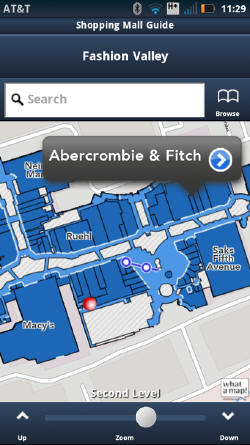
csr-sirfusion-indoor-location-mapping-screenshot-example-qtoothRecently, CSR, who is mostly recognized for their GPS chip technology, has announced a software development kit (SDK) for Android to integrate the SiRFusion library into mobile apps running Android 4.4 or later to enable indoor positioning.

According to Dave Huntingford, director of product management of CSR, the company realized around four years ago that even though the demands for outdoor positioning using their technology were mostly met, indoor was the next frontier. So, CSR began focusing on the problem by utilizing technology currently found inside mobile devices which would not require the installing of extra infrastructure to buildings. These types of technologies included the Wi-Fi radio and the micro-electro-mechanical system (MEMS) sensors such as the gyroscope and accelerometer. The end result was to attain approximately 5 meter location accuracy.

Here’s how SiRFusion gets the job done. Upon the detection of Wi-Fi access points inside a building, the SDK is designed to capture their SSID or MAC address, determine their specific location and store the points in a database. Trilateration of Wi-Fi access points is one technique to identify position. Limitations include variations in signal strength and quantity of access points available. MEMS sensors provide momentary, inertial measurements such as dead reckoning. The mobile device can identify, for example, the number of footsteps by the user.

According the the CSR press release from today:

The system automatically crowd-sources a venue’s indoor Wi-Fi signatures as consumers walk through the location, and it has also been designed to accommodate future proximity and location technologies such as Bluetooth Smart beacons, Wi-Fi Round Trip Time (RTT), and Indoor Messaging System (IMES).

And so, as Huntingford made clear, the quest when it comes to ever-better positioning is never ending, hence the desire for an architecture that is versatile enough to support new technology as it comes online. The Android SDK for SiRFusion will be released in the first quarter 2015; incorporation of Bluetooth Low Energy (BLE) technology will most likely be available by Q2 2015.

Filed Under: Mobile, News, Tech Talk

The Dash – The Latest Entry in the Dawn of the Smart Headphone

2014-02-16

The latest product to make a splash on Kickstarter as of last week is The Dash, an in-ear wireless headphone. The Dash looks to be a strong entry into the growing class of devices known as smart headphones. In order to make the device qualify as “smart”, the creators of The Dash have included a variety of sensors that can be used to track the wearers health and to communicate and control connected devices wirelessly.

Although we have some questions about some of its component and design choices, the device shows a tremendous amount of promise. Here’s their promo video and info direct from their Kickstarter campaign:

bragi-dash-details-chart-qtoothbragi-dash-inside-details-chart-qtooth

Click for Zoomed View
Click for Zoomed View of Internal Components

Overall we are incredibly impressed with their choices of components and the featured functionality of The Dash. Here are what we think are some of the pros:

  • CSR’s AptX circuitry – for delivering quality audio over Bluetooth
  • The use of 3-axis and accelerometer sensors in both the left and right ear buds for greater accuracy of motion tracking
  • Onboard media/music storage (4GB) and playback for greater audio quality than available over Bluetooth and use even when not connected to another device or smart phone
  • The ability to use the built-in ambient mic to listen to the immediate environment – a great safety feature for when the ears are plugged by use of the device
  • The ability to turn features on and off via an app – Currently the practical battery charge is about 3 hours when all of the internal circuitry is on and working. Turning of functions that aren’t currently being used will allow the battery life to be extended
  • A companion storage case that will be able to recharge the ear buds within an hour several times before it too needs to be recharged

Here are some of our potential cons. Since the device may evolve yet before its official introduction to the world, and since we have not personally tried The Dash, these questions may not add up to a hill o’ beans. Here they are any way:

  • The use of an ear bone microphone for speech – In our experience, we are yet to find an ear bone microphone that really works well, especially for communicating speech. Microphones and speakers that rely on bone conduction are usually significantly lacking in treble response. This is where the clarity of any sound occurs and how we can differentiate one consonant sound from another. Without those high frequencies clearly articulated “P” can sound like “B”, “T” can sound like “D”, and so on. This can cause a lot of confusion for the person on the other end of the line. Perhaps the folks at Bragi have found the ultimate microphone for this, but there is a reason why Google recently abandoned the bone conduction audio on their much anticipate Google Glass. Used in tandem with a traditional microphone that picks up sound from airwaves, a bone conduction microphone can be a great asset (like the way it is used on the Jawbone headsets). In this case we are skeptical, especially since conduction microphones work best when they are held securely against bone. As far as we can tell, The Dash will mostly be surrounded by the softer flesh and cartilage of the folds of the inner ear. Perhaps they can still make it work in conjunction with their ambient mic? Or at least make it an option?
  • A claim of “waterproof” – Sure, they only claim water resistance to 1m (about 3 feet), but they also claim that it should be okay for daily swimming, albeit with reduced functionality. They also feature pictures of surfing a wave. I’m not sure who only swims to a depth of 1 meter. Diving into a pool, pushing off the wall at the turn of a lap, or getting hit by a wave will probably easily exceed the water pressure of 1 bar/ 1 meter that they claim. It will be interesting to see what real world use of actual customers demonstrates. But just to be clear, we are still thrilled with the direction that Bragi is taking with The Dash. This level of water resistance should mean that getting caught in the rain or keeping the music going or taking a quick call when hitting the post workout shower should be a non-issue.
  • Passive Noise Reduction – This is a rather cryptic way of saying that The Dash works as an ear plug. They lay claim to the fact that this will help isolate the wearer from noise from their environment. True! Bragi does make some effort to differentiate what they are doing from active noise cancellation circuitry, but we just wanted to clarify the terms for those who may be less familiar. Good active noise reduction circuitry will actually do a better job of reducing noise across a broader range of frequencies than an ear plug. Bragi states that they have kept out the more expensive active noise reduction because it would reduce the battery life. This makes sense, especially considering that the size of this device is quite small and leaves little room for the extra circuitry or increased battery size that might be required. We’d also like to point out that although The Dash provides an ambient microphone to help the user stay aware of their surroundings when necessary, this is not as accurate for positioning those sounds within the environment. All of the folds and curves of the human ear are not just there to make them look as pretty as a sea shell, they serve the purpose of helping us locate sounds. Even if a person is deaf in one ear, as long as the other ear is reasonable healthy, human hearing is incredibly accurate in determining location. This is super beneficial for survival and one of the main reasons I never ride my bike while wearing headphones. I rely on my hearing far too much to help me know exactly where that SUV is in relationship to my rear wheel! Even with the ambient mics active, plugging both ears with The Dash will greatly reduce the wearer’s hearing location abilities.
  • Reflectance Pulse Oximetry – Say what?! That’s the fancy term for the technology behind how The Dash measures heart rate and oxygen saturation (the amount of oxygen carried by the blood). Reflectance pulse oximetry uses two tiny LEDs to emit low intensity red and infrared light into the capillaries of the ear. The optical reflection of the emitted light reveals the relative amount of red and white blood cells and can be interpreted as both heart rate and oxygen saturation. So far in, other devices,  this approach has proven to be a less than perfect way to measure this information. Perhaps having it located on the inside of the ear and using whatever associated circuitry Bragi has developed will greatly improve accuracy. We hope so. This is one of the key features of The Dash and helps combine multiple wearable devices into one. We love the idea!
  • Comfort and secure mounting – Bragi claims that the 3 sizes that they offer for the ear molds will comfortably fit 94% of the population. Maybe so, but many other headset manufacturers offer the similar and make the same claim. We’ve found that ALL devices that are stuffed into the ear canal increase our desire to remove them the longer we wear them. And although we believe that The Dash mounts securely in the ear (see image below) we wonder what will happen if we do shake them loose, say when swimming or surfing. It would be nice if they added some optional, secondary means of attachment. Maybe an ear hook or some form of leash? Just a thought…

bragi-dash-in-ear-3-point-mounting-qtooth

So there you have it, our quick take on The Dash. We’re very excited for them and they are absolutely crushing it on Kickstarter. Check them out when you get a chance and maybe get in line for your own pair by making a pledge toward their campaign. We here at QTOOTH will definitely be keeping an ear out for any news as they get closer to release or when they become available next November!

Filed Under: Entertainment, Featured Content, Health & Fitness, Mobile, News, Wearable

Going Wacky for Wireless at the Sochi Olympics

2014-02-09

sochi-olympics-winter-logo-qtoothThere will be many firsts at the Sochi Olympics and we are not just talking about the sporting events. There is also a brand new public, state of the art ultrafast wireless network so people can make the most of their Olympic experience using their smartphones and tablets.

Two local phone companies were awarded contracts by President Vladimir Putin to install the half a billion dollar network. It promises to deliver plenty of network capacity and data speeds that should average ten times the Russian national average. Although the two companies, MegaFon and OAO Rostelecom, may never get a full return on their investment, they hope that it will raise their visibility and reputations as true global players in the wireless telecom market. We’re pretty sure Putin wouldn’t mind a bump in his street cred among the tech savvy either.

It’s interesting to note that they may have overdone it. MegaFon has installed 900 base stations and antennas on the two square kilometers (0.8 square mile) that will host most of the competitions. Tigran Pogosyan, head of MegaFon’s Sochi project, has reportedly said that according to their advisers at Qualcomm, the San Diego-based wireless technology company, it is the highest density of mobile equipment anywhere in the world. However, after the games are done this is far more than is needed for that area. Perhaps they could formulate a plan to re-use the equipment elsewhere.

Palm Trees at the Winter Olympics?

palm-tree-antenna-sochi-qtoothMost people do not associate palm trees with the Winter Olympics. However, due to its unique geography, Sochi is one of those places where warm body of water that keeps things relatively mild all year round but is still close enough that for a quick drive to mountains whose elevations provide the perfect conditions for snow. Being based in Los Angeles, QTOOTH is quite familiar with this arrangement. and it looks like the folks at Sochi have gotten hip to something that those in Southern California have made use of for quite a few years now: wireless base station towers disguised as palm trees.

Most stadiums and convention centers use as few as a single base station to transmit mobile phone calls and data. Each of Olympic venues in Sochi, on the other hand, have dozens. The main stadium, the Fisht, has thirty just to itself! Because of the sheer density of wireless towers and antennas, MegaFon wisely decided to camouflage them by disguising them as the local flora. Wise choice, and it definitely goes a long way to keeping Sochi beautiful.

It Looked Good in Practice. How About in Performance?

MegaFon expected data speeds to average 35 megabits a second at the Sochi Olympics. To give you a comparison, Verizon Wireless, the largest U.S. wireless carrier, advertises speeds of 5 to 12 megabits for its 4G connections.

So far, the performance of the network has seen mixed reviews. It works great… when it works. There seems to be spotty reception in some areas. Some have also experienced block outs where they can’t get on the network, most likely from the overload of too many users and not enough bandwidth. It’s seems a fair to cut the providers some slack, though. After all, this is virgin territory for all companies no matter where they are from. Similar issues were seen at the 2012 Olympics in London and the situation has only gotten to be more complicated. That was 2 years ago. Since then there has been an incredible worldwide explosion in the number of people using smartphones and tablets. This isn’t just an American or first world phenomenon, athletes and tourists from every corner of the globe are using these devices to surf the web, share photos and watch videos at ever-increasing rates.

Event Access Like Never Before- via Wireless

For the Sochi Olympics, MegaFon developed an application that lets tablet and smartphone users watch live broadcasts and repeats of the competitions. This means that a spectator at an Alpine event could also live stream a hockey game on a tablet screen at the same time. Want one more reason to become an Olympic champion beside getting a medal? Samsung, which sponsors the games, is handing out free Galaxy Note 3 tablets to athletes so they can stay in touch with fans, friends and family.

As we move forward into the wireless world of tomorrow, these types of services will become routine. Cities and venues will already have most, if not all, of the infrastructure in place. The whole thing will seem less of a big deal. Until then, here’s how it’s done. All we need to do is learn how to refine the experience.

Filed Under: Mobile, News, Tech Talk

WearableTech Conference Tomorrow: PLT Labs, CSR, and More!

2013-12-09

QTOOTH is headed to the Wearable Tech Conference tomorrow where we’ll be checking out all of the latest in gear and innovation from the developers and companies who make it all possible. There’s still time to get discount tickets if you are interested in going. As media sponsor of the event, QTOOTH has a line on discounted tickets to the event which you can find by clicking here.

We’ll be getting hands-on experience with innovations from CSR, Pivothead, Revolutionary Tracker, HzO, Ellisys, Freescale, Clothing+, Sensoplex, and more.  We’ll be tweeting and posting live from the conference as much as possible.. We’ll also be doing a lot of follow up articles here on QTOOTH.COM, so stay tuned!

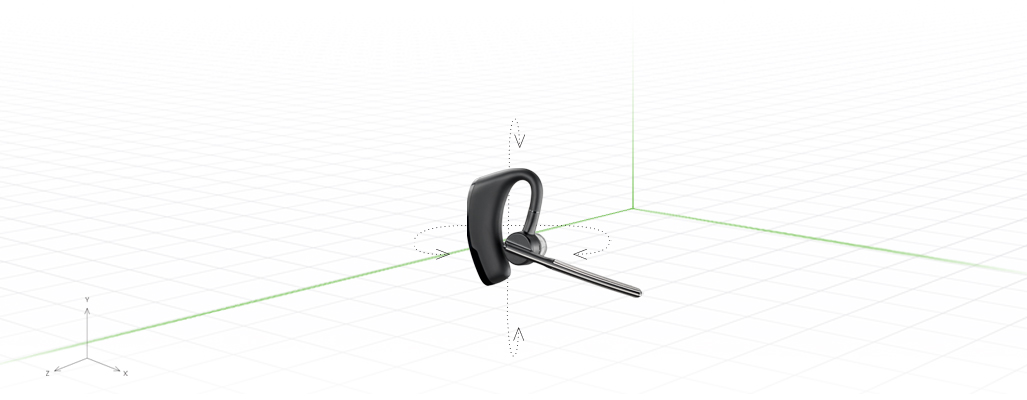
We’re really looking forward to getting  chance to have a sit down with Mike Holmlund, software product marketing manager at Plantronics, and learn all about the Concept 1 Project that is coming out of PLT Labs, Plantronics research division. Check out the video below that lays out the basics of the how this device works. Dubbed “Google Glass for your ears”, we think that this type of device might find more rapid adoption than smart glasses or watches.

What do you think? Do you have any questions you’d like us to ask the folks at PLT Labs when we meet up with them at the Wearable Tech Conference?


Please Note: The following headsets are not the Concept 1. The Concept 1 is yet to be introduced to the market. But hey, if you’re looking for one of the best Bluetooth headsets on the market from a company who has been at it longer than just about anyone, check them out!

[amzn_product_inline asin=’B00DQ5NU76′]

[amzn_product_inline asin=’B005IMB5NG’]

[amzn_product_inline asin=’B0000CEPC8′]

Filed Under: Home & Office, Mobile, News, Wearable

Why Apple’s iBeacon May Mark the End of NFC

2013-09-20

iphone5c-selection-hero-2013What is iBeacon? And why do most of us not have a clue as to why it is so important to… well, pretty much everyone?

Face it, we are all used to Apple putting on one heck of a show when it releases some new revolutionary product. They are so good at it that, even if you are a pretty low tech kind of person, it is hard to avoid hearing the news. Well here’s one that they have barely mentioned in their last to big product reveals: iBeacon. Although iBeacon showed up in a slide during their Worldwide Developers Conference last June as a feature of their new iO7 mobile operating system, it wasn’t mentioned at all during that products presentation. And what did they say about it last week when they revealed the new line of iPhones that sport the new system? Nothing!

This is amazing since it could lead to a huge wave of new apps for such things as indoor mapping, in-store marketing, mobile payment systems and will probably make a true “internet of things” possible even sooner. Perhaps it is because it isn’t news for the general public yet. Apple is probably more concerned with creating an environment of applications and partnerships with other companies to ensure adoption. Only then will they really have something that is easy to demonstrate to their end-user. However it is a HUGE deal to companies that want to leverage it for their own uses. Here’s a video from one of those companies, Estimote, that also does a good job of showing a few of the many ways that iBeacon can be used:

So, What is iBeacon?

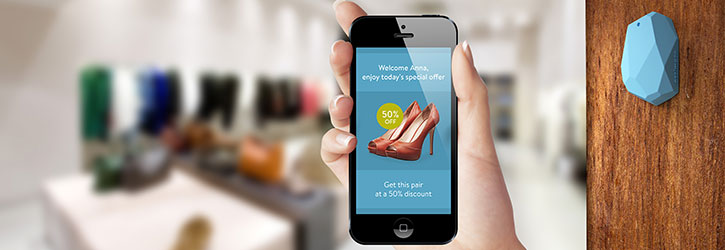
iBeacon uses Bluetooth Low Energy, otherwise known as BLE, and creates a beacon around a physical area so that an app can be alerted when a user enters them. The beacons come in the form of small wireless sensors which, when placed inside any physical space, will transmit data to your iPhone using Bluetooth.

The most used real-world example of this is typically when a person goes to a store with the new Apple iPhone 5s that comes is equipped both iO7 and iBeacon.  When they enter the store’s beacon field it can interact with the iBeacon on their phone and give them customized information such as special promotional offers, directions to where the product they wish to purchase is located, or recommendations based on their current location or purchasing history. This is what is known in the industry as “personalized microlocation-based notifications and actions”. doesn’t exactly roll off the tongue does it? Perhaps that’s why Apple is waiting to slowly roll out this new concept to the public. Something this new, complex and pervasive could be perceived as being scary and big brother-ish as much as empowering.

As a note on the empowerment side: it has been shown that the iBeacon can actually communicate in both directions. In other words when you go into that fictitious store or restaurant, what if you and your phone communicated to them, “I’m not buying today” or “I’m looking for a new shirt in a large” or “I’m vegan”. Then they can accommodate you and provide you with a higher level of service without the hassle or miscommunication.

These days everyone in the tech world is hot for context. This means that they want to provide or take advantage of information that is placed within real world context. This gives the information real value. A system like the one that iBeacon promises can provide this type of contextual information when it is needed. Just like one of the more common uses for NFC, or Near Field Communication, iBeacons will even allow you to make payments using your smart phone. Here’s where it gets good: iBeacon runs on a single coin battery that can run for up to two years and includes an accelerometer, flash memory, a powerful ARM processor and Bluetooth connectivity. And the more sensors that are added to a system the better and more precise the context will be provided to the iBeacon.

What is NFC and Why is iBeacon Better?

NFC, otherwise known as Near Field Communication, is a very low power, short range form of wireless. It’s primary use so far has been for exchanging information and files between smartphones and as a means of using the phone to transfer funds at a payment terminal. There are a couple of significant limitations with NFC. It’s real world range is less than 2 inches (4cm). That means that when it is used to communicate with sensor tags in an environment like a retail store, the user has to be within 2 inches for it to communicate. The range for an iBeacon is up to 165 feet (50 meters). Another limitation is that NFC functionality on a phone requires its own chip. This chip is in addition to the ones already included on a device that will almost always have Bluetooth as well. Why not take advantage of a Bluetooth chip that is already there instead of adding another one?

Google and NFC Versus Apple and Bluetooth

What we are really witnessing is a war between Google and their support of NFC and Apple and their support of BLE (also known as Bluetooth 4.0 or Bluetooth Smart). Google has only started to support BLE with the release of Android version 4.3 and this was only done under extreme pressure from app developers. Many app developers couldn’t create their products for Android phones because of the lack of BLE.

Meanwhile Apple had been mysteriously avoiding NFC. Even when the iPhone 5s and 5c rolled out recently many were confused by its lack of NFC support. But as we start to wrap our heads around iBeacon and what it means and what it can do, it is easy to understand why. They do not feel the need to support yet another form of wireless and are committed to Bluetooth and WiFi. In the words of Apple’s mobile development chief Craig Federighi, “There’s no need to wander around the room, bumping your phone”. ANd Apple’s AirDrop allows their phones to share files across WiFi, so unless you are in a remote part of the ocean, why bump phones together? We agree! Between NFC, gesture controls, and the crazy smart watch phenomenon, we at QTOOTH are wondering what’s up with all this hands on approach to technology? Wireless is what will make our world hands-free so we can use them for more important things, like sports, hobbies, carrying things or holding hands! (Hey, why not? I guess we’re romantics at heart!)

Conclusion

There’s a few more things that iBeacon will do that NFC can’t: indoor mapping with navigation (hey, I’m in aisle 5!), share files with ANYONE on ANY PLATFORM using BLE, and the promise of making the sensors ever smaller and less obtrusive.

There’s the wise view of “the world is what it is, not as it should be”. QTOOTH is gonna go out on a limb and say how we think it should be: iBeacon in. NFC out.

Filed Under: Featured Content, Mobile, News, Tech Talk

  • « Go to Previous Page
  • Page 1
  • Page 2
  • Page 3
  • Page 4
  • Page 5
  • Interim pages omitted …
  • Page 7
  • Go to Next Page »

Primary Sidebar

Affiliate Disclosure

This website uses affiliate programs for monetization. At no additional cost to you, links to various sites mentioned in posts may result in a commission that is credited to this site if you make a purchase.

Some affiliate programs and affiliations include, but are not limited to, Commission Junction, Apple, Google, Amazon.com and more.

For complete details
click here.

Copyright © 2026 · Preferred Hosting by WP Engine and Domain Name Registry by Namecheap

We are using cookies to give you the best experience on our website.

You can find out more about which cookies we are using or switch them off in .

QTOOTH
Powered by  GDPR Cookie Compliance
Privacy Overview

This website uses cookies so that we can provide you with the best user experience possible. Cookie information is stored in your browser and performs functions such as recognising you when you return to our website and helping our team to understand which sections of the website you find most interesting and useful.

Strictly Necessary Cookies

Strictly Necessary Cookie should be enabled at all times so that we can save your preferences for cookie settings.

3rd Party Cookies

This website uses Google Analytics to collect anonymous information such as the number of visitors to the site, and the most popular pages.

Keeping this cookie enabled helps us to improve our website.

Additional Cookies

This website uses the following additional cookies:

(List the cookies that you are using on the website here.)